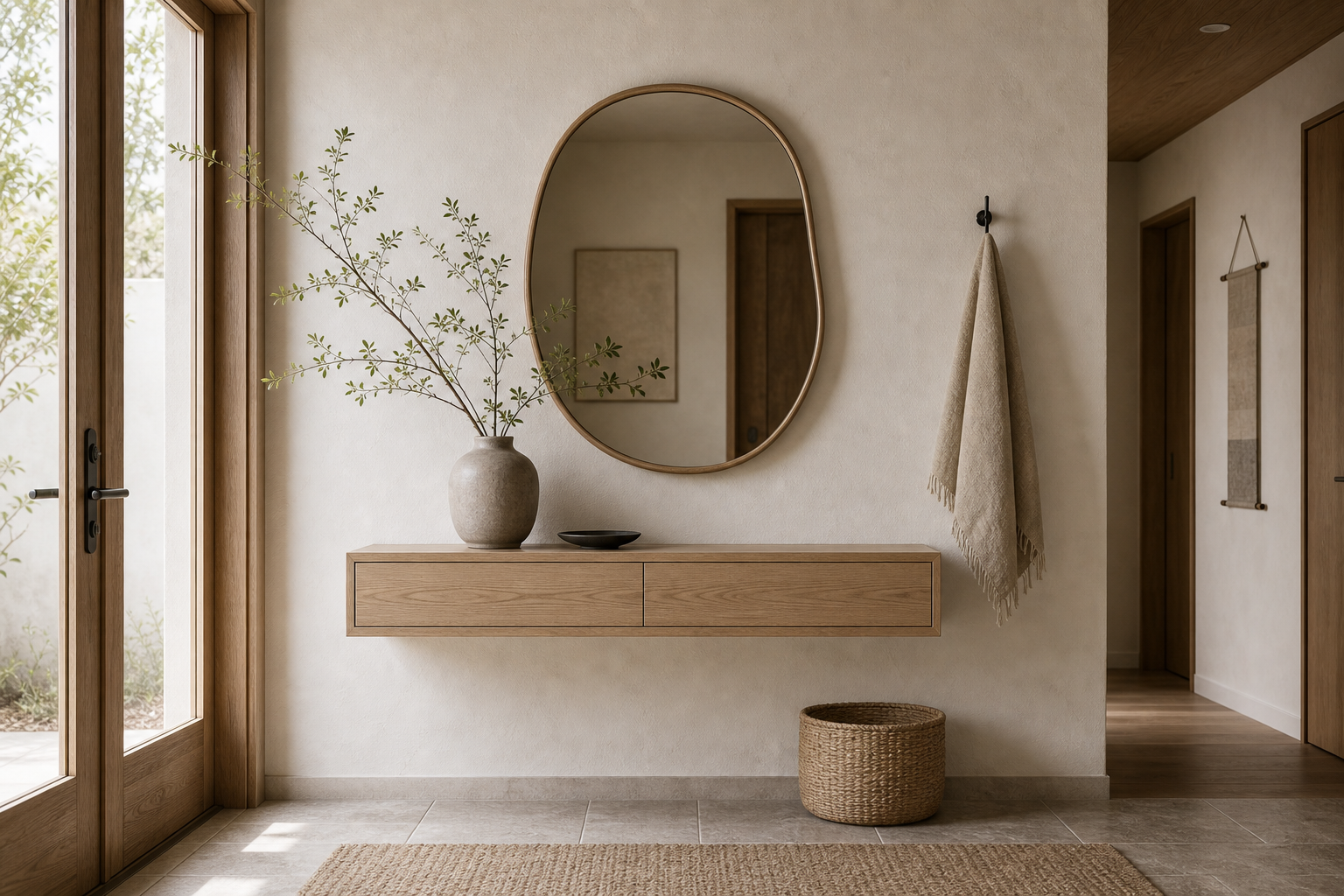

This entryway gains function from a surface that barely intrudes into the passage. The floating timber-toned console is a shallow horizontal ledge with no visible legs, aligned beneath a large round mirror and kept clear except for a branch vessel and one dark tray. A glazed door brings daylight across the floor, making the gap below the console as important as the shelf itself. The composition feels calm because arrival space remains physically and visually open.
The Console Occupies Only a Shallow Wall Band
The console is centered on the wall and lifted above the floor, making it the main practical gesture in the entry. Because it floats, the stone floor remains visible below it. That open space keeps the small area from feeling crowded.
The ledge begins near the door frame and stops before the side opening, giving it clear limits within the pale wall. Its thickness is sufficient to register as joinery but not so deep that it resembles a suspended cabinet. This proportion preserves the narrow threshold.
The oval mirror adds height above the long horizontal console. Its rounded shape keeps the entry from feeling too linear, and the wood frame connects back to the console and door trim.
Floorboards and the low base line remain visible from the door through to the hall, so the eye does not stop at furniture legs. The uninterrupted strip also makes cleaning access and daily movement easier to understand without assuming any concealed storage.
A Round Mirror Breaks the Horizontal Datum
Only a ceramic vase and small tray sit on the console. That restraint is what makes the wall feel Japandi. The surface is styled, but it still looks ready for daily use.
The mirror is wider than the vase but narrower than the console, creating a useful stepped hierarchy. Its curve answers the rounded stool and vessel while preventing the long timber line from becoming the only geometry on the wall.
One Branch Vessel Sets the Vertical Accent
The branch arrangement brings height and movement to the left side of the console. Its organic shape contrasts with the clean drawer fronts, making the wall feel alive without adding clutter.
The Woven Stool Stays Outside the Route
The hook and hanging textile add a useful secondary moment to the right of the mirror. They also prevent the console from carrying every entry function, which helps the wall stay balanced.
A small woven cylinder sits near the opposite wall rather than directly beneath the ledge. That offset leaves the central turn clear and gives the softer texture its own space. It can be read as a perch or basket, but the image does not establish an internal function.
The woven basket fills the lower area without attaching another cabinet to the wall. Its texture warms the stone floor and gives the floating console a grounded companion.
Warm and Dark Notes Are Carefully Limited
Light from the glass door washes across the plaster wall and console, making the simple materials feel intentional. The daylight also creates a shadow under the floating piece, which makes its suspended quality easier to see.
Keeping an Entry Surface Useful but Uncrowded
Start with a narrow wood console mounted to the wall so shoes, baskets or a rug can sit below without obstruction. Then add a mirror for height, one vessel for softness and one basket for texture. The entry should feel edited, not empty.
A storage-dense alternative appears in this modern organic entryway built-in study. The present hall makes a stronger case for restraint, providing one landing surface and mirror while keeping the arrival route completely legible.
Color is confined to warm timber, pale plaster, black outlines, and the muted green of branches outside and in the vessel. The dark mirror rim relates to door hardware without becoming a broad graphic panel. Meanwhile, the console's warm face mediates between the pale wall and floor. This small palette works because every tone is attached to a visible function or material edge; no accent color has been introduced merely to animate an already balanced arrival composition.
The branch canopy rises partly into the mirror area, creating depth between object, reflection, and wall. Because the vessel sits near one end, most of the console remains available as an actual landing surface.