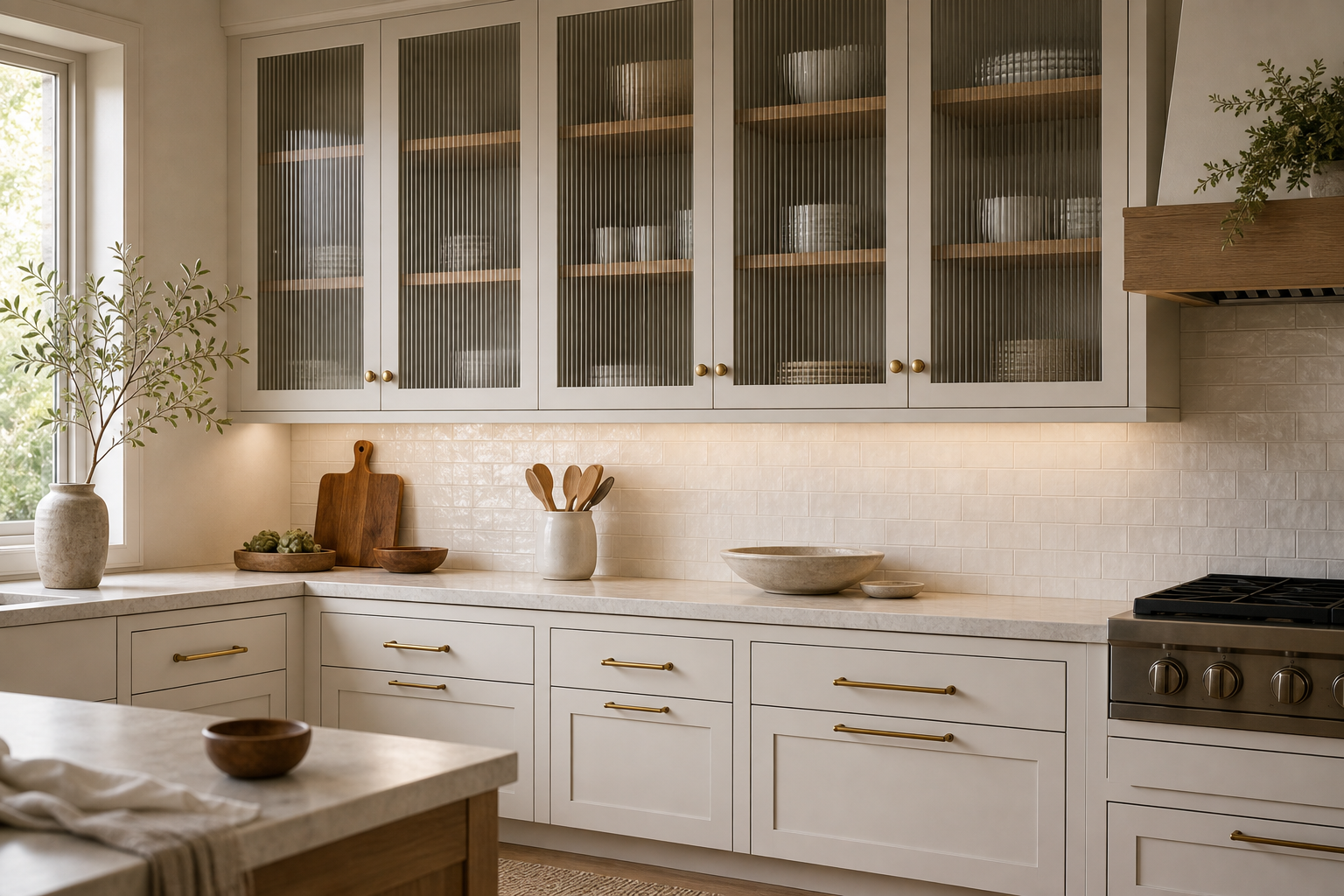

The upper cabinets carry the character of this kitchen through surface rather than color. Reeded glass runs across a long bank of framed doors, admitting light and softened outlines while obscuring the exact contents. Below, pale tile and flat work surfaces calm the vertical rhythm. A timber-toned hood at the right gives the wall a stronger end point, preventing the glass run from reading as an indefinite decorative band.
Reeded Glass Animates the Upper Run
The long upper run is the first design decision the eye registers because the vertical ribbing repeats across several doors. That repetition gives the wall movement, but the glass still reads soft. You can see dishes and shelves behind it, yet the fluting prevents the storage from looking too exposed.
The doors repeat at equal widths across the main wall, making the ribbed surface feel architectural rather than ornamental. Solid frames around each panel establish a larger grid, while the finer glass lines provide a second, more delicate scale inside it.
Solid upper doors across this much wall could have made the kitchen feel heavier. The ribbed glass breaks that mass without turning the storage into open shelving. This is the practical advantage of the material. It suggests depth, hides small visual clutter and lets the cabinet run feel more refined.
Dishes and shelf lines remain visible as muted blocks but their small edges are blurred. This is the functional distinction from clear glazing: storage contributes depth and brightness without requiring every object to become part of a sharply focused display.
The warm-metal knobs and drawer pulls add warmth against the painted cabinetry and pale counter. They also create small points of shine below the ribbed glass. Because the hardware is slim and consistent, it sharpens the cabinetry without competing with the glass texture.
Warm-Metal Hardware Adds Small Highlights
The warm white tile backsplash has a subtle handmade quality, but it does not overwhelm the upper cabinets. Its horizontal grout lines contrast gently with the vertical glass ribs. That quiet tension gives the wall more depth than a flat painted backsplash would.
Small knobs on the upper doors and slim pulls below share one warm-metal tone. Their spacing follows the cabinet divisions, producing measured points of reflection that never overpower the glass. Exact alloy and finish cannot be verified from the image.
Pale Tile Separates Upper and Lower Storage
The wood range hood prevents the kitchen from becoming too pale and delicate. It adds a stronger natural note at the right side of the composition, balancing the lighter glass doors and the cream cabinetry with a warmer architectural block.
The pale counter gives the lower half of the kitchen a clean working plane. That restraint matters because the upper cabinets already carry the detailed surface. A busier countertop pattern would make the glass, tile and hardware compete for attention.
The timber-toned hood projects beyond the pale wall at the far right and introduces a broad opaque volume after the transparent cabinet run. Its simple form balances the tall window frame at the opposite side and gives the elevation a definite finish.
Side Daylight Reveals the Vertical Relief
Daylight from the left window catches the ribbed panels and makes the vertical texture more apparent. The glass works especially well in this light because it reflects softly rather than acting like a flat mirror. That keeps the wall elegant instead of glossy.
Using Textured Glass Without Losing Kitchen Calm
Use reeded glass where the cabinet wall will be seen most often, such as the main upper run above the counter. Keep the interior shelves neat, choose hardware with a slim profile and pair the glass with a simple tile field. The idea is to create gentle depth, not a display case that demands perfection.
The painted cabinetry in this coastal kitchen cabinet study creates identity through color. This transitional kitchen instead uses filtered visibility, relying on reeded panels, restrained hardware, and one timber-toned hood for variation.
The counter remains broadly open between the sink and range, with cutting boards, bowls, and utensils gathered into small groups. This prevents the lower work line from competing with the detailed glazing above. The side window introduces the strongest daylight at the left, so ribbing becomes progressively subtler toward the hood. That change keeps a long repeated cabinet run from feeling mechanically uniform.