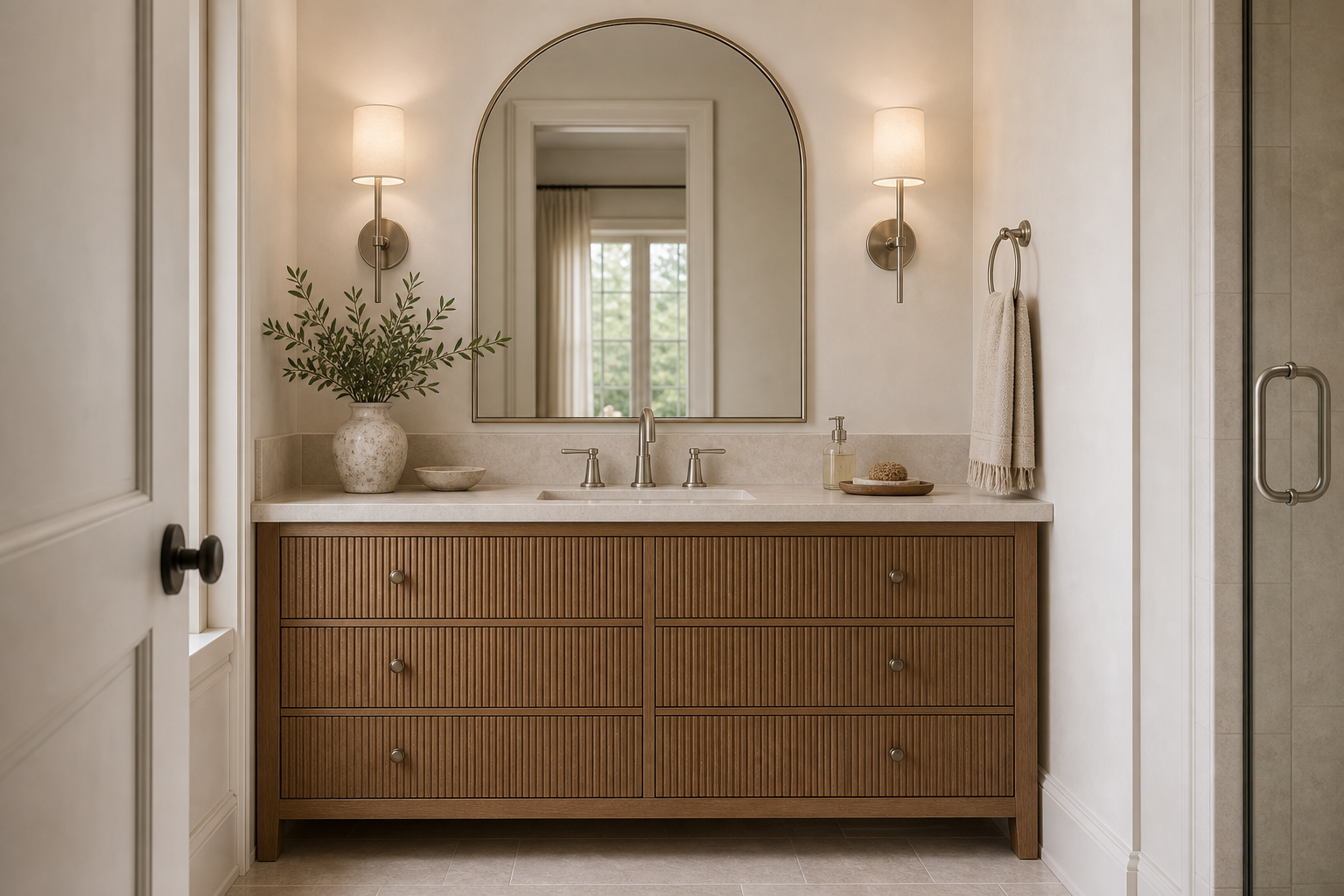

Fine vertical fluting gives this broad vanity detail without turning six drawer fronts into a busy cabinet grid. The timber-toned base stretches between two walls beneath a pale counter and centered arched mirror. Paired shaded sconces create a balanced upper composition, while a towel ring and visible shower edge acknowledge the room's daily functions. The transitional character comes from combining traditional symmetry with cleaner furniture lines and restrained surface variation.
Fluted Drawer Fronts Give the Vanity a Fine Rhythm
The vanity front is covered in vertical fluting, making it the strongest tactile element in the bathroom. The texture catches light and gives the wood depth. Because the rest of the wall stays quiet, the vanity can carry the main design interest.
The grooves run continuously across each drawer face but stop at the framing rails, allowing individual fronts to remain easy to identify. Small round knobs punctuate the pattern at wide intervals rather than adding another long line over the texture.
The arched mirror balances the vertical grooves with a softer upper curve. Its shape keeps the vanity wall from feeling too rigid. The slim metal frame adds definition without overwhelming the wood.
The cabinet nearly fills the available recess and stands on short legs that reveal a narrow floor strip. This shadow keeps a substantial storage volume from appearing fused to the floor and gives the vanity a furniture-like termination.
The Arched Mirror Softens the Rectangular Joinery
The two sconces flank the mirror evenly, giving the vanity wall a formal balance. Their warm light highlights the plaster and counter. The fixture scale is restrained, so the lighting supports the vanity rather than becoming the main feature.
The mirror rises into a soft arch but retains straight lower sides aligned with the basin. Its fine warm-metal edge separates reflection from the pale wall without becoming a second highly textured feature beside the fluted fronts.
Paired Sconces Hold the Upper Symmetry
The pale counter creates a calm horizontal surface above the fluted drawers. It gives the sink area a clean transition from wood to mirror. Its light tone also prevents the wood vanity from feeling too heavy.
A Pale Counter Separates Wall and Timber Tones
The brushed faucet, mirror edge and towel ring bring a refined finish to the wood vanity. They make the room feel polished without looking cold. This mix of wood texture and clean metal is central to the transitional mood.
The Centered Sink Protects Clear Side Space
The counter holds a vase, bowl, soap dispenser and small tray, but it still leaves the sink area clear. That restraint lets the fluted drawer fronts remain the room's primary detail.
Shower and Towel Zones Remain at the Perimeter
Choose a vanity where the fluting is visible across the drawer fronts, not hidden by oversized hardware. Pair it with a simple pale counter, an arched mirror and balanced sconces to keep the look refined.
Using Texture Without Losing Drawer Legibility
I would not add busy wallpaper to this vanity wall. The wood texture already gives enough movement. I would also avoid oversized knobs or pulls because they would interrupt the vertical grooves.
The longer floating composition in this scheduled organic-modern vanity study emphasizes uninterrupted horizontals. This bathroom keeps visible legs and uses vertical fluting to make a similarly broad cabinet feel lighter.
The branch vessel sits left of the sink and soap remains on the right, producing an easy asymmetry beneath the formal sconces. Both objects stay below mirror height and away from the central faucet. The shower door enters only at the far right edge, confirming that the vanity retains a distinct frontal zone.
The vanity's outer legs align near the wall returns and leave a consistent recessed toe area beneath the drawers. Pale rectangular floor tiles run toward the cabinet without a contrasting rug. This clear floor junction lets fluting remain the primary lower texture.
The sconces sit just outside the mirror width and remain above the branch arrangement and towel. Their pale shades create a soft halo on the plain wall while the cabinet carries the finer texture below. This division keeps fluting concentrated at furniture height instead of repeating it across every surface. The upper wall remains calm and visually generous.