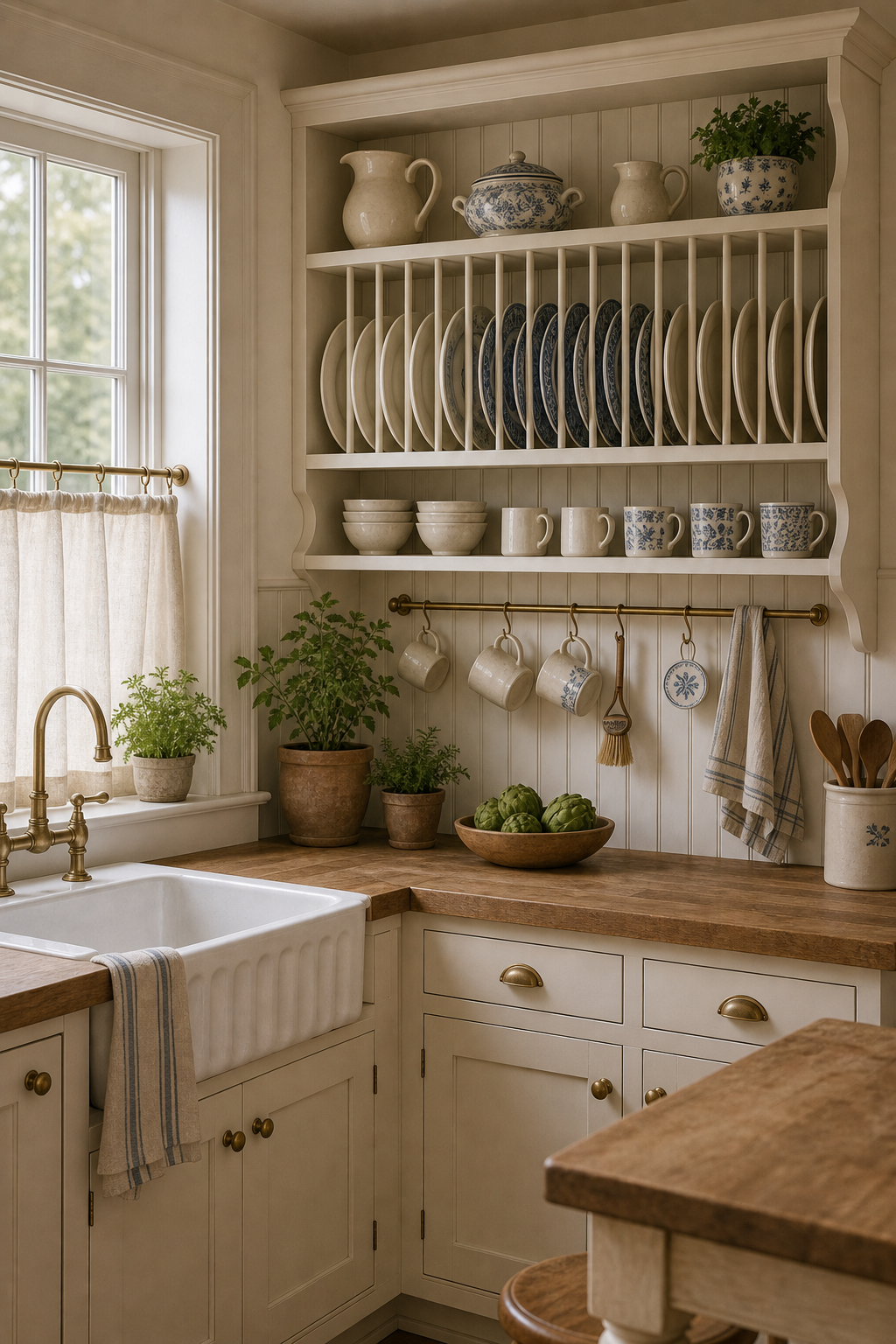

The wall earns its cottage character through visible daily storage rather than applied ornament. A built-in rack holds blue-and-white plates upright in repeated slots, with pitchers and bowls arranged on a shelf above. Vertical paneling forms a pale backdrop, while a warm-metal rail, apron-front sink, timber-toned counter, and side window connect display to actual kitchen work. Every decorative object also has a plausible place in use.
Vertical Plate Slots Create the Wall's Main Rhythm
The built-in plate rack dominates the wall because it gives dishes a precise place to stand upright. That vertical rhythm is much stronger than ordinary open shelving. The cream painted frame keeps the rack connected to the cabinetry, while the blue-and-white plates bring just enough pattern.
The plates are aligned edge-on and separated by consistent dividers, creating a finer cadence than ordinary stacking. Their repeated blue motifs provide pattern without requiring wallpaper or decorative tile behind the storage.
The beadboard backing gives the plate rack a cottage architectural layer. Its vertical grooves support the plate slots and make the wall feel crafted. Because the beadboard is painted the same warm cream as the rack, the dishes remain the most detailed element.
Vertical grooves continue behind shelves and slots in one pale color. The rustic brick cooking-wall study allows a rough surface to dominate; this wall uses quieter paneling so the dish collection supplies most of the detail.
The Upper Shelf Changes the Display Height
The warm-metal rail below the rack holds mugs, utensils and a towel close to the counter. It extends the storage function downward without needing another shelf. The warm-metal also relates to the bridge faucet, tying the sink and plate wall together.
A Rail Extends Storage Below the Rack
The deep apron-front sink sits directly beside the plate rack, which makes the open storage feel practical. Clean dishes, towels and mugs all belong near this work zone. The pale apron-front sink also repeats the white ceramic pieces in the rack.
The Apron-Front Sink Locates the Working Zone
The timber-toned counter warms the cream cabinetry and gives the wall a functional base. It keeps the plate rack from feeling too delicate. Its wood tone also connects to the cottage mood more naturally than a glossy counter would.
The deep sink sits directly below and beside the rack, making the proximity of plates, mugs, and towels believable. It also introduces one broad pale volume beneath many small dish edges, stabilizing the lower half of the elevation.
Most of the plates and mugs stay within a blue-and-white palette. That discipline is what lets the rack display many objects without becoming chaotic. The ceramic pitchers on the upper shelf add height, while the plates create the main repeated rhythm.
Blue-and-White Dishes Keep the Collection Coherent
Build the rack where dishes are actually used, ideally near the sink or prep counter. The storage should feel convenient, not merely decorative. Use a shared color palette for plates and mugs, and leave enough room between vertical dividers so each piece is easy to remove.
Building Visible Storage Around Everyday Reach
I would not add patterned tile behind this rack. The dishes and beadboard already create enough visual texture. I would also avoid mixing too many dish colors. The blue-and-white scheme is why the open storage feels edited.
Place a rack where clean dishes are handled, not on a remote display wall. Maintain enough spacing for each plate to be removed independently, keep the counter below usable, and resist filling every upper gap with pieces that are never reached.
The rack width corresponds closely with the counter and sink zone below, preventing visible dishes from spreading across unrelated work areas. A shallow cap shelf completes the upper edge and leaves a band of pale wall before the window trim.
Mugs hang below the plate slots, translating the vertical dish rhythm into a looser lower row. Their handles and the warm-metal rail add fine detail without hiding the panel grooves behind them.
Pitchers on the top shelf are fewer and larger than the plates, which keeps the display from repeating one scale from counter to ceiling. That hierarchy is why a sizable collection still looks deliberate rather than like overflow storage. Daylight from the nearby window keeps white dish edges distinct from the pale joinery and confirms that the rack remains visually open despite its capacity.