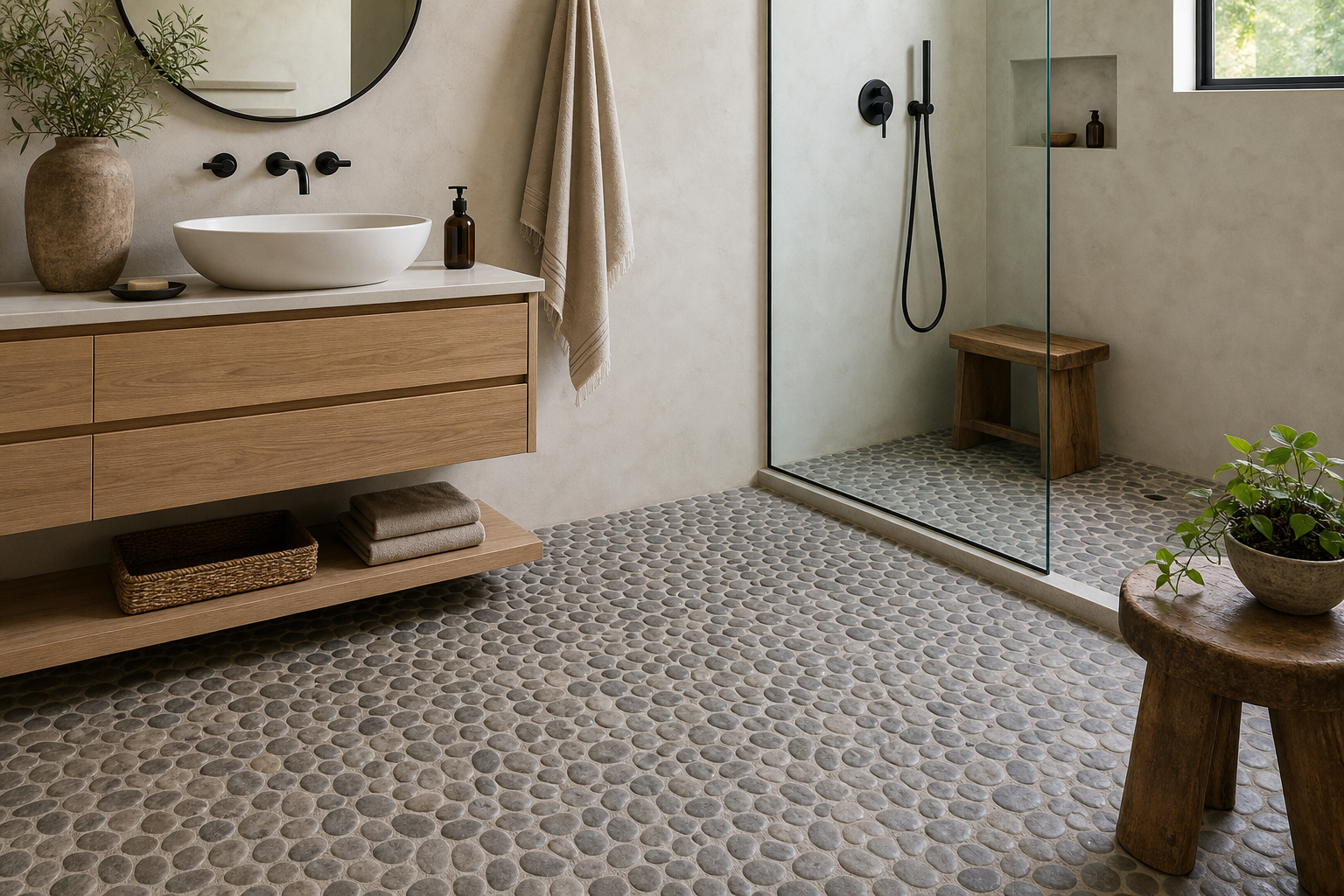

Rounded pebble tile covers the entire visible bathroom floor and continues into the open shower, making the ground plane the room's strongest material event. A floating timber-toned vanity, pale vessel basin, clear glass panel, dark fixtures, compact stool, towels, and greenery sit above that continuous texture. The design feels organic because irregular scale stays underfoot while walls and furniture remain broad and calm.
Pebble Tile Creates One Continuous Ground Plane
The floor occupies the entire foreground, so its rounded texture becomes the first material decision the viewer notices. It gives the bathroom an organic quality before any styling is considered. Because the rounded floor piecess vary in tone, the surface feels natural without needing a strong color contrast.
The small rounded pieces extend from the camera edge toward the shower and vanity with no visible material break. That continuity makes a modest room feel deeper.
The same pebble surface runs from the vanity area into the shower. That continuity makes the bathroom feel larger and more unified. The glass shower panel helps preserve that visual connection because it does not block the view of the floor.
The bathroom shower-tile guide uses a more regular surface. Here, irregular joints and varied gray tones create movement across both dry and wet zones.
Rounded Pieces Contrast With Straight Vanity Lines
The floating timber-toned vanity adds warmth above the gray pebble floor. Its straight drawer lines also contrast with the irregular rounded floor piecess. That contrast is important: the room needs both organic texture and clean modern geometry.
Pebble scale is much finer than the vanity drawers and glass panel. This difference keeps the floor active without forcing additional pattern onto the walls.
A Floating Vanity Exposes More of the Floor
The pale walls stay smooth and warm, giving the floor a quiet background. They prevent the bathroom from becoming a collage of textures. This is why the pebble tile feels deliberate rather than rustic by accident.
Clear Glass Protects the Long Material View
The black shower fixtures and wall-mounted faucet add crisp contrast against plaster, wood and rounded floor pieces. They give the soft materials a more contemporary edge. Because the black accents are limited, they define the room without overpowering the floor.
The transparent screen contributes only a narrow vertical edge, allowing the textured floor to remain visible through the shower zone. Drainage construction and slip performance cannot be judged from the photograph.
The small wood stool repeats the vanity warmth inside the shower zone. It also gives the wet area a practical surface without adding cabinetry. Its natural texture belongs with the pebble floor, but its blocky form keeps the composition grounded.
A Compact Stool Repeats the Warm Furniture Tone
Start by deciding whether the pebble tile will cover only the shower or the larger bathroom floor. A continuous surface creates the strongest organic effect. Keep surrounding materials calm: smooth plaster, simple wood, clear glass and limited dark fixtures are enough.
Using Dense Floor Texture With Quiet Walls
I would avoid a second busy floor border or patterned wall tile. The pebble surface already provides the main movement. I would also avoid glossy cabinetry because the bathroom's strength comes from matte, tactile materials.
Keep adjoining walls simple and repeat only a few dark fixture lines. Patterned wall tile or a second irregular surface would compete with the floor's already dense rhythm.
The vanity projects above the pebble field on an open base line, allowing rounded pieces to continue beneath it. This exposes more texture without adding floor objects.
A towel and small plant occupy the room edges and never interrupt the direct route between vanity and shower.
Pebble variation is strongest in the foreground, where low camera light reveals individual rounded outlines and darker joints. Toward the shower, the same field becomes visually quieter, creating depth without a change of tile pattern or color family.
The glass edge and shower controls occupy one side, leaving the central floor visually open. A compact stool remains beyond the main route and introduces a warmer solid form without concealing the continuous pebble surface beneath it.
The vanity front stays visually plain beside the animated floor. That contrast is important: the rounded pieces provide movement, while the long horizontal cabinet and counter prevent the compact room from feeling restless.