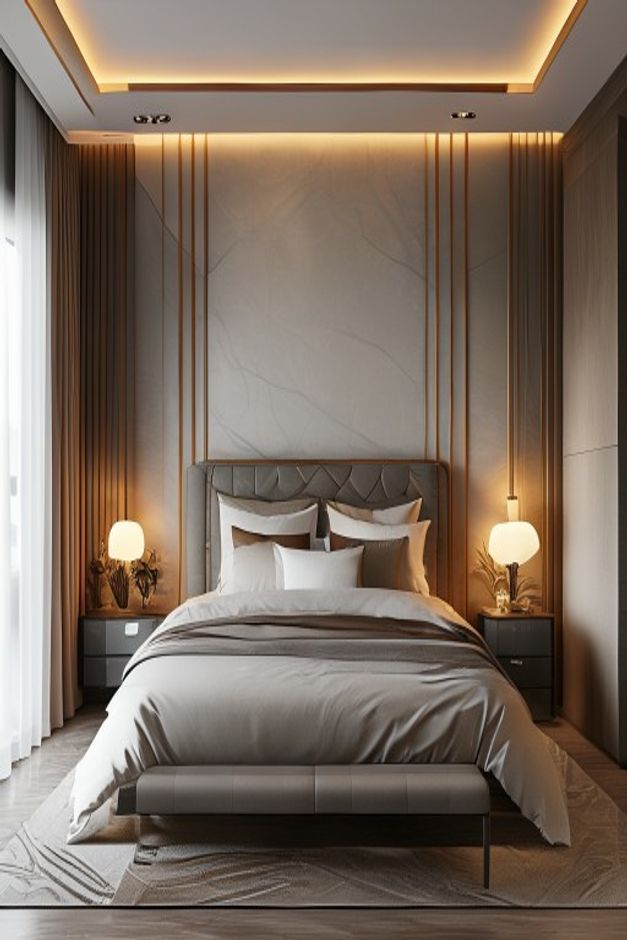
This bedroom presents a masterclass in modern luxury, offering a compelling study of how light and high-contrast materials can redefine the intimacy of a sleeping space. By focusing on the interplay between stone surfaces and metallic geometry, the design moves beyond mere decoration to create an environment that feels both expansive and deeply grounded. It serves as a blueprint for homeowners looking to marry the opulence of Art Deco influences with the clean, restrained lines of contemporary interior architecture.
Understanding the success of this room requires looking past the surface to the fundamental layout. The symmetry established by the centered bed, flanked by minimalist bedside tables, provides a stable anchor for the more dramatic vertical elements. This balance allows the wall treatment to serve as the primary architectural statement without overwhelming the room’s primary function as a place of rest. It is a rare example of how bold aesthetic choices can be tempered through disciplined spatial planning.
The Architectural Role of Illuminated Feature Walls
The feature wall serves as the structural heartbeat of the bedroom, utilizing integrated lighting to dissolve the boundary between solid architecture and ambient atmosphere. By embedding light sources directly into the marble panels, the design creates a soft, diffused glow that emphasizes the depth and natural variation of the stone. This technique avoids the harshness of direct overhead lighting, instead opting for a layered approach that invites the eye to explore the texture of the wall itself.
Beyond the visual appeal, this illuminated surface acts as a spatial divider that defines the sleeping zone within the larger room volume. The vertical orientation of the gold metal slats provides a rhythmic contrast to the horizontal expanse of the marble, effectively drawing the eye upward and enhancing the perceived height of the ceiling. This verticality is essential for maintaining a sense of grandeur, ensuring that the heavy materials do not make the room feel claustrophobic or overly enclosed.
Symmetry and the Art of Balanced Furniture Placement
Symmetry remains the most effective tool for achieving a sense of calm in luxury bedroom design. By centering the upholstered bed against the illuminated marble wall, the room establishes a clear axis that dictates the location of every other element. This intentional alignment ensures that the bedside tables and lighting fixtures act as extensions of the wall’s design language rather than afterthoughts, creating a cohesive visual narrative.
The choice of minimalist dark grey bedside tables provides a necessary visual weight that grounds the ethereal glow of the wall. Because the headboard is upholstered in a soft, geometric pattern, the furniture avoids the sterility often found in modern spaces. This balance between the soft fabric of the bed and the hard, reflective surfaces of the wall panels creates a tactile dialogue that is essential for a bedroom environment, proving that luxury is as much about touch as it is about sight.
Integrating Metallic Accents into Modern Surfaces
Gold accents, when applied with restraint, elevate the architectural character of a room without descending into excess. In this space, the brushed gold metal trim serves to frame the marble sections, acting as a structural guide that directs the viewer’s gaze across the wall. This metallic integration is not merely decorative; it functions as a way to delineate the transition between different material planes, providing a crisp edge that highlights the quality of the craftsmanship.
The integration of these gold elements requires a careful understanding of how light interacts with reflective surfaces. By placing the vertical metal slats adjacent to the illuminated marble, the design ensures that the gold catches the light, creating subtle highlights that shift throughout the day. This dynamic interaction keeps the wall from feeling static, allowing the bedroom to change its character based on the time of day and the intensity of the artificial lighting used.
The Influence of Art Deco Geometry in Contemporary Spaces
While the room feels undeniably modern, the influence of Art Deco is evident in the geometric tufting of the headboard and the rhythmic repetition of the wall panels. This historical nod provides a sense of timelessness that prevents the room from feeling like a fleeting trend. The use of vertical lines, in particular, pays homage to the skyscraper-inspired motifs of the 1920s, reinterpreted here through a lens of contemporary minimalism and muted color palettes.
Applying these traditional motifs to a modern context allows for a richer, more layered aesthetic. The key is in the simplification of the forms; where an original Art Deco interior might have used ornate carvings or intricate inlays, this room opts for clean, straight edges and a monochromatic palette of taupe and warm grey. This restraint allows the underlying geometry to shine, providing a sophisticated backdrop that feels both nostalgic and forward-looking.
Layering Textiles for Tactile Comfort
A bedroom’s success is often determined by the quality of its textiles, which must work to soften the inherent hardness of marble and metal. The layered bedding, featuring a variety of textures and decorative pillows, creates a welcoming contrast to the rigid structure of the headboard wall. By introducing fabric at the center of the room, the design ensures that the most frequently touched surfaces remain soft and inviting, reinforcing the room’s primary purpose as a sanctuary.
The sheer floor-to-ceiling curtains further contribute to this softness, acting as a translucent filter for natural light. These curtains provide a fluid, organic movement that counters the static nature of the stone wall, adding a layer of depth to the windows. When combined with the upholstered bench at the foot of the bed, these fabric elements create a cohesive loop of comfort that ties the entire room together, ensuring that the luxury remains accessible and functional.
Lighting Strategies for Ambient and Task Needs
Lighting in this bedroom is treated as a structural element rather than a secondary utility. The combination of recessed cove ceiling lighting and vertical linear wall lights allows for a highly customizable atmosphere. The cove lighting provides a general wash of light that highlights the ceiling architecture, while the vertical wall accents serve to emphasize the texture of the marble panels, creating a dramatic shadow play that adds depth to the room.
On the bedside tables, the mushroom-style lamps offer a more intimate, localized light source that is perfect for evening reading. This multi-tiered approach ensures that the room can transition from a bright, functional space during the day to a moody, relaxing environment in the evening. By controlling the intensity and direction of the light, the design allows the occupant to curate their own experience of the space, highlighting the versatility of the architectural choices.
The Role of Color in Defining Modern Luxury
The color palette of taupe, warm grey, gold, and white is carefully curated to evoke a sense of quiet sophistication. Taupe and warm grey provide a neutral foundation that is far more complex than standard white, offering a depth that changes with the light. These tones allow the gold accents to pop without appearing garish, creating a harmonious balance that feels both expensive and deeply comfortable.
Using these muted tones also helps to unify the different materials used in the room. Whether it is the fabric of the headboard or the stone of the wall, the consistency in the color story ensures that no single element fights for attention. This color discipline is a hallmark of successful upholstered headboards and vertical paneling in warm neutral bedrooms, where the goal is to create a cohesive envelope that envelops the occupant in a sense of calm.
Architectural Lessons for the Homeowner
For those looking to replicate this aesthetic, the most important lesson is the value of intentionality. Every piece of furniture, from the minimalist bedside tables to the upholstered bench, has been chosen to support the architectural vision of the wall. Homeowners should focus on creating a single, strong feature rather than trying to make every corner of the room a focal point. This restraint is what differentiates a cluttered space from a curated one.
Furthermore, consider how light can be used to elevate basic materials. You do not need the most expensive stone to create a luxury feel; you simply need the right lighting to emphasize the texture and form of the surfaces you choose. By investing in quality materials and thinking about how they interact with the room’s lighting, you can transform even a simple bedroom into a space that feels like a high-end retreat. Ultimately, the success of this design lies in its ability to balance bold architectural statements with the fundamental need for comfort and rest.
How can I incorporate marble into a bedroom without it feeling cold?
Pair marble with warm-toned textiles, such as upholstered headboards or plush bedding, and use integrated warm-spectrum lighting to soften the stone’s natural coolness.
What is the best way to use gold accents in a modern bedroom?
Use gold for structural elements like trim, wall slats, or lighting fixtures to provide a refined, metallic highlight that complements neutral tones without overwhelming the space.
Why is symmetry so important in luxury bedroom design?
Symmetry creates a sense of order and balance, which is essential for relaxation and provides a stable framework for highlighting architectural features like a feature wall.