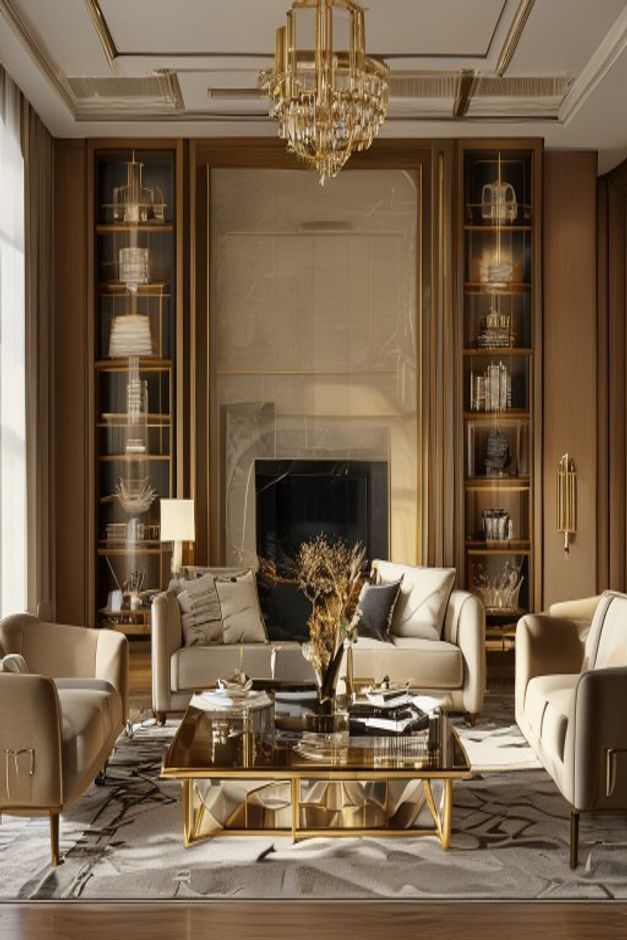
The room demonstrates how period-inspired geometry can harmonize with contemporary comfort. By anchoring the space around a central fireplace and integrated shelving, the design achieves a sense of architectural permanence that is often missing in modern residential layouts. The room succeeds because it avoids the cliches of the style, opting instead for a restrained, sophisticated approach that prioritizes tactile quality and light-reflective surfaces over mere ornamentation.
The interplay between the heavy, structured built-in units and the soft, inviting nature of the upholstered seating creates a deliberate tension. This balance is essential for any homeowner looking to translate historic glamour into a functional, livable space. By examining how these elements interact, we can uncover the underlying principles of proportion and materiality that make this specific arrangement so effective for high-end residential interiors.
The Role of Symmetry in Art Deco Spatial Planning
Symmetry acts as the primary organizing force in this space, dictating the placement of every piece of furniture to foster a sense of calm and order. The fireplace, flanked by identical floor-to-ceiling shelving units, provides a rigid axis that forces the eye toward the center of the room. This architectural choice is not merely aesthetic; it establishes a clear hierarchy of space that makes the room feel larger and more intentional than a more casual, asymmetrical layout might allow.
When planning a similar setup, one must consider the impact of fixed architectural elements on the overall flow of movement. By aligning the seating directly with the fireplace, the design encourages a formal engagement with the room’s core features. This approach effectively eliminates wasted space and ensures that every chair and sofa serves a specific purpose in the broader layout, mirroring the precision found in Modern Organic Living Room Built-In Shelving Ideas.
Selecting Upholstery for a Sophisticated Neutral Palette
The choice of cream fabric for the primary sofas and armchairs is a calculated decision to introduce softness against the harder, reflective surfaces of the room. Cream provides a neutral, luminous base that prevents the darker wood paneling and metallic accents from feeling overly heavy or oppressive. This choice of upholstery is particularly effective in an Art Deco context, where the goal is to balance the inherent drama of the style with a sense of approachable luxury.
Texture plays a significant role here, as the fabric choice adds a layer of depth that prevents the room from appearing flat or one-dimensional. By selecting high-quality, durable upholstery that maintains a clean profile, the design ensures that the furniture remains the centerpiece without overwhelming the surrounding architecture. This approach to seating is a vital lesson for those exploring Traditional Small Living Room Seating Layout Ideas where space constraints require a balance between comfort and visual lightness.
Integrating Metallic Accents with Glass Surfaces
The inclusion of a gold-toned coffee table with a glass top serves as a bridge between the plush upholstery and the more rigid, structural elements of the room. Metal, when used in a polished finish, acts as a reflective agent that bounces light across the floor, while the glass top maintains an open, airy feel. This combination is a staple of the Art Deco aesthetic, providing a necessary injection of glamour that does not obstruct the visual path through the room.
When incorporating such pieces, it is important to consider the scale of the furniture relative to the surrounding area. A coffee table that is too small will fail to anchor the seating group, while one that is too large can disrupt the movement around the room. In this instance, the metallic frame picks up the warm tones of the wood paneling, creating a cohesive dialogue between the furniture and the room’s permanent fixtures.
The Impact of Integrated Lighting on Architectural Detail
Lighting in this room is treated as an architectural feature rather than a simple utility, with tiered crystal and gold chandeliers providing a grand sense of scale. The integration of lighting within the shelving units serves to highlight the curated objects on display, drawing the eye vertically and emphasizing the height of the room. This multi-layered approach ensures that the space remains functional and inviting regardless of the time of day.
By utilizing both overhead fixtures and task-oriented shelf lighting, the design creates a dynamic environment that can shift from bright and airy to intimate and moody. This versatility is crucial for living rooms that serve multiple functions, from hosting guests to quiet evening relaxation. The use of warm-toned light sources complements the cream upholstery, enhancing the overall sense of warmth and comfort within the space.
Curating Shelving for Visual Harmony
The built-in shelving units do more than provide storage; they act as a gallery space that reflects the personality of the room. The curation of objects on these shelves is sparse and intentional, preventing the clutter that often diminishes the impact of a well-designed room. By leaving ample negative space, the shelving becomes a structural element that contributes to the room’s overall sense of architectural rigor.
When styling such units, it is helpful to group items by color, shape, or material to maintain a cohesive narrative. The objects chosen here echo the gold and wood tones found elsewhere, reinforcing the color palette without being overly repetitive. This careful curation is a reminder that the items we choose to display are as important as the furniture we choose to place, as they define the room’s character and provide a sense of history.
Using Patterned Rugs to Define Seating Zones
A patterned area rug serves as the foundation for the seating group, grounding the cream furniture and providing a visual anchor for the arrangement. The pattern is subtle enough not to clash with the architectural lines of the fireplace or the shelving, yet distinct enough to define the boundaries of the living area. This is a common technique for creating a sense of intimacy in larger rooms, as it visually pulls the furniture together into a unified cluster.
Selecting a rug that complements the existing color scheme is essential for maintaining the room’s overall sense of balance. By incorporating colors that appear elsewhere—such as the browns of the wood or the creams of the upholstery—the rug acts as a unifying thread that ties the entire room together. It is a subtle but powerful tool for defining the space and adding an extra layer of comfort underfoot.
The Importance of Material Contrast in Design
The room succeeds because of the deliberate juxtaposition of materials, ranging from the smooth, cool touch of stone or marble at the fireplace to the warmth of wood paneling. These textures create a sensory experience that goes beyond the visual, making the room feel more substantial and thoughtfully designed. The contrast between the hard, fixed surfaces and the soft, flexible upholstery is what gives the room its unique character.
Understanding how different materials interact is key to creating a space that feels both balanced and interesting. For those looking to add natural elements to their home, learning how to integrate materials like wood or stone can be a transformative experience, as seen in The Art of Balance: Integrating Live-Edge Wood into Warm Neutral Living Rooms. By focusing on the interplay of these textures, one can create a room that feels both timeless and grounded.
Refining the Art Deco Aesthetic for Modern Living
Modernizing the Art Deco style requires a departure from the heavy, ornate details of the past in favor of cleaner lines and a more restrained palette. This room achieves this by stripping away the unnecessary, focusing instead on the fundamental principles of symmetry, quality materials, and light. The result is a space that feels luxurious but not dated, honoring the history of the style while meeting the demands of contemporary life.
Homeowners can learn from this approach by prioritizing quality over quantity and focusing on the architectural bones of their own homes. By investing in well-proportioned furniture and selecting a cohesive color palette, it is possible to create a room that feels both sophisticated and welcoming. This room serves as a reminder that the best designs are those that remain true to their core principles while allowing for personal expression and comfort.
FAQ
How can I achieve symmetry in a living room without a fireplace?
Use large-scale furniture pieces like matching bookcases or console tables on either side of a central focal point, such as a large window or a piece of art, to anchor the room.
What is the best way to keep cream upholstery looking clean?
Opt for performance fabrics that are specifically designed for high-traffic areas and consider incorporating washable throw blankets or pillows to protect the primary seating surfaces.
How do I choose the right metallic finish for an Art Deco space?
Gold or brass finishes are traditional for the style, but ensure the tone matches the warmth of your wood and wall colors to maintain a cohesive look throughout the room.
Styling the Coffee Table Without Losing Symmetry
Keep the coffee table arrangement low enough to preserve the view between the cream sofas. A shallow tray, one glass or metallic object, and a small stack of books are enough to echo the room’s Art Deco materials without filling every part of the surface.
Center the grouping on the seating axis, then introduce one slightly off-center object so the table feels composed rather than rigid. The surrounding upholstery and built-ins already provide strong symmetry, so the decor can remain restrained.