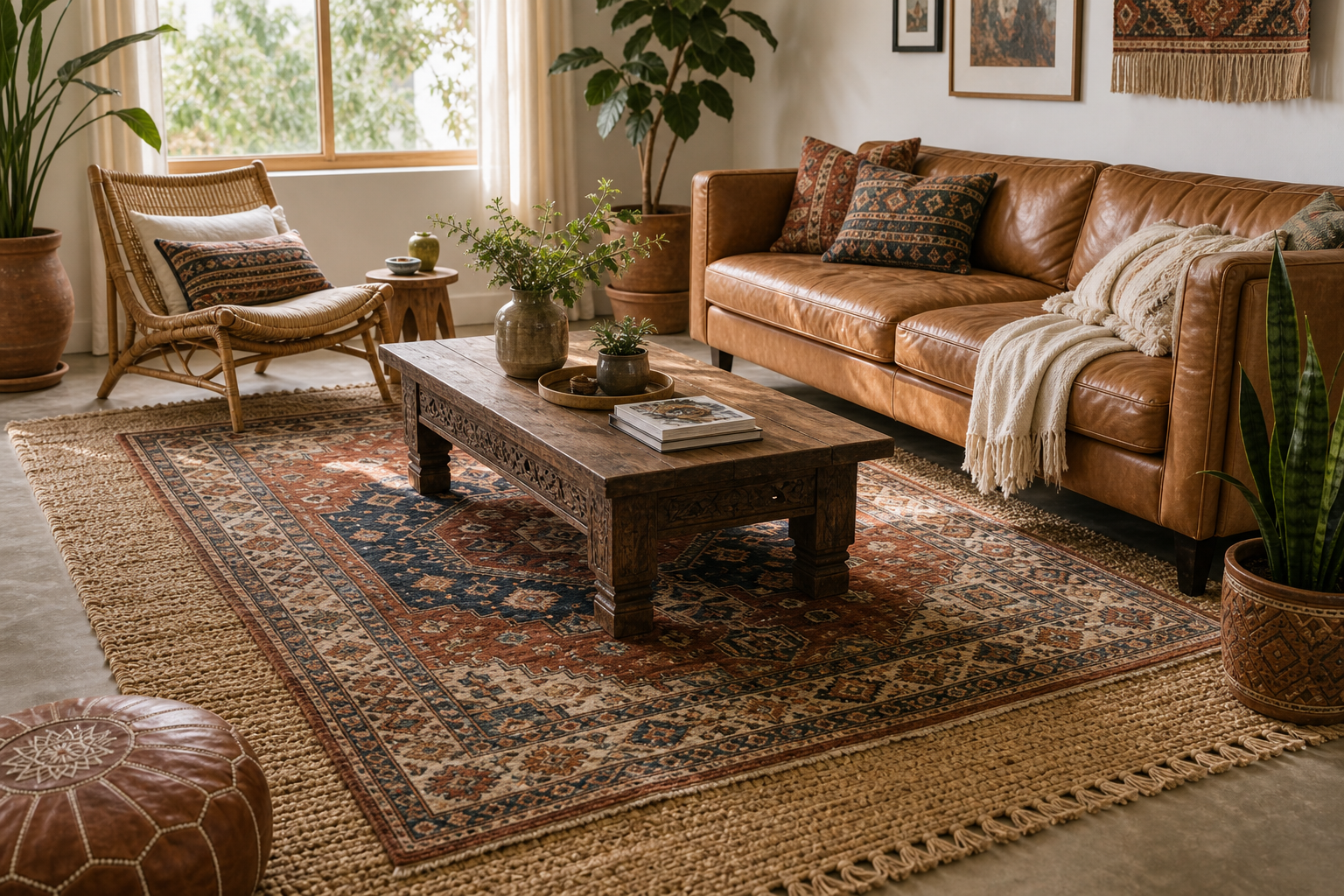

Two patterned rugs give this bohemian living room its identity before the furniture. Their overlapping borders establish a floor field visible around the low sofa, woven chair and wood table.
Pattern is balanced vertically by a perimeter of potted plants rather than by more textiles on the walls. The result keeps visual energy distributed across floor and foliage while circulation stays open.
The Rug Layers Create the Room’s Ground Plane
A broad patterned rug establishes the full seating boundary, while a second bordered textile overlaps it near the coffee table. Both edges remain visible, making the layered floor deliberate rather than accidental.
The patterns share warm muted values but differ in scale. That controlled contrast adds depth without creating two unrelated decorative fields beneath the furniture. The alternative seen in bohemian Living Room Round Pedestal Coffee Table clarifies how a change of focal point reshapes the same kind of decision.
Viewed from the entrance, wood coffee table should remain distinct from many potted plants.
Why the Coffee Table Belongs on the Darker Pattern
The wood coffee table sits over the darker central pattern, where its simple rectangular top provides a visual pause. Enough textile remains exposed on every side for the layered effect to stay legible.
Its footprint is smaller than the inner rug zone and does not conceal the border. This preserves practical reach from the sofa while keeping the floor composition intact. A different solution appears in modern Organic Living Room Built-In Shelving, useful for judging how much visual weight this feature should carry.
Check the composition at standing height: sunlit window must extend the view while second border rug keeps the usable area grounded.
Plants Extend the Bohemian Mood Vertically
Tall plants occupy the perimeter behind the low seating, carrying texture upward without adding another furniture mass. Their leaves echo the irregular rug motifs at a very different scale.
Pots remain outside the principal walking and seating area. Vertical greenery therefore enriches the bohemian character while the floor plan stays readable. The planning contrast with traditional Small Living Room Seating Layout is particularly helpful because its strongest line runs in another direction.
The position of second border rug should answer the edge of large patterned rug, not an arbitrary wall midpoint. Their alignment carries the room’s visual order.
The Sofa and Chair Keep the Seating Low
The sofa and woven chair remain low, exposing a broad band of wall and plant foliage above them. This compressed seating height keeps the many floor patterns from making the room feel vertically crowded.
Different upholstery textures distinguish the seats, but both stay within the same warm neutral range. The rugs therefore remain the principal source of pattern. Material emphasis shifts in modern Organic Living Room Brick Fireplace : A Study in Texture and Light, offering a distinct reference for the same scale question.
Use the line of many potted plants to position wood coffee table.
Sunlight Makes the Patterns Feel Softer
Sunlight enters from the large window and falls across both textile layers at an angle. Brighter areas reveal weave and border detail, while softer shadow prevents the repeated motifs from appearing flat.
The window edge is not blocked by tall furniture. Plants filter portions of the light without replacing the clear opening with a dense screen.
A final circulation check should follow the path from sunlit window toward warm sofa. No added furnishing should project into that route.
How to Layer Rugs Without Visual Noise
Choose one rug to establish the full seating footprint and a second to emphasize only the center. Their palettes should overlap, but their borders and weave need enough difference to justify the layering.
Stop before furniture hides every edge. Visible corners and bands are what allow a reader to understand that two intentional textiles, rather than one busy rug, are present.
The practical measure is the open edge around warm sofa.
Keep rug edges visible at several points around the seating group. Those exposed borders explain the layering more clearly than adding another pattern or decorative object. Use the larger textile to connect every seat and reserve the smaller one for the coffee-table center. The difference in footprint should remain obvious from the room entrance. Low seating protects that view across the textiles, while perimeter plants carry visual interest upward. This distribution prevents pattern, furniture and greenery from competing at the same height. Rotate the upper rug slightly only when its border remains clear beneath the table and outside the sofa’s front legs.
FAQ
Can two patterned rugs work together?
Two patterns can coexist when they share muted colors but differ in border scale and weave. Both textile edges need to remain visible for the layering to read clearly.
Should a coffee table sit fully on the rug?
The table should sit securely within the inner rug area without hiding its border. Here, exposed pattern around the wood base preserves the reason for using two layers.
How do plants affect a bohemian living room?
Plants move visual texture from floor level to the room perimeter. Keeping pots behind low seating balances the rugs while leaving conversation space and circulation open.