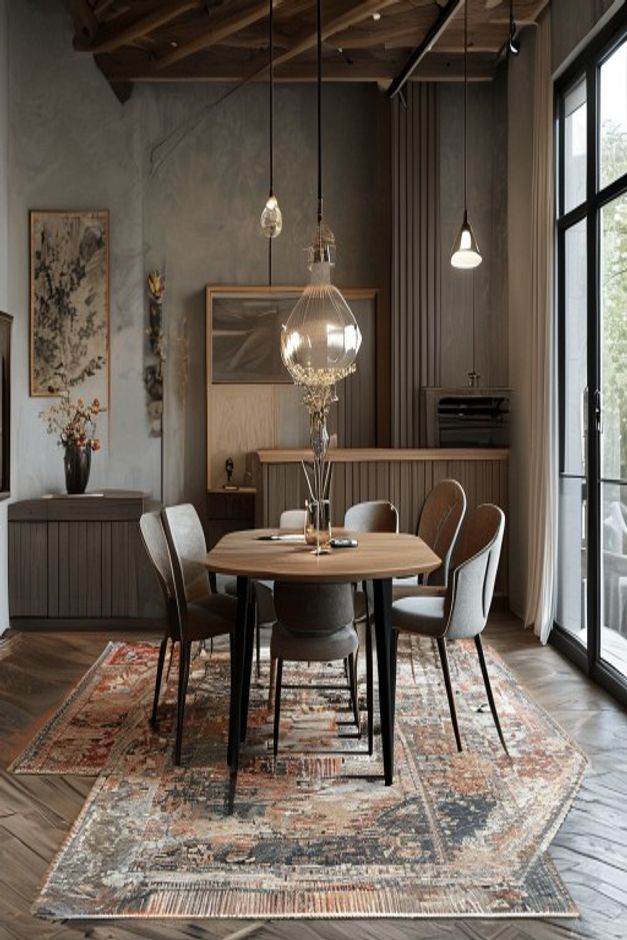

This dining room serves as a masterclass in balancing the inherent coldness of industrial aesthetics with the necessary warmth required for communal dining. By juxtaposing raw, concrete-effect wall finishes with the soft, organic grain of an oval wooden dining table, the space moves beyond a sterile warehouse look into something deeply livable and refined. The intentional layering of textures—from the herringbone wood flooring to the distressed area rug—creates a foundation that feels both grounded and intentional, making it an essential case study for those looking to elevate their own dining environments.
Understanding the architecture of this room requires looking past the individual components and observing how the light interacts with the surrounding surfaces. The cluster of modern glass pendant lights does not merely illuminate the space; it acts as a sculptural anchor that pulls the eye toward the center of the room. By analyzing how these specific elements—the metal-legged table, the curved upholstery, and the vertical wood paneling—interact, homeowners can learn to replicate this sophisticated balance in their own homes without sacrificing comfort for the sake of a rigid style.
The Art of Selecting an Oval Dining Table for Industrial Spaces
Choosing a dining table in an industrial setting often defaults to heavy, reclaimed timber, but this room demonstrates the power of a more refined approach. The oval wooden dining table introduces a necessary softness to the room, breaking up the harsh linear geometry typically associated with concrete walls and metal accents. Its curved silhouette encourages better flow within the room, ensuring that the heavy industrial backdrop does not overwhelm the primary gathering space.
The black metal legs of the table serve as a critical bridge between the light-toned wood surface and the darker elements of the room, such as the charcoal-toned accents. This material consistency is vital; it grounds the table within the industrial theme while maintaining a sense of sophistication. When selecting a table for your own home, consider how the base material echoes other hardware or structural features to ensure the furniture feels like an extension of the architecture rather than an afterthought.
Curating a Pendant Light Cluster as a Sculptural Element
In this dining room, the lighting setup functions as the primary visual anchor, moving away from a singular, static fixture toward a dynamic cluster of modern glass pendants. This approach allows for a more layered distribution of light, which is essential when working with darker, matte surfaces like concrete-effect walls. The warm bulbs tucked within these glass shades provide a necessary contrast to the cool grey tones, creating an inviting glow that softens the overall atmosphere during evening hours.
When designing a similar lighting arrangement, it is important to vary the heights of the individual pendants to create a sense of movement. This technique prevents the fixture from appearing too heavy or blocky, allowing the light to dance across the room’s various textures. For those interested in how lighting influences the perception of space, exploring Scandinavian Kitchen Island Design: Mastering Pendant Lighting and Natural Textures can provide further insight into how different materials react to artificial illumination.
Balancing Concrete-Effect Walls with Warm Wood Tones
The walls in this space utilize a concrete-effect finish to establish an authentic industrial foundation, yet they avoid feeling cold due to the strategic inclusion of vertical slatted wood paneling. This juxtaposition is key; the concrete provides the grit, while the wood introduces the warmth and acoustic softening required for a dining area. This dual-material approach prevents the room from feeling like an unfinished basement, instead framing the dining table as a curated interior feature.
Integrating wood paneling alongside masonry-style finishes adds a layer of depth that paint alone cannot achieve. The vertical orientation of the slats draws the eye upward, making the room feel more expansive despite the deep, moody color palette. By focusing on these tactile contrasts, you can create a space that feels both rugged and welcoming, proving that industrial design does not have to be synonymous with austerity.
The Role of Herringbone Flooring in Industrial Design
Herringbone flooring acts as a sophisticated counterpoint to the more rigid industrial elements, introducing a classic, patterned geometry that elevates the entire room. The rich tones of the wood floor provide a warm base that anchors the charcoal and grey elements, ensuring the room remains grounded. This choice of flooring pattern adds a sense of history and craftsmanship, which is often missing in purely modern or minimalist industrial spaces.
When working with patterned floors, it is essential to keep the surrounding furniture relatively clean in its design to avoid visual clutter. The low-profile sideboard and the simple lines of the dining chairs allow the floor to serve as a subtle, elegant backdrop rather than a distraction. This balance is crucial for maintaining a cohesive look, as seen in Parisian Dining Room Dining Chairs Ideas, where the relationship between floor and furniture is equally prioritized.
Selecting Upholstered Chairs for Comfort and Style
The upholstered dining chairs in this room are critical to the overall comfort of the space, offering a soft, tactile experience that contrasts with the hard surfaces of the table and walls. The curved backs of these chairs echo the shape of the oval table, creating a sense of harmony that makes the furniture feel like a unified set. By choosing upholstery in a neutral, muted tone, the chairs blend seamlessly into the room’s palette while providing the necessary support for long, lingering dinners.
When selecting seating for an industrial dining room, look for fabrics that can withstand daily use while maintaining a refined appearance. The combination of curved forms and soft textiles is the most effective way to counteract the rigid, boxy nature of industrial architecture. This approach ensures that your dining room remains a place of comfort and relaxation rather than just a display piece for industrial trends.
Integrating Sideboards for Functional Storage
A low-profile wooden sideboard serves as the perfect storage solution in this dining room, providing a place for serving dishes and decorative items without obstructing the room’s visual lines. Its placement against the concrete-effect wall highlights the contrast between the natural wood grain and the man-made finish. By keeping the sideboard low, the space above remains open for large-scale wall art, which helps to tie the room’s color palette together.
Functional storage is often overlooked in industrial design, yet it is essential for keeping the dining area uncluttered. A well-chosen sideboard can act as a secondary surface for lighting or floral arrangements, adding another layer of interest to the room. For those looking to integrate storage with ambient lighting, learning about Modern Organic Laundry Room: Mastering Wood Paneling and Ambient Lighting can offer inspiration on how to combine cabinetry with subtle, integrated light sources.
The Impact of Large-Scale Wall Art and Decor
The large abstract framed wall art in this room serves as a vital bridge between the different colors of the space, pulling together the charcoal, terracotta, and wood tones. By using art as a unifying element, the room feels cohesive rather than a collection of disparate industrial pieces. The placement of this art above the sideboard ensures that the eye is drawn around the room, creating a balanced visual experience.
In addition to wall art, the use of vertical sculptural decor and dried floral arrangements adds a layer of organic texture that softens the industrial edges. These small, intentional details are what transform a space from a generic room into a personalized home. When selecting decor, focus on items that introduce new textures or colors that are already present in the room’s foundation, ensuring a harmonious and sophisticated result.
Anchoring the Space with a Distressed Area Rug
A distressed area rug is the final piece of the puzzle, defining the dining area and providing a soft landing for the chairs. The faded pattern of the rug complements the industrial aesthetic, suggesting a sense of age and wear that fits perfectly with the concrete-effect walls. By anchoring the table and chairs, the rug creates a distinct zone within the open-plan layout, making the dining area feel intimate and contained.
Choosing the right rug size is paramount; it must be large enough to accommodate the chairs even when they are pulled out from the table. This prevents the room from feeling disjointed and ensures that the furniture feels purposefully arranged. The rug’s ability to bridge the gap between the herringbone flooring and the table legs is a testament to the power of layering in interior design.
How do I choose the right pendant height for an industrial dining table?
Pendants should generally hang between 30 and 36 inches above the tabletop to provide adequate illumination without obstructing sightlines. In a cluster arrangement, vary the heights slightly to create a more dynamic, sculptural effect that complements the table’s shape.
What is the best way to mix wood and concrete in a dining room?
Use wood for horizontal surfaces like tables and floors to introduce warmth, while reserving concrete-effect finishes for vertical surfaces like walls. This balance prevents the space from feeling too cold and ensures the industrial aesthetic remains approachable.
How can I make an industrial dining room feel more comfortable?
Incorporate soft textiles such as upholstered dining chairs and area rugs to counteract hard industrial materials. Adding organic elements like dried florals and warm-toned lighting will also help create a welcoming atmosphere that invites guests to linger.
Final Reflections on Industrial Dining Design
The success of this dining room lies in its refusal to lean too heavily into a single aesthetic. By carefully layering textures—wood, concrete, glass, and fabric—the design achieves a sophisticated balance that feels both modern and timeless. Homeowners can learn that industrial design is not about stripping a room of its personality, but rather about curating a collection of materials that speak to one another in a meaningful way. When you prioritize the relationship between your lighting, furniture, and wall finishes, you create a space that is as functional as it is beautiful, ultimately, a reflection of your own design sensibilities.