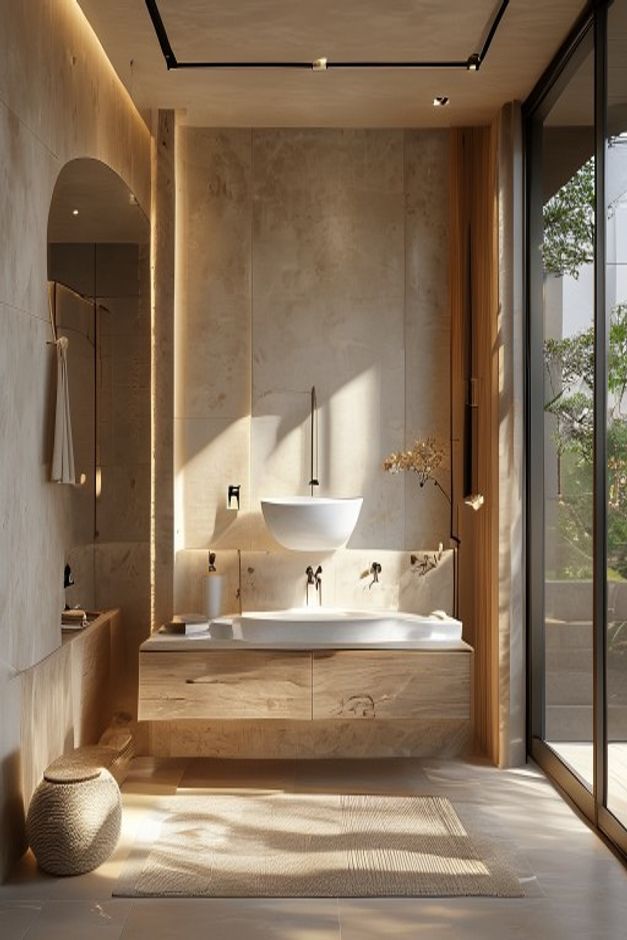
This bathroom shows how the intersection of Scandinavian functionality and Japanese minimalism creates a sanctuary of profound clarity. By prioritizing a restrained palette of beige, cream, and light wood, the space achieves a sense of architectural equilibrium that feels both grounded and expansive. It is an essential case study for those looking to understand how subtle shifts in texture and tone can elevate a functional room into a retreat of quiet luxury.
The deliberate choice of a floating vanity in a light oak or ash finish acts as the anchor for the entire composition. By lifting the cabinetry from the floor, the design emphasizes horizontal lines that draw the eye across the room, effectively expanding the perceived volume of the space. This approach to minimalist bathroom floating vanity and tiled wall design principles ensures that the heavy materials of the stone walls feel weightless, creating a sophisticated balance between permanence and movement.
The Role of Light Oak and Ash in Japandi Aesthetics
In the context of Japandi interiors, the selection of timber is not merely a decorative choice but a fundamental structural decision. Light oak or ash species provide a neutral, warm foundation that bridges the gap between the starkness of ceramic fixtures and the coolness of large-format stone tiling. These woods possess a tight, consistent grain that maintains a clean visual profile, preventing the room from feeling cluttered or overly busy while still introducing necessary organic warmth.
Using such light-toned timber for a dual-sink vanity allows for a seamless integration with the surrounding cream and beige surfaces. The wood acts as a tactile counterpoint to the matte white ceramic sinks, softening the transition between the vanity top and the wall treatment. By keeping the wood finish natural and matte, the design avoids artificial glare, ensuring that the material quality remains the primary focus of the viewer’s experience within the space.
Layering Lighting for Architectural Impact
Lighting in this environment is treated as an architectural material, used to define boundaries and highlight surfaces rather than simply illuminating the floor plan. The implementation of integrated LED strip accent lighting beneath the vanity creates a floating effect, reinforcing the lightness of the wood cabinetry. This hidden light source eliminates harsh shadows, providing a soft, diffused glow that enhances the texture of the floor and the base of the walls.
Recessed ceiling track lighting complements the LED strips by providing focused, adjustable illumination where it is most needed. This dual-layered strategy allows for a transition between high-intensity task lighting for daily routines and a more subdued, atmospheric setting for evening relaxation. By avoiding a single, central light source, the design maintains the integrity of the ceiling plane, allowing the room to feel taller and more open.
Symmetrical Vanity Arrangements and Spatial Flow
The symmetrical arrangement of the dual-sink vanity creates a sense of order that is central to the Japandi philosophy of intentional living. By mirroring the placement of the sinks and the drawers, the design establishes a rhythmic pattern that guides the user through the space with ease. This symmetry is not just aesthetic; it serves a practical purpose, providing distinct zones for two users without compromising the clean, minimalist lines of the vanity unit.
The floating nature of the unit is crucial here, as it maintains an uninterrupted view of the floor surface. This lack of visual obstruction allows the eye to travel from the entrance to the glass shower panel without encountering unnecessary barriers. Such spatial management is a hallmark of quiet luxury bathroom: mastering the floating vanity aesthetic, proving that even in a compact footprint, careful furniture placement can foster a sense of expansive serenity.
Integrating Natural Stone and Porcelain Surfaces
The choice of large-format stone or porcelain tile for the walls provides a seamless, grout-minimal canvas that allows the light wood of the vanity to stand out. Large tiles are instrumental in creating a sense of continuity, reducing the number of vertical lines that can break up the wall plane. This choice of material ensures that the bathroom feels like a singular, cohesive volume rather than a collection of disparate surfaces.
The beige and cream tones of these tiles work in tandem with the natural wood to create a monochromatic yet deeply layered environment. Because the tiles are matte, they absorb light rather than reflecting it, which contributes to the tranquil atmosphere of the room. This muted backdrop is essential for allowing the more decorative elements, such as the arched mirror and dried floral arrangements, to serve as points of visual interest without disrupting the overall calm.
The Importance of Mirror Geometry and Placement
The arched mirror serves as a vital geometric contrast to the strict horizontal lines of the vanity and the verticality of the tile walls. By introducing a curve into the space, the mirror softens the hard edges of the room, creating a more welcoming and human-centric environment. This choice of shape is particularly effective in a minimalist bathroom, where the lack of ornamental detail means that every object must carry its own weight in terms of form and proportion.
Positioning the mirror directly above the vanity ensures that it functions as a focal point for the user while reflecting the ambient light from the ceiling and the window. This reflection is key to making the room feel larger, as it brings the outside light deeper into the space. The mirror acts as a bridge between the functional tasks of the vanity and the aesthetic goals of the room, proving that utility and beauty are not mutually exclusive.
Textural Elements and Organic Accents
Beyond the primary fixtures, the inclusion of a woven textured stool and a floor mat introduces a layer of tactile complexity that is essential for preventing the room from feeling sterile. These items offer a different scale of texture compared to the smooth stone and wood, grounding the space in the reality of daily use. The woven fibers provide a subtle variation in color that complements the beige and light wood palette, adding depth without introducing new, clashing hues.
Dried floral arrangements provide a final, organic touch that reinforces the connection to nature inherent in Japandi design. These elements are chosen for their sculptural quality and muted color, fitting perfectly within the restrained aesthetic. By choosing decor that is understated and natural, the design maintains its focus on the architectural quality of the space, ensuring that the room remains a place of rest rather than a display of clutter.
Maximizing Natural Light in Modern Bathrooms
The presence of a floor-to-ceiling glass side panel is a transformative design choice that allows natural light to permeate the entire bathroom. This transparency is essential for the Japandi aesthetic, which emphasizes a strong connection between interior and exterior environments. By flooding the room with daylight, the glass panel highlights the natural grain of the oak or ash vanity, revealing the subtle variations in the wood that might otherwise be lost in artificial light.
When combined with the reflective properties of the mirror and the light-toned walls, the natural light creates a dynamic environment that changes throughout the day. This shifting quality of light prevents the space from feeling static, allowing the user to experience the room in different ways depending on the time. It is a testament to how quiet luxury bathroom design: the art of backlit mirrors and vessel sinks can be achieved through the simple, honest use of daylight and quality materials.
Cohesive Design Principles for Homeowners
The primary takeaway for homeowners is the power of restraint. By limiting the material palette to light wood, stone, and matte ceramic, one creates a foundation that is inherently relaxing and timeless. The success of this bathroom lies in the fact that every element, from the floating vanity to the recessed lighting, serves a specific purpose, leaving no room for superfluous decoration that might distract from the overall sense of peace.
How do I choose the right wood for a floating vanity?
Select light oak or ash for their neutral tones and consistent grain, which complement minimalist palettes while adding necessary warmth without visual clutter.
What lighting is best for a Japandi bathroom?
Combine hidden LED strips for soft, ambient floor-level glow with recessed ceiling track lighting to provide adjustable, functional illumination without breaking the ceiling plane.
Why use large-format tiles in a small bathroom?
Large-format tiles minimize grout lines, creating a seamless, expansive wall surface that enhances the feeling of space and allows the vanity to stand out.