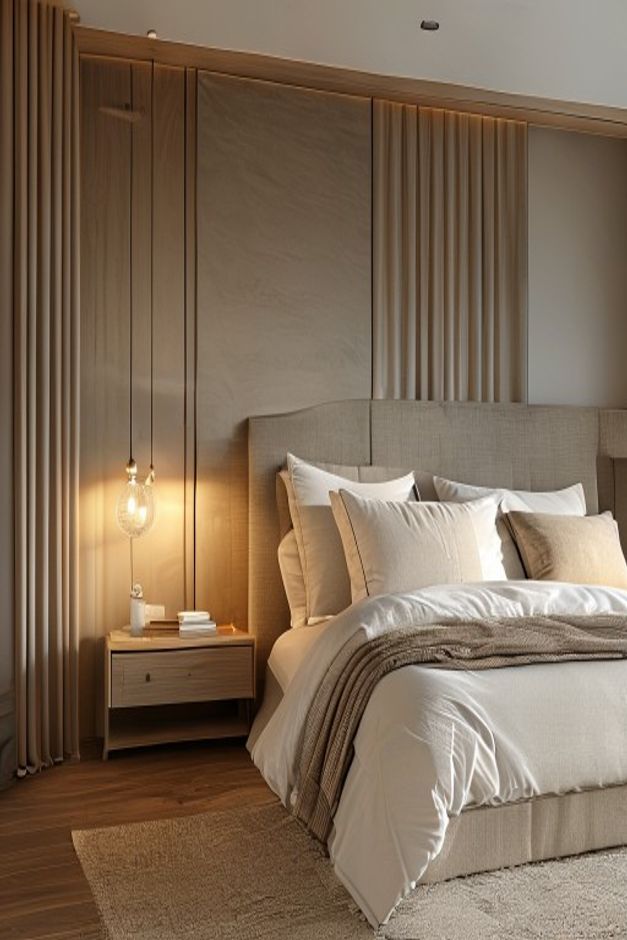

This bedroom presents a compelling study in restrained luxury, where the deliberate choice of a floating nightstand with a drawer serves as the anchor for a broader minimalist narrative. By stripping away visual clutter, the design forces an appreciation for texture, scale, and the interplay between light and shadow. It is a rare example of how architectural precision can redefine the domestic sanctuary, proving that the most impactful design choices are often those that prioritize negative space and deliberate, purposeful furniture placement.
The room succeeds because it avoids the typical pitfalls of modern minimalism, which often veer toward sterility. Instead, it leans into a warm, monochromatic palette that relies on the natural grain of wood and the softness of linen to create an atmosphere of profound calm. For those seeking to replicate this aesthetic, the lesson lies in the marriage of functional storage with a lightweight, gravity-defying silhouette. This approach not only maximizes floor space but also enhances the perceived volume of the room, making it an essential reference for contemporary residential interiors.
The Architectural Impact of Floating Furniture
Incorporating a floating nightstand with a drawer into a bedroom layout fundamentally alters the room’s proportions. By lifting the storage unit off the floor, the design creates an uninterrupted line of sight across the perimeter, which is a hallmark of high-end, minimalist architecture. This visual continuity allows the eye to travel freely, preventing the room from feeling segmented or crowded, even when multiple pieces of furniture are present.
Beyond the aesthetic gain, the functional utility of a drawer within a suspended unit is significant. It provides a discreet home for personal items that might otherwise clutter the surface, maintaining the clean, serene environment required for rest. The integration of such pieces requires careful mounting, ensuring the hardware remains invisible to preserve the illusion of a weightless, floating form that feels perfectly balanced against the surrounding wall treatments.
Mastering Symmetry in Bedroom Layouts
Symmetry remains the most effective tool for establishing order in a bedroom, and this space demonstrates its power through the precise alignment of the bed and its flanking nightstands. By centering the upholstered headboard against the wood-paneled feature wall, the design establishes a clear axis that organizes every other element in the room. This balanced approach creates a sense of stability and predictability, which are essential components of a restorative sleeping environment.
When implementing this level of symmetry, the consistency of the furniture is paramount. The matching floating nightstands act as bookends, mirroring each other to reinforce the central position of the bed. This deliberate repetition is not merely a stylistic preference; it is a structural decision that guides the occupant’s movement and focus, ensuring that the room feels intentional rather than haphazardly assembled. It is an exercise in restraint that pays dividends in overall comfort.
Harnessing the Warmth of Light Oak Paneling
The use of light oak paneling as a backdrop for the bed introduces a tactile dimension that is often missing in modern minimalist spaces. The vertical orientation of the wood grain adds a sense of height to the room, drawing the eye upward and emphasizing the vertical plane. This material choice provides a necessary counterpoint to the softer, upholstered elements, grounding the room in a natural, organic aesthetic that feels both timeless and contemporary.
Integrating wood into a bedroom requires an understanding of how light interacts with the surface. In this instance, the paneling acts as a canvas for ambient lighting, catching the glow from integrated coves and pendant fixtures. The result is a dynamic wall that changes throughout the day, shifting from a bright, airy backdrop in the morning to a deep, textured surface in the evening. This depth is what elevates the room from a simple sleeping space to a curated architectural environment.
The Role of Texture in Monochromatic Schemes
A monochromatic palette of beige, cream, and taupe relies entirely on the successful layering of textures to maintain visual interest. The juxtaposition of the smooth, fluted wood accents against the coarse, linen-textured upholstery creates a sensory experience that prevents the room from appearing flat. This strategy demonstrates that a lack of color does not equate to a lack of character; rather, it allows the inherent properties of the materials to take center stage.
When selecting textiles for such a room, it is crucial to vary the weave and density of the fabrics. A textured area rug beneath the bed provides a soft landing for the feet while adding another layer of depth to the floor plane. Similarly, the layering of bedding—using different weights and finishes—adds a luxurious, inviting quality that encourages relaxation. By focusing on these tactile details, the design achieves a level of sophistication that feels both effortless and highly considered.
Integrated Lighting as a Design Element
Lighting in a minimalist bedroom should be treated as a structural component rather than an afterthought. The use of integrated wall cove lighting creates a soft, diffused glow that highlights the texture of the wood paneling, effectively turning the wall itself into a light source. This technique eliminates harsh shadows and contributes to the overall feeling of serenity, as the light appears to emanate from the architecture rather than from an external fixture.
The inclusion of a pendant light with an exposed bulb adds a touch of industrial character that balances the room’s softer, organic elements. This fixture acts as a focal point, drawing the eye toward the bedside area and emphasizing the verticality of the space. When combined with the cove lighting, it creates a multi-layered lighting scheme that allows for flexibility, enabling the occupant to transition the room from a bright, functional space to a dim, intimate retreat with ease.
The Importance of Floor-to-Ceiling Curtains
Floor-to-ceiling curtains are an essential architectural element in this bedroom, serving to soften the transition between the wall and the window. By extending the fabric from the highest point of the wall to the floor, the curtains emphasize the room’s height and create a sense of grandeur. This vertical extension is particularly effective in minimalist spaces, where clean lines and uninterrupted surfaces are valued above all else.
Beyond their visual impact, these curtains provide a necessary functional layer, offering privacy and light control while contributing to the room’s acoustic comfort. The choice of a neutral fabric ensures that they blend seamlessly with the surrounding walls, maintaining the room’s cohesive, monochromatic aesthetic. When closed, they create a soft, cocoon-like environment, further enhancing the sense of seclusion and peace that defines the modern minimalist bedroom.
Refining the Upholstered Headboard
The upholstered headboard serves as the primary point of comfort in the room, providing a soft, tactile surface that contrasts with the rigidity of the wood-paneled wall. Its clean, geometric lines complement the minimalist theme, while the choice of a neutral, linen-textured fabric ensures it remains a subtle, sophisticated addition to the space. The headboard is not just a functional piece; it is a structural element that defines the bed’s presence and anchors the entire composition.
When selecting an upholstered headboard, consider the scale in relation to the feature wall. In this design, the headboard is perfectly proportioned to sit within the boundaries of the wood paneling, creating a harmonious relationship between the two. This level of precision is what separates a well-designed bedroom from a standard one. It is a testament to the idea that every piece of furniture should be carefully considered for its contribution to the overall spatial harmony.
Curating a Restorative Sanctuary
The final layer of a successful bedroom design is the curation of personal elements that do not overwhelm the space. By keeping surfaces clear and focusing on high-quality, essential furniture like the floating nightstand, the room remains a place of rest rather than a place of storage. This philosophy of ‘less is more’ is the ultimate takeaway for homeowners looking to create their own sanctuary, as it emphasizes quality over quantity and intentionality over impulse.
How do I choose the right height for a floating nightstand?
The ideal height for a floating nightstand is typically level with the top of the mattress, ensuring easy access to items while lying down. This placement maintains the visual flow of the room and ensures the furniture feels integrated with the bed.
What are the benefits of using a wood-paneled feature wall?
Wood paneling introduces natural texture and warmth, preventing minimalist spaces from feeling cold. It also acts as a structural backdrop that can hide wiring for lighting, creating a cleaner, more polished aesthetic.
How can I make a minimalist bedroom feel warmer?
Focus on layering natural textures like linen, wool, and wood grain. Incorporate warm-toned ambient lighting, such as cove or pendant lights, to soften the room’s lines and create an inviting atmosphere.
For another restrained wall treatment, compare these nightstands with wood panel walls in a modern minimalist bedroom.