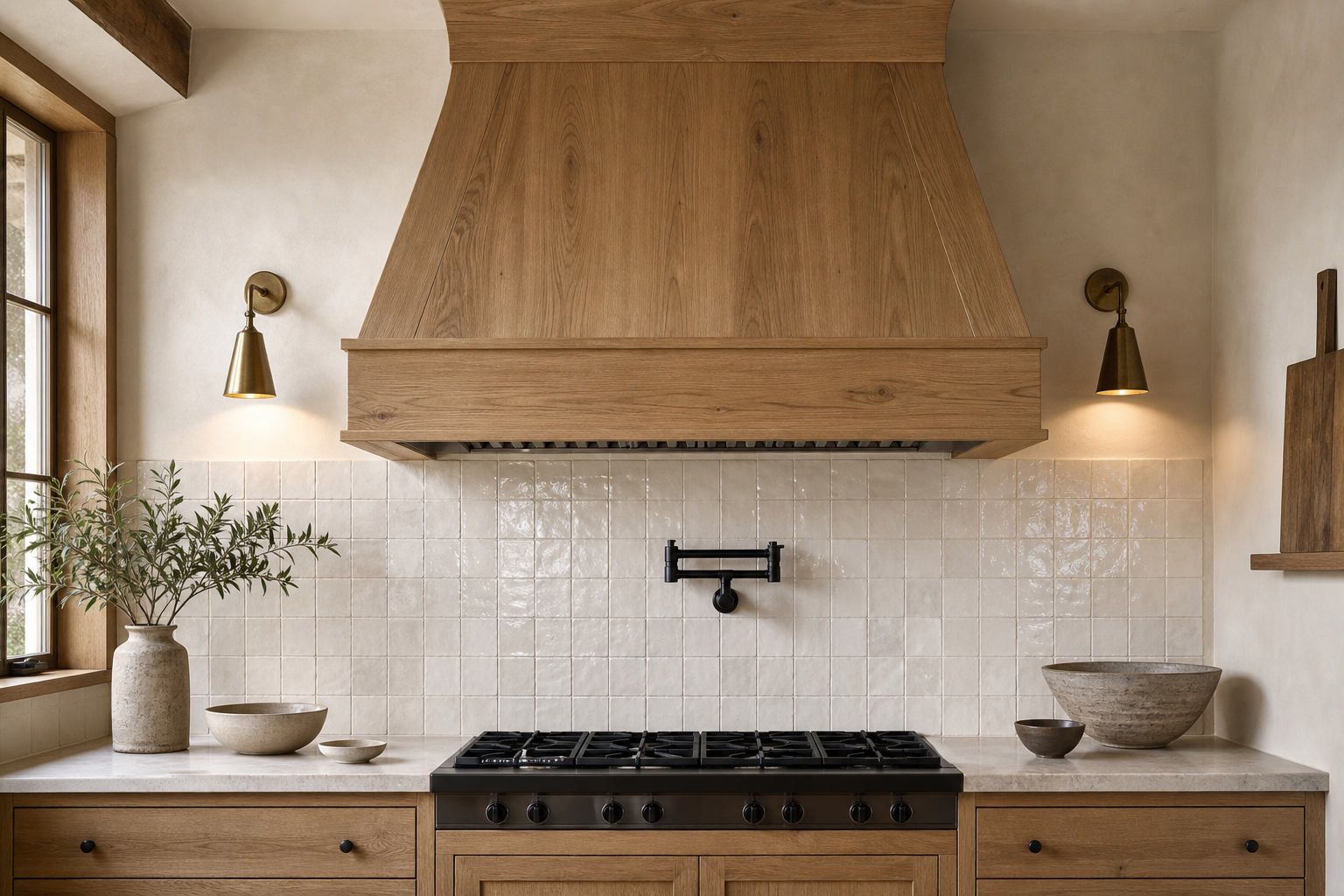

The range hood is shaped as a tapered architectural canopy, not a box attached above the cooker. Its timber-toned face widens toward the lower edge and rises close to the ceiling, giving the cooking wall a warm central mass. Pale square tile, a dark range and pot filler, paired wall lights, side windows, and low bowls form a clear supporting grid. Rustic character comes from visible grain and proportion, while the composition remains exact.
The Flared Hood Establishes the Cooking Wall's Silhouette
The hood occupies the upper center of the wall and extends almost to the ceiling. That position gives it more authority than the countertop, bowls or sconces. Its flared sides are important because they make the hood feel built for the wall rather than hung on it. The result is rustic warmth with a modern sense of proportion.
The hood narrows as it rises, directing the eye toward the ceiling while retaining enough width over the cooking surface. That profile gives a large timber-toned volume a lighter, more deliberate stance.
The off-white tile backsplash forms a steady grid below the timber-clad hood. Each small tile catches light differently, so the wall has texture without becoming loud. That is a smart counterpoint to the large wood surface. The hood gives mass; the tile gives scale.
Its lower span closely follows the range width and creates a readable canopy rather than an undersized cover. The modern-rustic brick range-wall study gains texture from masonry; this wall makes the hood itself the dominant warm surface.
Pale Tile Separates Timber Tone From Dark Equipment
The black pot filler sits directly on the tile below the hood, creating a precise dark line at the center of the wall. It visually links the cooktop to the hood above. Because the rest of the palette is warm and pale, the black metal prevents the kitchen from feeling too soft.
Small pale tiles form a regular field behind the broad grain pattern. Dark grout is not claimed, but the visible grid clearly provides scale and prevents the hood, range, and counter from merging into one tonal block.
The Pot Filler Marks the Working Center
The two warm-metal sconces occupy the side walls without adding bulky storage. Their warm light frames the hood and keeps the range wall open. This is a strong design move in a modern rustic kitchen: use lighting to define the wall rather than filling every inch with upper cabinetry.
Paired Sconces Occupy the Empty Side Bays
The hood relates to the lower cabinets, the window trim and the cutting boards at the right edge. Those wood tones make the kitchen feel connected from top to bottom. The repetition is controlled, though. The tile and stone interrupt the wood just enough to keep the room from becoming heavy.
One sconce occupies each open side and keeps illumination below the hood's shoulder line. Their dark outlines relate to the range and pot filler without introducing another upper cabinet volume.
Windows Release Both Ends of the Elevation
The left window brings daylight across the tile, making the handmade surface easier to read. It also gives the cooking wall a softer edge. Without that side light, the hood would still be strong, but the tile variation and wood grain would feel flatter.
Low Counter Objects Protect the Hood Outline
The ceramic bowls and branch arrangement stay below the main hood line. They add life to the countertop without interrupting the range wall's vertical structure. This is a useful styling rule for kitchens with a major hood: keep accessories low and let the architectural feature breathe.
Sizing a Statement Hood Before Adding Storage
Choose the hood shape first, because its width and height will control the range wall. A broad timber-clad hood needs enough blank wall around it to feel intentional. Pair it with a light tile or stone surface, then repeat black or warm-metal only in small functional points such as a pot filler or sconces.
Determine range width, hood base, and side-light positions together. Tall cabinets pressed against the canopy or oversized objects on the counter would conceal the flare and make a carefully centered cooking wall feel crowded.
The hood face has no visible applied trim, allowing grain direction and the flared outline to carry its character. That restraint separates modern rustic work from a more ornamented country treatment.