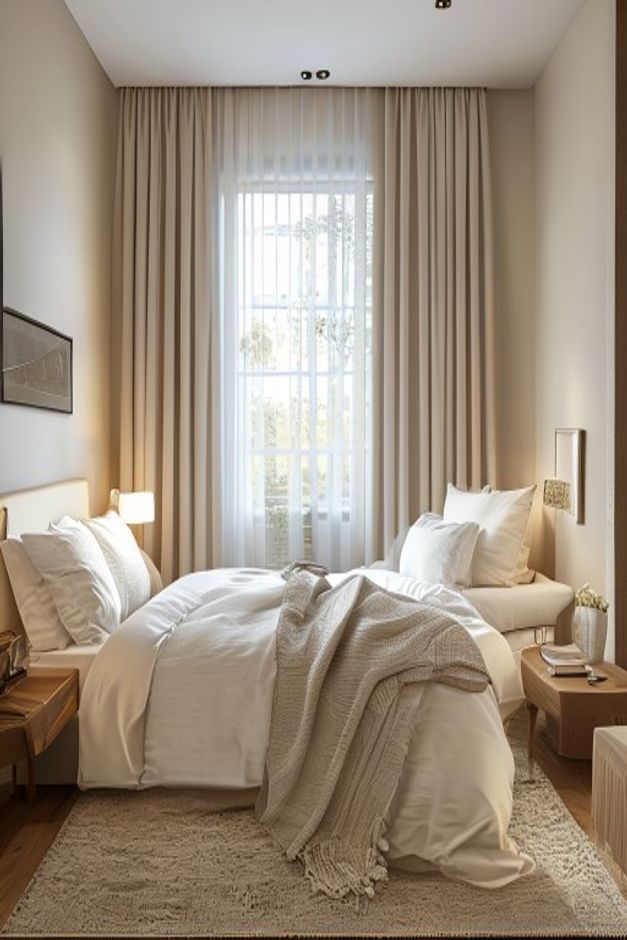
This bedroom works because the curtain wall does the architectural work. The image shows full-length linen curtains framing a white window, a low upholstered bed, relaxed white bedding, a small wood nightstand, a small plant, warm plaster-toned walls and a light wood floor. Nothing in the room is loud, but the design is not empty. It is organized around filtered daylight, soft texture and the quiet proportion between bed and window.
The most important decision is restraint. The room lets the linen curtains become the vertical structure, while the bed stays low and calm enough to support them. That is why the space feels composed rather than merely neutral.
Why the Linen Curtains Define the Room
The curtains are the strongest visible design element because they cover almost the full height of the window wall. Their loose weave catches daylight, which makes the fabric texture readable rather than flat. This is the difference between a curtain used only for privacy and a curtain used as an architectural layer.
The panels also create rhythm. Repeated folds move from ceiling to floor, giving the wall a vertical cadence that the rest of the room quietly follows. In a warm neutral bedroom, that kind of texture is essential because the color palette alone is too subtle to carry the design.
The black curtain rod is a small but important line. It gives the curtain wall definition without making the room feel graphic or harsh. A matching pale rod would disappear; a heavier decorative rod would feel too formal for the softness of the space.
How Filtered Daylight Controls the Mood
The visible daylight is soft and diffused through the linen. It does not create a sharp contrast between bright window and dark room. Instead, it spreads gently across the bedding, wall and floor, which helps the room feel calm.
This matters because warm neutral bedrooms can easily become flat if the light is not handled carefully. Here, the curtain fabric turns the window into a luminous surface. The light is still useful, but it is softened enough that the bed remains comfortable and restful.
A heavier opaque treatment would have changed the entire character of the room. The current linen allows the window to remain active while reducing glare, which is exactly what a bedroom needs when the goal is rest rather than drama.
Why the Low Upholstered Bed Supports the Window Wall
The bed is large, but it does not dominate the room because its form is low and soft. The upholstered base and gently rounded headboard keep the bed visually quiet, allowing the curtains and window to remain the main vertical feature.
The bedding reinforces that decision. The white duvet and pillows are relaxed rather than sharply tailored, so the bed feels lived in without looking messy. The fabric folds echo the curtain folds, connecting the horizontal sleeping surface to the vertical window treatment.
This is a useful design lesson: when the window treatment is the star, the bed should not compete with height, pattern or heavy color. It should provide comfort and scale while letting the wall behind it breathe.
What the Nightstand and Plant Add to the Corner
The wood nightstand gives the bed a small practical anchor. It is simple, low and warm in tone, which means it supports the room’s palette without distracting from the curtain wall. Its scale is especially important; a larger bedside cabinet would crowd the window side of the room.
The plant on the nightstand adds a small organic silhouette. It is not a large decorative gesture, but it breaks the broad softness of bed, wall and curtain. That little upright shape gives the corner life without changing the quiet mood.
The ceramic pieces beside the plant are also modest. They keep the bedside surface from feeling bare, but they do not introduce a new color story. In a room this restrained, small objects need to be chosen for proportion as much as style.
How the Light Wood Floor Grounds the Neutral Palette
The light wood floor is visible enough to matter. Its grain gives the room a natural base beneath the soft fabric layers. Without that wood tone, the wall, bedding and curtains could blur into one pale surface.
The floorboards also add direction. Their long lines lead the eye toward the bed and window, reinforcing the room’s calm orientation. This is subtle, but it is one reason the bedroom feels ordered without relying on strong contrast.
The best part is that the wood does not try to look rustic or decorative. It simply adds warmth and structure. That is exactly the right role for flooring in a warm neutral bedroom where the textiles already provide most of the softness.
How the Wall Color Keeps the Bedroom Warm
The wall color sits between beige and warm greige, which is why the white bedding does not feel stark. It creates a soft envelope around the bed and curtains, allowing the daylight to feel warmer as it moves across the surfaces.
This wall treatment is doing more than providing a neutral backdrop. Its matte quality reduces glare and supports the tactile character of the linen. In a bedroom built around filtered light, that matters because shiny paint would make the room feel less restful.
The color also helps the room avoid a cold all-white effect. The bedding can stay bright because the walls and floor provide warmth around it. That balance is the reason the palette feels intentional rather than simply pale.
Why the Doorway View Makes the Layout Feel Honest
The photograph is taken from just outside or near the doorway, which makes the room’s circulation easier to understand. The viewer sees the bed, the nightstand, the window wall and the open floor at once. That perspective reveals whether the layout actually works.
From this angle, the bed does not appear to block the entrance. The floor remains visible along the side, and the low frame keeps the room from feeling crowded. This is a practical design point, not a styling trick.
A bedroom can look attractive in a cropped corner view but fail in daily use. This image is stronger because it shows the relationship between entry, bed and window. The room feels calm because the major pieces are placed where they can be used without interrupting movement.
Why the Empty Wall Space Is Not a Problem
The left side of the room is intentionally quiet. The visible wall has no large artwork, shelving or extra furniture. That empty surface gives the eye a pause before it reaches the curtain wall and bed.
Homeowners often try to fill every blank area in a neutral bedroom because they worry the room will look unfinished. This image shows the opposite. Negative space helps the linen curtains feel more deliberate and keeps the room from becoming visually crowded.
The doorway view also benefits from that restraint. Seeing the bed and curtain wall from the entrance feels calm because the room does not reveal too many competing objects at once.
Where the Proportions Feel Most Successful
The strongest proportion is the relationship between the bed height and the curtain height. The bed sits low in the frame, while the curtains rise almost to the ceiling. That contrast makes the room feel taller and more spacious than its compact footprint suggests.
The nightstand is also correctly scaled. It sits below the window line and does not interrupt the curtain drop. In a small bedroom, bedside furniture often becomes too bulky; here it remains secondary.
The circulation path near the bed is visible along the floor. It is not wide enough to feel grand, but it is clear enough to make the room usable. That practical clarity is part of why the design feels believable.
What I Would Avoid in This Bedroom
The first mistake would be adding a strong patterned rug or heavy artwork near the window. The room already has a clear visual hierarchy: curtains first, bed second, nightstand and plant third. Extra pattern would weaken that hierarchy.
The second mistake would be choosing glossy surfaces. The room depends on matte walls, soft fabric and natural wood. Shiny furniture would reflect light in a way that feels unrelated to the linen and bedding.
I would also avoid overfilling the bedside table. The small plant and simple objects are enough. In a room this quiet, clutter becomes visible very quickly.
How to Recreate This Warm Neutral Curtain Strategy
Start with the window treatment, not the accessories. Choose linen or linen-like fabric with enough texture to catch daylight, then hang the panels high enough that the wall feels taller. The curtain should frame the window rather than simply cover it.
Next, keep the bed low and soft. Use white or warm ivory bedding, relaxed fabric folds and an upholstered frame that does not compete with the curtain height. The goal is to make the bed feel restful while the window wall provides structure.
Finally, add warmth through one simple wood piece and one small natural element. The nightstand and plant in this room are enough because they support the main idea instead of introducing a second story. The best warm neutral bedroom is not built from many beige objects; it is built from a few visible relationships that make light, fabric and proportion feel intentional.
The same tonal approach can be developed with an upholstered headboard and paneled wall.