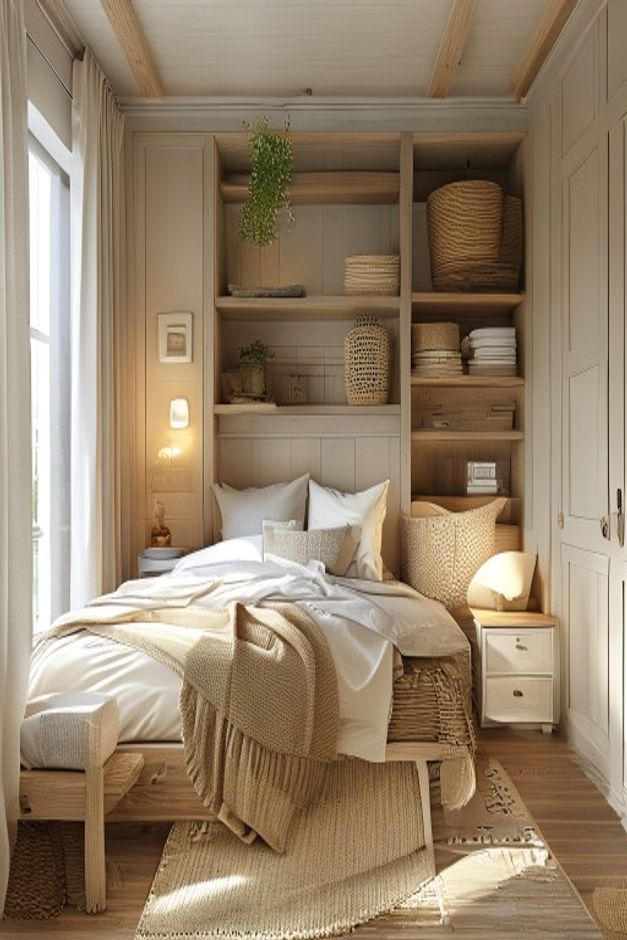

This bedroom shows how a narrow footprint can be transformed into a serene sanctuary through the strategic use of custom millwork. By nestling the bed directly into a floor-to-ceiling built-in shelving unit, the architecture eliminates the need for bulky, disjointed furniture while creating a cohesive, architectural frame for the sleeping area. This approach is useful because it addresses the universal challenge of balancing storage requirements with the need for visual tranquility in smaller residential footprints.
The design achieves a delicate equilibrium between utility and aesthetics, utilizing a palette of cream, beige, and light wood to maintain an airy, expansive feeling despite the density of the cabinetry. Every element, from the low-profile bed frame to the woven storage baskets, serves a dual purpose, proving that thoughtful planning can turn a structural constraint into the most compelling feature of a room. This analysis explores how such integrated systems redefine our understanding of bedroom storage and comfort.
The Architectural Logic of Bed-Integrated Shelving
Integrating a sleeping platform directly into a custom storage wall is an exercise in intentional spatial programming. By centering the bed within an alcove created by the surrounding shelving, the design anchors the room, establishing a clear hierarchy of use that prioritizes rest while keeping personal effects within immediate reach. This arrangement effectively utilizes the vertical plane, turning what would otherwise be dead wall space into a highly functional storage environment that supports the room’s overall structural integrity.
Beyond the functional benefits, this configuration creates a sense of enclosure that enhances the cozy, cottage-inspired atmosphere. The shelving unit acts as a protective frame, softening the transition between the wall and the bed, while the light-toned wood surfaces reflect ambient light to prevent the cabinetry from feeling heavy or oppressive. It is a sophisticated solution that prioritizes architectural continuity, ensuring that the storage system feels like a permanent, intentional component of the house rather than an afterthought or a temporary addition.
Balancing Materiality in a Neutral Palette
The success of this bedroom relies heavily on a disciplined selection of materials that prioritize texture over color. The light wood of the shelving unit provides a warm, organic foundation, which is complemented by the soft, tactile qualities of linen or cotton bedding and a jute or sisal area rug. By keeping the color palette restricted to cream, beige, and natural wood tones, the designer ensures that the complexity of the shelving does not overwhelm the senses, allowing the room to remain a place of genuine relaxation.
Texture acts as the primary decorative language here, replacing the need for bold patterns or vibrant hues. The woven wicker and rattan baskets tucked into the shelving provide a necessary contrast to the smooth, finished wood, adding a layer of artisanal charm that is characteristic of the cottage style. Meanwhile, the textured throw blanket draped over the bed adds another dimension of softness, bridging the gap between the rigid, structural lines of the cabinetry and the fluid, inviting nature of the sleeping surface. For those interested in how such organic elements influence living spaces, comparing these choices to Modern Organic Living Room Built-In Shelving Ideas reveals a consistent design philosophy that values natural, tactile warmth.
Optimizing Vertical Storage for Small Bedrooms
In smaller residential designs, the floor plan is often limited, making the vertical plane the most valuable real estate available. The floor-to-ceiling nature of this shelving unit maximizes every inch of potential storage, extending the reach of the room up to the ceiling line to capture space that is typically ignored. This verticality not only provides ample room for books, decor, and personal items but also draws the eye upward, creating an illusion of greater height and volume within the room.
The organization of items within these tall units requires a strategic approach to accessibility and visual weight. By placing frequently used items at mid-level and utilizing baskets for smaller, less aesthetic clutter on higher or lower shelves, the storage system remains both practical and visually tidy. This method of vertical management is a recurring theme in high-density design, much like the strategies discussed in Maximizing Verticality: Industrial Home Office Floor-to-Ceiling Wooden Shelving, where the focus on upward growth serves to liberate the floor area for better circulation and flow.
The Role of Ambient Lighting in Architectural Millwork
Lighting within a built-in system must be handled with precision to highlight the craftsmanship of the cabinetry without creating harsh shadows. The use of warm ambient wall sconces and table lamps in this bedroom creates a soft, diffused glow that emphasizes the depth and texture of the wood surfaces. This layered approach to lighting ensures that the shelving is not just a storage vessel, but a decorative element that contributes to the overall mood of the space during evening hours.
By positioning light sources to wash across the shelves, the design creates a sense of depth that makes the wall feel more dynamic and less static. The warm light interacts beautifully with the natural wood grain and the woven materials, enhancing the cottage aesthetic and creating a welcoming, intimate environment. This technique of using light to define architectural features is a hallmark of sophisticated interior design, ensuring that the room remains functional and atmospheric regardless of the time of day.
Integrating Furniture for Seamless Circulation
When dealing with narrow room dimensions, every piece of furniture must earn its place through multi-functionality or scale. The low-profile wooden bed frame is a critical choice, as its reduced height prevents it from competing with the surrounding shelving unit, maintaining a sense of openness. Similarly, the small two-drawer nightstand is scaled perfectly to fit within the alcove, providing essential storage without protruding into the limited walking path of the room.
The inclusion of a small wooden bench at the foot of the bed serves as both a seating area and a visual transition point between the sleeping zone and the rest of the room. By selecting furniture that aligns with the scale and material language of the built-in unit, the design achieves a seamless transition that makes the room feel larger than it actually is. This careful curation ensures that the space remains uncluttered, prioritizing ease of movement while maintaining the integrity of the overall design narrative.
The Importance of Decorative Curation within Storage
A built-in shelving unit is only as effective as the items it displays, and the curation process is what elevates the room from a simple storage solution to a curated living space. The addition of hanging greenery introduces a vital organic element that contrasts with the geometric rigidity of the shelves, bringing a sense of life and vitality to the bedroom. Meanwhile, framed wall art is strategically placed to add personal character, breaking up the repetition of the shelves and providing focal points that draw the eye.
The use of decorative woven baskets is particularly effective for managing the visual noise of everyday items. These baskets allow for hidden storage while contributing to the overall aesthetic, keeping the shelves looking intentional rather than chaotic. This balance of display and concealment is essential for maintaining a serene environment, proving that even in a highly functional storage system, there is always room for personal expression and artistic flair.
Lessons in Cottage Style and Modern Function
Cottage style is often associated with warmth, informality, and a connection to traditional craftsmanship, all of which are present in this bedroom. However, the design is clearly informed by modern needs for organization and efficiency, showing that traditional aesthetics can be successfully adapted to contemporary lifestyles. The integration of technology-free zones, such as the focus on books and greenery rather than screens, reinforces the cottage ethos of retreat and relaxation.
Homeowners can learn that the key to a successful cottage-inspired bedroom lies in the restraint of the color palette and the commitment to natural materials. By focusing on high-quality wood, soft textiles, and thoughtful, integrated storage, it is possible to create a room that feels both timeless and highly functional. This approach avoids the trap of clutter that often plagues smaller rooms, offering a blueprint for a more organized and peaceful way of living.
Strategies for Achieving Architectural Cohesion
Achieving cohesion in a room dominated by a single, large-scale feature like a built-in shelving unit requires a consistent application of materials and finishes. The wood used for the bed frame should ideally match or complement the wood of the shelving to create a sense of unity. By repeating these materials throughout the space, the designer ties the disparate elements together, making the room feel like a unified whole rather than a collection of separate parts.
Furthermore, the scale of the decor must be considered in relation to the scale of the shelving. Small, delicate items may get lost in large, deep shelves, while overly large items might overwhelm the space. By choosing decorative objects that have a clear presence and relationship to the surrounding architecture, the design maintains a balanced visual weight. This attention to detail is what separates a standard storage solution from a truly architectural design statement, ensuring that the room remains both beautiful and highly usable for years to come.
How do I choose the right wood tone for built-in shelving?
Select a wood tone that complements your existing flooring and furniture, prioritizing light, natural finishes to keep small rooms feeling open and airy.
Can built-in shelving replace a traditional dresser?
Yes, by incorporating drawers and baskets into the lower sections of your shelving unit, you can effectively replace a dresser while saving valuable floor space.
What is the best way to style open shelving in a bedroom?
Balance functional storage with decorative items like greenery, framed art, and personal collections, using baskets to hide smaller items for a clean, curated look.