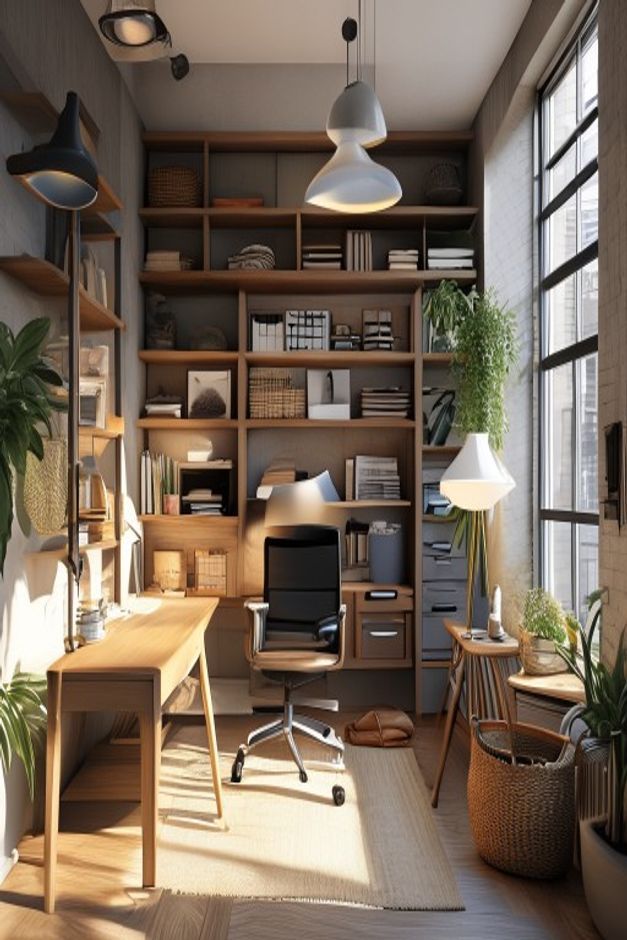

The room demonstrates how vertical storage can anchor a room without compromising its airy, open feel. By utilizing the full height of the wall, the shelving unit creates a structural backbone that dictates the flow of the workspace while providing ample room for organization. It is a compelling study in how raw, industrial aesthetics can be softened through the thoughtful application of warm wood tones and organic textures.
The integration of a minimalist desk against this massive storage wall highlights a sophisticated approach to interior architecture. Rather than treating storage as an afterthought, the design positions it as the primary interface between the user and their professional tools. This configuration offers a blueprint for homeowners looking to reclaim floor space while maintaining a high capacity for books, supplies, and decorative elements that define a personal workspace.
The Architectural Impact of Floor-to-Ceiling Storage
Installing a built-in shelving system that spans from floor to ceiling fundamentally alters the perception of a room’s volume. By drawing the eye upward, this choice minimizes the visual clutter typically associated with freestanding units, creating a sense of height and intentionality. The wood finish provides a necessary counterpoint to the harsher industrial elements, ensuring the office feels like a sanctuary rather than a cold factory floor.
Beyond aesthetics, this vertical strategy is a functional necessity for modern productivity. It allows for a categorized system where frequently used items remain within reach while archival materials are tucked away in higher, less accessible tiers. This hierarchical organization is essential for maintaining a clean desk surface, which is crucial for focus and long-term workspace satisfaction. For those interested in similar organizational strategies, Mastering the Japandi Home Office: Integrated Wooden Desk and Shelving Systems provides further insight into balancing open storage with minimalist desk design.
Balancing Industrial Rigidity with Organic Warmth
Industrial design often relies on cold materials like metal and glass, which can feel sterile if not balanced correctly. In this workspace, the dominant presence of warm-toned wood acts as a thermal and visual buffer, grounding the room in a natural palette. This creates a tactile experience that contrasts beautifully with the black metal frames of the office chair and the industrial-style task lighting.
The inclusion of wicker storage baskets within the shelving unit further enhances this organic dialogue. These baskets soften the rigid lines of the square shelving compartments, adding a layer of texture that is both functional and visually pleasing. By layering different materials—wood, wicker, metal, and glass—the designer creates a depth that prevents the office from feeling monochromatic or overly clinical, even when the primary palette remains restricted to neutral tones.
Optimizing Desk Placement for Workflow Continuity
The decision to position the minimalist writing desk directly facing the wall-to-wall shelving unit is a strategic move that minimizes distractions. By centering the user’s view on their library and professional resources, the layout fosters a sense of immersion. This linear arrangement ensures that everything required for a task is within a single rotation or reach, reducing the need for unnecessary movement throughout the day.
This layout also preserves the circulation path in the rest of the room, keeping the floor clear of bulky furniture. The desk itself, characterized by its slim profile, does not compete with the shelving for visual dominance but instead acts as a secondary, lighter element. This approach aligns with principles discussed in Mastering the Warm Neutral Home Office: A Study in Integrated Desk and Shelving Design, where the synergy between desk and storage is paramount to a successful office layout.
Lighting Strategies for Multi-Level Shelving
Lighting a floor-to-ceiling shelving unit requires a layered approach to ensure that every level remains functional and visible. The use of an industrial-style wall-mounted task lamp provides focused illumination for the desk, while ambient light from a pendant fixture ensures the room does not suffer from dark corners. This combination allows for a flexible environment that can adapt to different times of the day or varying project requirements.
Furthermore, the strategic placement of light sources prevents the shelving from casting deep, oppressive shadows. By ensuring that light can penetrate the open compartments, the design maintains a sense of lightness despite the physical mass of the wood. This is a critical consideration for any home office, as proper illumination is the difference between a space that encourages productivity and one that feels claustrophobic.
Selecting Materials for Long-Term Durability
The choice of wood as the primary material for the shelving unit is not merely an aesthetic preference; it is a commitment to longevity. Wood ages gracefully, developing a patina that only improves with time, which is ideal for a high-traffic home office. When paired with metal components, the result is a robust structure capable of supporting the weight of heavy books and equipment without bowing or losing its integrity.
Homeowners often overlook the importance of material selection in cabinetry, opting for cheaper laminates that do not withstand the daily rigors of an office environment. Investing in high-quality wood ensures that the shelving remains a permanent, valuable fixture of the home. This durability is a hallmark of the design philosophy explored in The Art of Integrated Japandi Built-in Shelving for Home Offices, which emphasizes the longevity of well-crafted, integrated storage.
The Role of Indoor Greenery in Industrial Spaces
Incorporating potted indoor plants into the office design serves as a vital bridge between the built environment and the natural world. In an industrial setting, the vibrant green of foliage provides a necessary pop of color that breaks up the neutral grey and black tones. These plants also add a sense of life to the shelving units, preventing them from looking like mere warehouses for books and files.
Placement is key when integrating greenery into high-level shelving. By positioning plants at various heights, the designer creates a cascading effect that draws the eye across the entire wall. This not only adds visual interest but also improves the overall atmosphere of the room, making it a more inviting place to spend long hours. The presence of nature has been shown to reduce stress, making it a functional addition to any professional workspace.
Managing Clutter in Open Storage Systems
Open shelving demands a high level of discipline, as every item stored becomes part of the room’s decor. To maintain a professional appearance, the use of wicker baskets and organized stacks of books is essential. These containers hide smaller, unsightly office supplies, while larger items are curated to show off personal style and professional credentials.
The secret to a successful open storage system is the balance between density and negative space. Not every shelf needs to be filled to capacity; leaving gaps allows the eye to rest and prevents the unit from appearing overwhelming. This intentional curation is what separates a cluttered storage wall from a well-designed architectural feature. For those seeking to master this balance, Coastal Home Office Design: Mastering Integrated Desk and Storage Solutions offers valuable lessons on how to curate open displays effectively.
Ergonomics and the Modern Home Office
While the shelving and storage are the visual stars, the ergonomic black office chair with casters is the unsung hero of the room. Its ability to move freely along the linear desk allows the user to transition between different zones of the shelving unit with ease. This mobility is essential in an industrial office where the desk and storage are tightly integrated.
A chair that supports the body while maintaining a sleek, unobtrusive profile is necessary to complement the minimalist desk. The black finish ties into the industrial theme, creating a cohesive visual language that connects the seating to the lighting fixtures and hardware. When designing a home office, prioritizing ergonomic comfort alongside storage capacity ensures that the room is as comfortable as it is beautiful, supporting both health and productivity.
How do I prevent floor-to-ceiling shelves from looking too heavy?
Use open shelving designs instead of closed cabinets, incorporate light-toned wood, and ensure there is adequate ambient lighting to illuminate the upper levels.
Can I mix different materials in an industrial office?
Yes, mixing wood, metal, and wicker is encouraged. These textures provide contrast and warmth, which prevents the industrial style from feeling cold or sterile.
What is the best way to organize a tall shelving unit?
Place frequently used items at eye level, store heavy books on the bottom shelves for stability, and use decorative baskets on higher shelves for items you access less often.