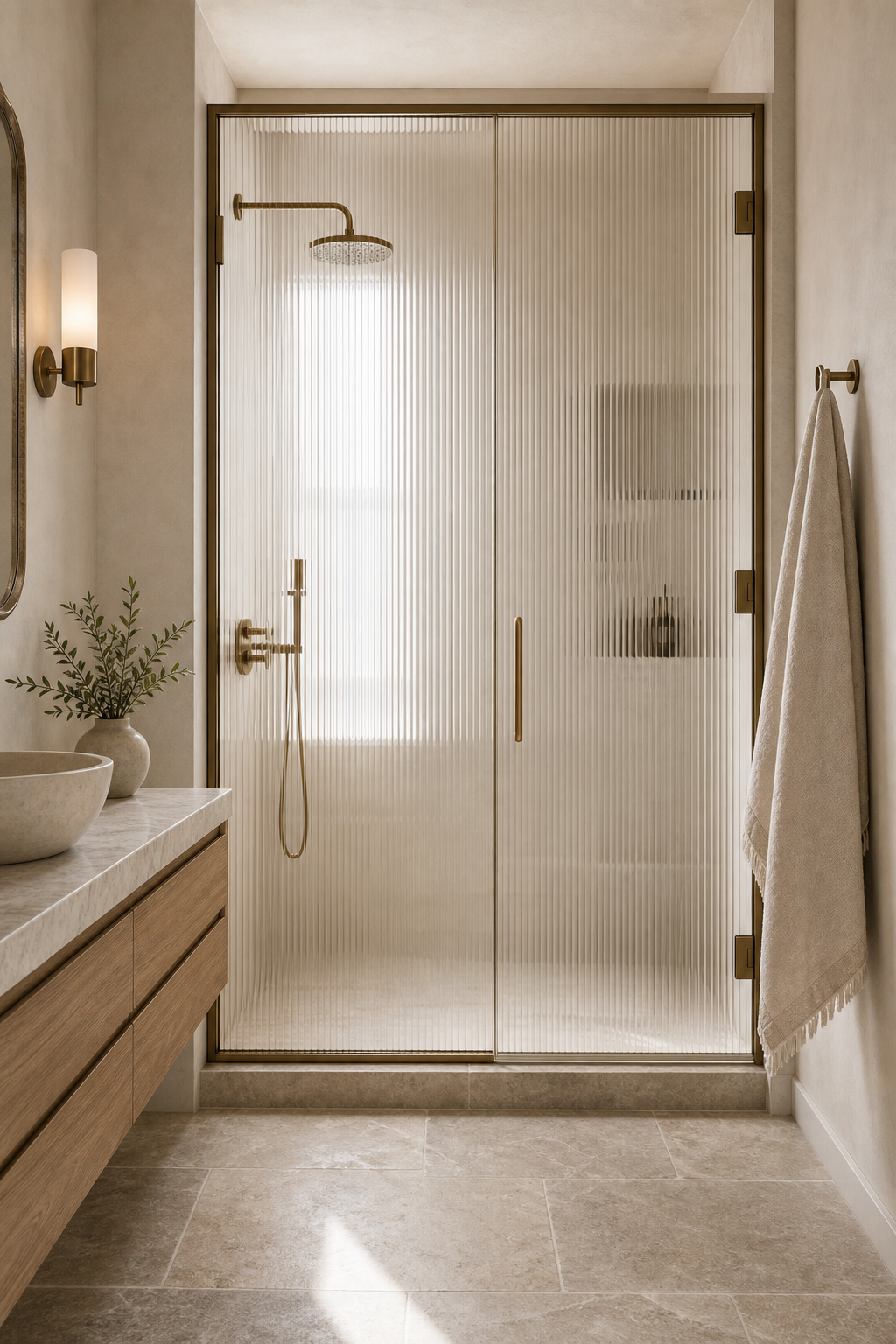

The shower enclosure is simultaneously a screen and the bathroom's principal elevation. Fine vertical ribs obscure the interior just enough to create privacy, yet daylight still passes through and reveals the rain head, hand shower, and wall niche as softened silhouettes. A slim warm-metal frame outlines the opening, turning a practical wet-zone boundary into a measured architectural panel that mediates between traditional warmth and contemporary restraint.
Reeded Glass Becomes the Main Elevation
The shower doors occupy the full back wall, so their ribbed texture becomes the strongest visual surface in the room. Unlike clear glass, the reeded panels soften what is behind them. That gives the shower privacy without making the bathroom feel smaller.
Two broad door panels fill the opening from low curb to the upper frame, so the ribbing is experienced as one continuous field. The center joint remains narrow and the handle is vertical, preserving the same direction instead of interrupting it with a heavy horizontal bar.
The slim warm-metal frame outlines the shower doors and makes the ribbed glass feel intentional rather than purely functional. That metal edge also connects to the shower fixtures and door hardware, giving the bathroom a consistent transitional finish.
Backlighting is strongest toward the lower left, where the glass glows while still hiding precise detail. On the right, the niche and bottles appear as muted shapes. This graduated visibility gives the enclosure depth that clear glass would not provide.
A Slim Frame Contains the Texture
The vertical ridges break up the light and create a softer glow across the shower enclosure. This matters because the glass is the largest feature in the view. The texture gives the wall movement without adding color or pattern.
Hinges, handle, and perimeter share the same warm-metal tone and are small relative to the panels. Consistency matters more than exact finish identification: one frame language keeps the numerous functional junctions from becoming visual noise.
Fixtures Remain Legible Behind the Screen
The warm-metal shower head and hand shower are visible through the textured glass but slightly softened by it. That partial visibility is part of the appeal. The fixtures remain readable, yet the shower interior does not become visually busy.
The Vanity Edge Keeps the Foreground Open
The pale tiled floor gives the shower doors a calm base and keeps the lower half of the room steady. Because the floor is quiet, the reeded glass can carry the main texture without competition.
Only a portion of the floating vanity enters the foreground, leaving a generous strip of pale tiled floor before the shower curb. The diagonal daylight across that floor reinforces the route and prevents the enclosure from reading as a flat end cap.
Towel and Sconce Balance the Side Walls
The floating wood vanity warms the left side of the bathroom and prevents the glass and stone from feeling too cool. Its horizontal drawer lines also contrast with the vertical ribs of the shower door, which makes both elements easier to read.
Floor Tile Carries the Approach to the Shower
The towel on the right wall introduces a soft textile next to the glass enclosure. The sconce on the left adds a warm vertical note, balancing the warm-metal shower frame and keeping the bathroom from feeling purely practical.
Choosing Privacy Without Losing Spatial Depth
Start with the glass choice before choosing decorative tile. If the door has this much texture, surrounding surfaces should stay quieter. Then repeat one metal finish across the frame, handle and fixtures. That consistency helps the reeded glass read as part of the architecture.
The clearer enclosure in this Scandinavian bathroom shower tile guide exposes the wet-zone surfaces directly. Here, ribbed glass deliberately softens them, making privacy and filtered light the central design decision.
The towel hook on the right and the tall shaded sconce on the left occupy opposite side walls, giving the enclosure a balanced foreground without creating a matched pair. A pale vessel basin and branch arrangement enter only at the lower left edge, establishing the vanity's presence while preserving the shower as the principal subject. This framing is effective because ancillary bathroom functions are acknowledged at the perimeter rather than described as if the camera revealed the entire room.