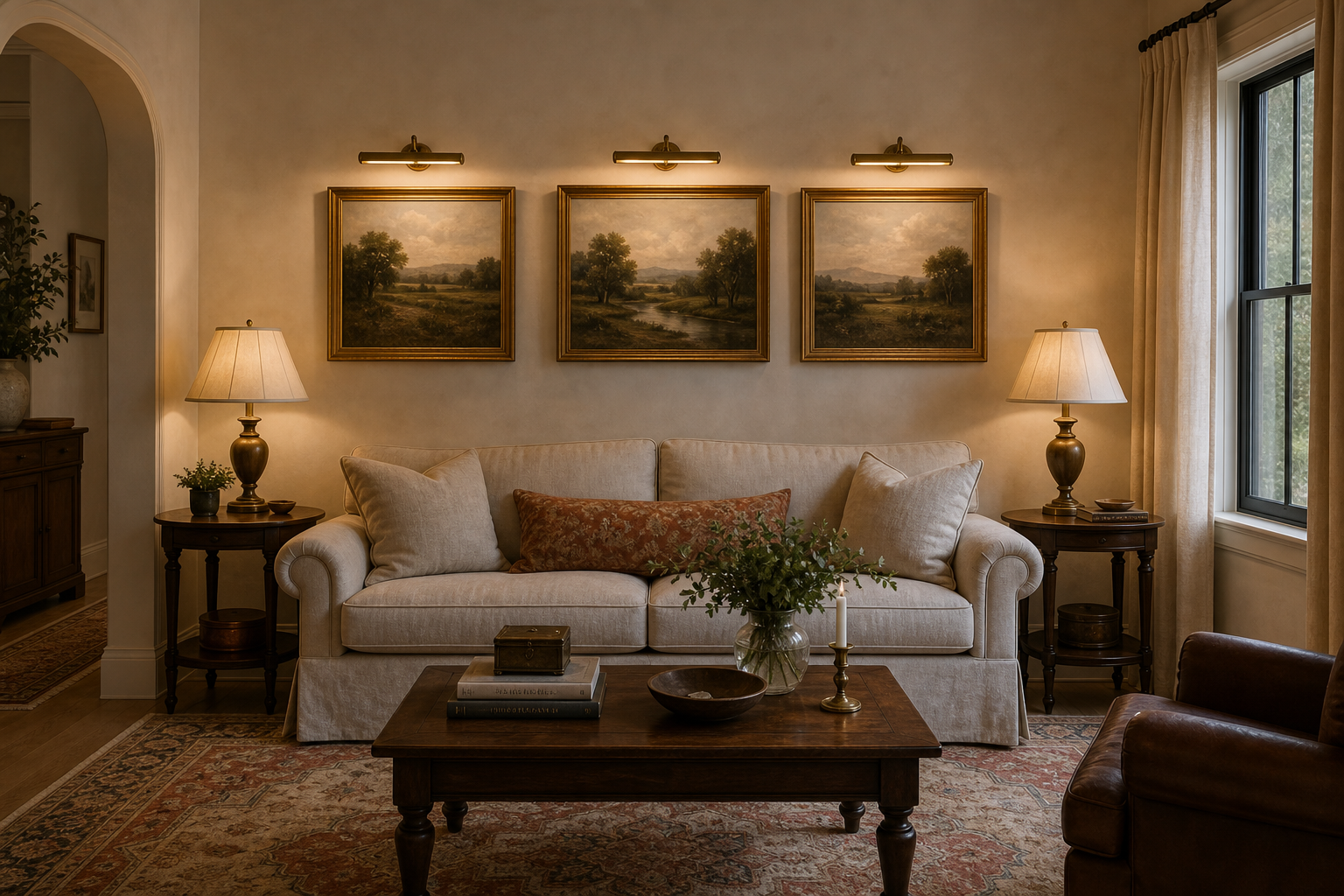

Three landscape works form the upper structure of this living-room wall, and each receives its own slim picture light. The repeated pools of light establish a measured rhythm above a pale sofa, while table lamps at both ends create a lower, warmer layer. A dark rectangular coffee table and patterned rug anchor the foreground. The scheme feels traditional because art, furniture, and lighting share one clear axis rather than because the room relies on excessive ornament.
Three Picture Lights Establish the Upper Rhythm
The three warm-metal picture lights create a clear horizontal rhythm above the sofa. They make the artwork wall feel intentional rather than simply filled. Their warm glow also gives the paintings depth, which matters in a room with muted traditional colors.
Each fixture is centered over one frame and remains narrower than the artwork below. Their consistent height makes the installation read as a deliberate series, while small differences in the painted scenes prevent the wall from becoming mechanically repetitive.
The landscape paintings are centered above the sofa, so the wall and seating read together. The sofa becomes the base of the composition. This alignment is why the room feels calm even with several framed pieces.
The three frames together occupy roughly the inner span of the sofa rather than stretching to the side tables. This containment gives lamps and windows separate edge zones and prevents the illuminated gallery from visually swallowing the entire elevation.
Warm-Metal Lines Stay Visually Fine
The warm-metal finish repeats in the picture lights, table lamps and candlestick. That repetition keeps the warm metals connected across the room. The warm-metal also suits the traditional frames without looking overly polished.
Paired Table Lamps Create a Lower Light Layer
The table lamps provide lower light on both sides of the sofa. They prevent the picture lights from becoming the only warm source in the room. This layered approach makes the seating area feel comfortable in the evening.
Table lamps sit close to arm height and cast broader light onto wall and upholstery. They are not substitutes for the picture lights; the two layers serve different visual depths, one revealing art and the other making the seating area feel inhabited.
The Sofa Provides a Quiet Base for the Art
The rolled arms, pillows, framed landscapes and picture lights create several depths against the same wall. That layering keeps the traditional room from feeling like a showroom vignette.
The patterned rug brings warm rust and muted tones into the seating area. It relates to the landscape colors above. The dark wood coffee table grounds the lighter sofa and gives the room a strong center below the artwork.
Side Windows Prevent the Wall From Feeling Staged
Start with the artwork spacing. Picture lights look best when each frame has enough wall around it to feel deliberate. Then add table lamps at a lower height so the room does not rely only on the wall lights.
Coordinating Art Width Before Mounting the Lights
I would not use mismatched picture light finishes on this wall. The repeated warm-metal is what gives the composition order. I would also avoid hanging the paintings much higher. They need to stay connected to the sofa.
The spacing logic in this published traditional living-room layout guide focuses on furniture relationships. This room adds a corresponding upper grid, aligning three illuminated pictures with the long sofa below.
The coffee table aligns with the middle artwork and sits inside the rug boundary, connecting upper and lower axes through furniture placement. A branch arrangement introduces one irregular silhouette at the center. Its height remains below the frames, ensuring foliage does not interrupt the illuminated art sequence.
Windows flank the sofa wall at different visible widths and bring daylight across the pictures from both sides. The lights still remain distinct because their shades sit close to each frame. During the day, they work as fine architectural accents; after dark, the paired table lamps can maintain a separate lower atmosphere.
The sofa cushions and small patterned pillows introduce muted color below the landscapes but never repeat their scenes literally. Their low placement keeps the art wall formal while making the seating usable. This separation between collected artwork and relaxed upholstery is what prevents the room from reading as a gallery with furniture placed in front of it.