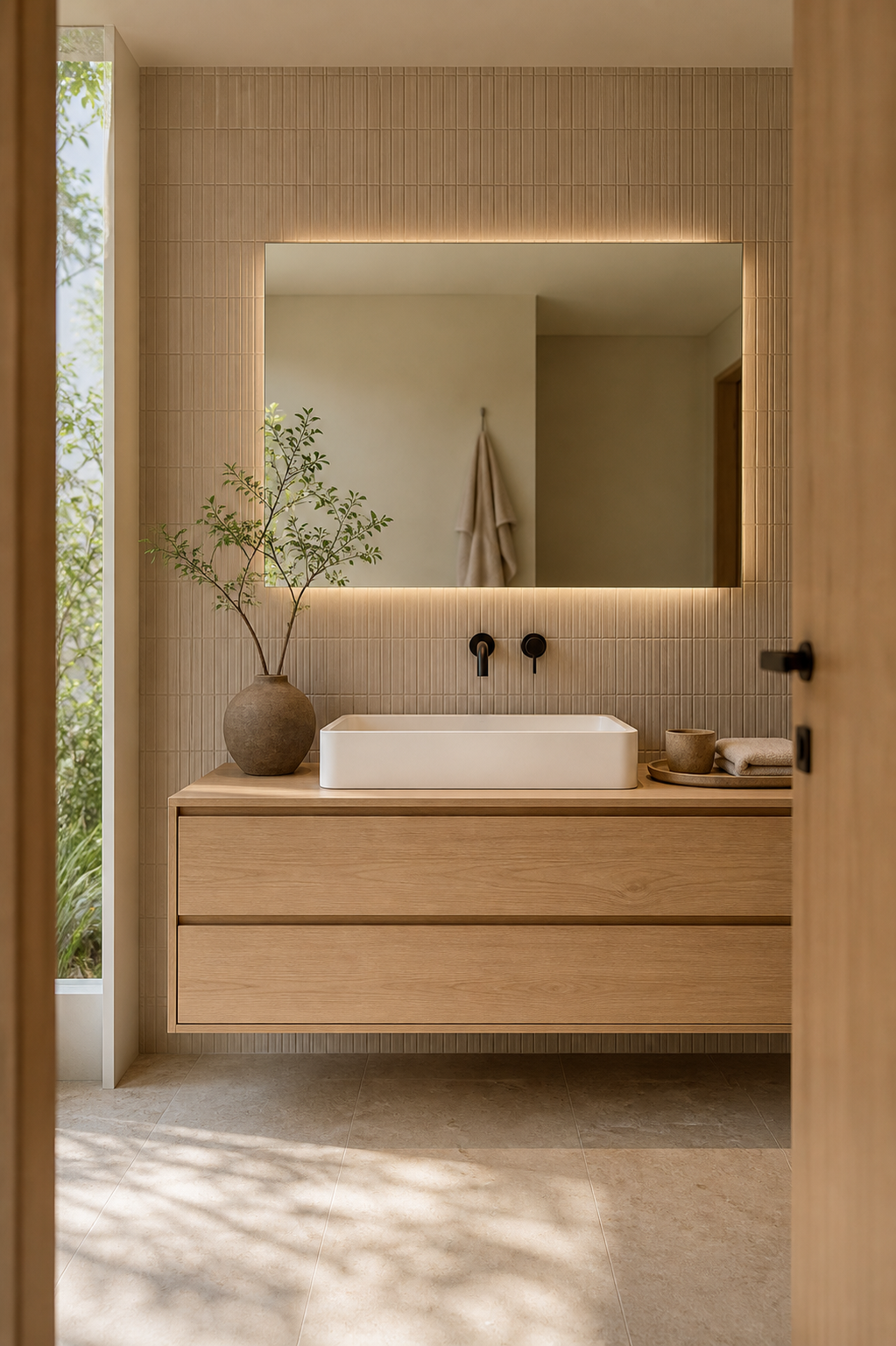

The vanity succeeds by concentrating storage into one warm horizontal volume and then lifting it clear of the floor. Two broad drawer fronts sit beneath a pale vessel basin, while a dark wall-mounted spout and control keep the top visually open. Vertical wall tile, a wide mirror, a narrow side shelf, greenery, and soft light complete the scene. The Japandi character comes from proportion and restraint, not from adding symbolic accessories.
The Floating Vanity Establishes a Warm Horizontal Line
The vanity is the largest warm material in the room, so it naturally becomes The primary feature. Its light wood tone softens the beige tile and pale floor. Because it floats above the floor, the vanity feels lighter than a full-height cabinet. That detail helps the bathroom keep its Japandi calm.
The cabinet spans most of the visible wall but remains shallow in height, so it provides presence without becoming a solid block. Its timber grain supplies movement inside an otherwise pale enclosure.
The drawer fronts are broad and simple, with no visible decorative pulls. That restraint lets the visible timber grain and horizontal lines provide the detail. This is important in a small vanity wall. Extra hardware would interrupt the clean surface and make the cabinet feel busier.
The earlier Japandi slatted floating vanity analysis emphasizes repeated grooves. This vanity uses two uninterrupted fronts, making the storage read calmer and wider.
Floor Clearance Lightens the Compact Room
The rectangular pale vessel basin sits on top of the vanity like a clear functional object. Its pale surface gives the wood a crisp contrast. The sink shape also echoes the straight lines of the drawers and mirror, keeping the composition disciplined.
A continuous pale floor remains visible beneath the drawers and into the doorway. That gap makes the furniture boundary obvious and prevents the small bathroom from ending at the cabinet face.
The Vessel Basin Adds One Rounded Form
The dark faucet comes out of the tile wall rather than rising from the counter. That leaves more open surface around the sink. Its dark finish gives a small graphic note against the warm tile, but the scale is restrained enough that it does not overpower the vanity.
Wall-Mounted Fittings Protect the Counter
The narrow vertical tile gives the wall subtle rhythm behind the mirror and sink. It adds texture without introducing a busy pattern. The tile also stretches the wall visually, which helps the floating vanity feel balanced below the large mirror.
The spout projects from the wall directly over the basin; no deck-mounted fixture divides the counter. Exact plumbing depth is not visible, so the useful lesson is alignment rather than construction detail.
Vertical Tile Pulls the Vanity Wall Upward
The mirror glow gently outlines the vanity zone and makes the vertical tile more readable. Side daylight adds a natural layer without harsh contrast. That softness matters because Japandi bathrooms depend on calm transitions between materials.
Mirror Light Softens the Timber Tone
Start with a simple floating vanity in a light wood tone. Keep drawer fronts flat or nearly flat so the cabinet reads as one calm plane. Pair it with a quiet white sink, wall-mounted faucet and one textured wall surface. The fewer competing details, the stronger the vanity becomes.
Keeping Japandi Joinery Visually Uncomplicated
Japandi bathroom design is not about emptiness. It is about making every visible decision feel measured. Here, the timber-toned vanity, tile wall, vessel sink and soft lighting create a room that feels warm, functional and carefully edited.
Keep drawer divisions broad, countertop objects sparse, and fittings grouped around the basin axis. Extra open cubbies would compete with the clean floating silhouette confirmed in the photograph.
The mirror nearly fills the recess width and reflects pale wall rather than a crowded room, increasing brightness without introducing another material pattern.
A narrow ledge at one side holds only a small branch vessel, leaving the basin and drawer center visually undisturbed.
Drawer shadow lines run horizontally and provide the only strong detail on the cabinet face. Their restraint keeps the basin and dark wall fittings easy to isolate.
The vanity top extends beyond the basin toward the doorway, but styling remains sparse enough for the working surface to read clearly.