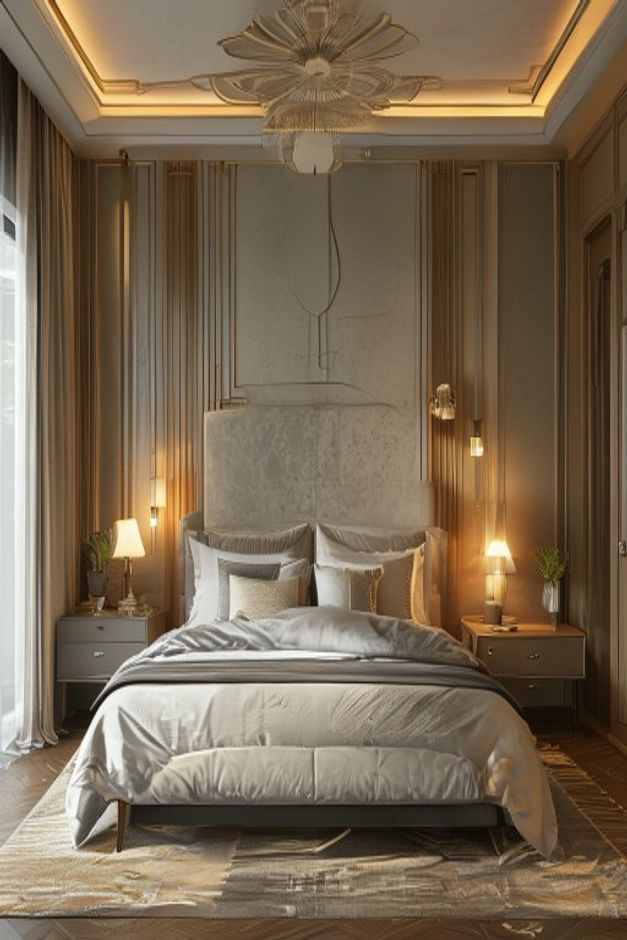
The ceiling is the first surface to establish order in this bedroom. A recessed perimeter traces the room above the bed, and concealed warm light emphasizes its stepped profile. That luminous frame gives the otherwise muted interior a formal, almost ceremonial quality associated with Art Deco geometry.
Below it, the bed, headboard, artwork, and paired nightstands form a centered vertical stack. The composition is not dependent on bold color or graphic pattern. Instead, it builds drama through symmetry, shallow relief, and multiple light sources placed at different heights.
The Tray Ceiling Establishes a Formal Boundary
The recessed ceiling edge is broad enough to be read from the bed, not merely as a technical lighting slot. Its stepped molding creates a layered outline that mirrors the rectangular wall panels below. This repetition makes the upper plane feel connected to the room rather than applied as an isolated flourish.
A central decorative fixture occupies the middle of the recess, but the perimeter glow carries most of the architectural work. The fixture's complex form is visually softened by the simple ceiling field around it. Leaving that surrounding area quiet prevents the overhead composition from becoming crowded.
Vertical Wall Panels Pull the Eye Back to the Bed
Tall narrow strips flank a broad central headboard zone, drawing attention upward from the nightstands. Their warm metallic-brown tone gives depth to the taupe wall without requiring a high-contrast accent color. The central panel remains calmer so pillows and artwork can be read clearly.
The headboard rises into that middle field and shares its pale, softly textured character. Because the boundary between upholstery and wall is understated, the bed appears taller and more integrated. Stronger pattern at this point would interrupt the clean axis between mattress and ceiling.
Bedside Illumination Uses Several Small Sources
Table lamps, slim wall lights, and pendant-like glass fixtures create separate pools of amber light on both sides of the bed. None is large enough to overpower the headboard. Together they give the wall depth and make the strict symmetry feel hospitable after dark.
The useful idea is not to duplicate every fixture exactly, but to maintain comparable brightness and height on the two sides. Similar layering principles appear in this analysis of wood-paneled bedroom headboard walls, where integrated light also turns a flat elevation into an architectural feature.
Muted Bedding Prevents Decorative Overload
Ivory, gray, and taupe bedding occupies a large part of the image, yet it remains visually quiet. The folds provide texture while the lack of strong pattern allows the ceiling and wall relief to stay dominant. A low upholstered bench repeats the softness at the foot without creating a second focal point.
The rug beneath the bed introduces a subtle border and gives the furniture a shared base. Its restrained tonal variation is important. A strongly geometric Deco rug might be historically recognizable, but in this particular photograph it would compete with the layered ceiling and panel rhythm already present.
Daylight Keeps the Warm Scheme From Feeling Enclosed
A tall glazed opening and sheer curtain run along the left edge, bringing a cool natural light into the warm composition. That side illumination reveals the panel depths and stops the taupe palette from becoming uniformly amber. The curtain also adds a soft vertical line beside the harder trim.
The room demonstrates that formal symmetry benefits from one source of variation. Daylight arrives asymmetrically, fabric moves differently from rigid molding, and the bed is naturally imperfect. Those small departures give the carefully centered plan enough life to avoid the stiffness of a staged hotel room.
Nightstands Maintain the Bed Wall's Clear Base
Compact dark nightstands sit beneath the layered wall lights and align closely with the mattress height. Their simple drawer fronts give the elaborate wall and ceiling a stable lower edge. Taller cabinets would collide with the vertical fixtures and make the headboard zone look compressed.
Only a lamp and a few small objects occupy each top, leaving usable surface around them. The discipline at bedside level is what allows the upper architecture to feel luxurious. Ornate furniture here would duplicate the room's formal gestures instead of supporting them. The open floor around the legs also keeps the base from reading as one continuous dark band.