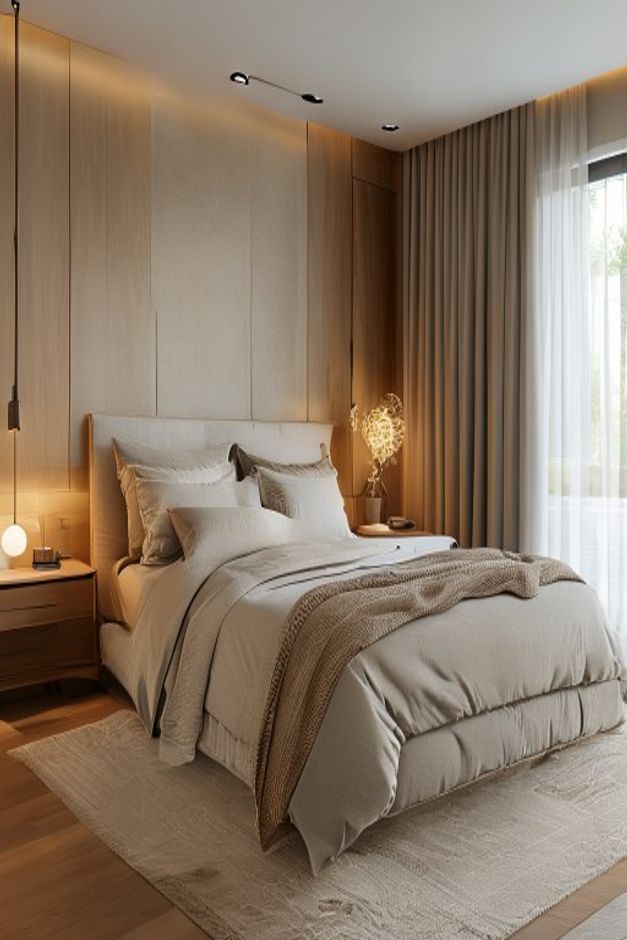

This bedroom shows how architectural detailing can replace the need for excessive ornamentation. By centering the design around a wood paneled headboard wall, the space achieves a sense of permanence and intentionality that defines modern residential comfort. The result succeeds because it balances the raw, organic appeal of timber with the soft, tactile requirements of a sleeping sanctuary, proving that high-end design often relies on the quality of materials rather than the complexity of decoration.
The composition relies on a disciplined palette of beige, taupe, and cream, which prevents the wood from feeling heavy or overly rustic. By examining the interplay between the light-toned wall panels and the layered textiles, one can begin to understand how to curate a room that feels both expansive and intimate. This approach to interior architecture prioritizes the sensory experience, where every choice—from the grain of the wood to the weight of the drapery—contributes to a cohesive, tranquil environment that avoids the pitfalls of fleeting trends.
The Architectural Impact of Wood Wall Paneling
Wood paneling in a bedroom environment acts as a structural frame that grounds the entire spatial layout. Unlike paint or wallpaper, which sit on the surface, vertical wood slats or panels introduce a rhythmic, three-dimensional quality that alters the acoustics and the perceived depth of the room. This architectural treatment creates a permanent backdrop that feels inherently sophisticated, providing a clean, linear structure that guides the eye toward the center of the bed.
When selecting wood for a feature wall, the choice of tone is paramount to maintaining a serene atmosphere. Light-toned wood species offer a bridge between the warmth of natural materials and the coolness of a contemporary palette, ensuring the room remains bright and airy. By integrating these panels directly into the wall architecture, the design achieves a seamless look that avoids the clutter of freestanding headboards, effectively turning the wall itself into the primary aesthetic statement.
Curating a Palette of Quiet Luxury
Quiet luxury is often defined by the absence of visual noise, achieved through a monochromatic or closely related color scheme. In this space, the transition from the warm wood of the headboard wall to the taupe and cream tones of the bedding creates a soft, harmonious gradient. This layering of neutral shades allows the textures of the materials to take center stage, as the eye is not distracted by high-contrast colors or busy patterns.
To replicate this effect, homeowners should focus on the subtle variations in hue found within natural materials. Linen bedding in muted beige offers a matte finish that contrasts beautifully with the slight sheen of finished wood, while textured knit throws add a layer of complexity that feels inviting. For those looking to refine their own space, exploring Quiet Luxury Bedroom Color Ideas can provide the necessary foundation for building a similarly sophisticated and cohesive color story.
The Role of Textile Layering in Bedroom Design
Textiles are the primary tool for softening the rigid lines of architectural wood paneling. The juxtaposition of a structured, paneled wall against the organic, wrinkled drape of linen creates a tension that is essential for a balanced room. By layering different weights of fabric, such as sheer curtains for daytime light diffusion and heavier drapery for evening privacy, the room gains a functional versatility that enhances its overall comfort.
Beyond the bed, the inclusion of a high-quality area rug serves to delineate the sleeping zone while adding another layer of softness underfoot. When choosing textiles, prioritize natural fibers like wool, linen, and cotton, as these materials age gracefully and provide a tactile quality that synthetic alternatives cannot replicate. Integrating these elements requires a careful eye for scale; ensuring the weight of the curtains matches the scale of the room is just as important as selecting the right bedding.
Lighting Strategies for Ambient and Task Needs
Effective lighting design in a quiet luxury bedroom must move beyond a single overhead source to create a layered, atmospheric experience. The use of recessed ceiling spotlights provides a clean, unobtrusive foundation, while a linear wall-mounted pendant adds a touch of sculptural interest that draws attention to the wood paneling. This combination ensures that the room remains functional for reading or dressing while maintaining a soft, diffused glow that promotes relaxation.
A decorative sculptural table lamp placed on a wooden nightstand acts as both a functional light source and a piece of art. The form of the lamp should complement the linear nature of the wall paneling without competing with it. By utilizing dimmers and warm-toned bulbs, the lighting can be adjusted to shift the mood of the room throughout the day, reinforcing the idea that a well-designed space should adapt to the needs of its inhabitants.
Integrating Functional Furniture with Minimalist Intent
Furniture in a quiet luxury bedroom should be selected for its silhouette and material integrity rather than its ability to make a bold statement. The wooden nightstands flanking the bed echo the wood tones of the headboard wall, creating a sense of continuity that makes the room feel larger and more organized. By keeping the furniture profile low and streamlined, the design allows the architecture to remain the primary focus.
When considering storage, opt for pieces that maintain clean lines and avoid unnecessary hardware or ornamentation. A well-chosen wardrobe or dresser should blend into the room’s palette, serving its purpose without disrupting the visual flow. For those interested in how to balance furniture placement with window treatments, looking into Minimalist Bedroom Window Radiator Layout Ideas can offer practical solutions for maintaining a clean, uncluttered perimeter.
The Importance of Verticality and Proportion
The height of the headboard wall paneling plays a significant role in how the room is perceived. Extending the wood panels to the ceiling or across the entire width of the wall can create an illusion of height and grandeur, even in smaller bedrooms. This vertical emphasis draws the eye upward, making the space feel more expansive and reinforcing the architectural nature of the design.
Proportion is the silent partner of luxury. Ensuring that the nightstands are appropriately scaled to the width of the bed and the height of the headboard is essential for maintaining symmetry. When these elements are perfectly aligned, the room achieves a sense of order that is immediately calming. Avoid the temptation to overcrowd the space with too many accessories; instead, let the quality of the wood and the precision of the installation speak for themselves.
Balancing Wood Tones with Soft Furnishings
While wood provides a warm, organic base, it must be carefully balanced with soft furnishings to prevent the room from feeling like a sauna or a cabin. The key is to introduce materials that provide a visual break from the wood grain. Cream-colored upholstery on the bed frame, for instance, acts as a neutral buffer between the wood wall and the bedding, softening the transition and adding a sense of luxury.
Similarly, the use of textured knit throws and plush pillows introduces a tactile softness that invites rest. These items should be chosen in shades that harmonize with the wood rather than matching it perfectly. By embracing a spectrum of warm neutrals, the design becomes more dynamic and less static. If you are looking for guidance on how to select fabrics that complement wood features, reviewing Warm Neutral Bedroom Fabric Headboard Ideas can help you refine your choices.
Sustainability and Longevity in Design Choices
Investing in high-quality wood paneling and natural textiles is a commitment to longevity that aligns with the principles of quiet luxury. Unlike mass-produced furniture that may need replacing every few years, a well-executed wood wall is a permanent fixture that adds value to the home. Choosing sustainable, ethically sourced wood and natural fabrics ensures that the bedroom remains a healthy and enduring environment.
The longevity of a room also depends on its ability to transcend changing fashions. By focusing on classic materials and a neutral palette, the design avoids the trap of becoming dated. Homeowners can learn from this approach by prioritizing quality over quantity, investing in foundational pieces that provide comfort and aesthetic pleasure for decades to come. This is the essence of sustainable luxury: creating spaces that we are loath to leave and that stand the test of time.
How do I choose the right wood tone for my bedroom walls?
Select a wood tone that complements the natural light in your room; lighter woods like oak or ash work best in smaller or darker spaces, while richer tones can add depth to larger, well-lit rooms.
Can a wood paneled wall work in a small bedroom?
Yes, using vertical wood paneling can actually make a small bedroom feel taller and more spacious by drawing the eye upward and creating a clean, continuous line behind the bed.
What is the best way to maintain a wood feature wall?
Keep the wood dust-free with a soft microfiber cloth and avoid harsh chemical cleaners; periodically check for any changes in the wood due to humidity to ensure the finish remains intact.