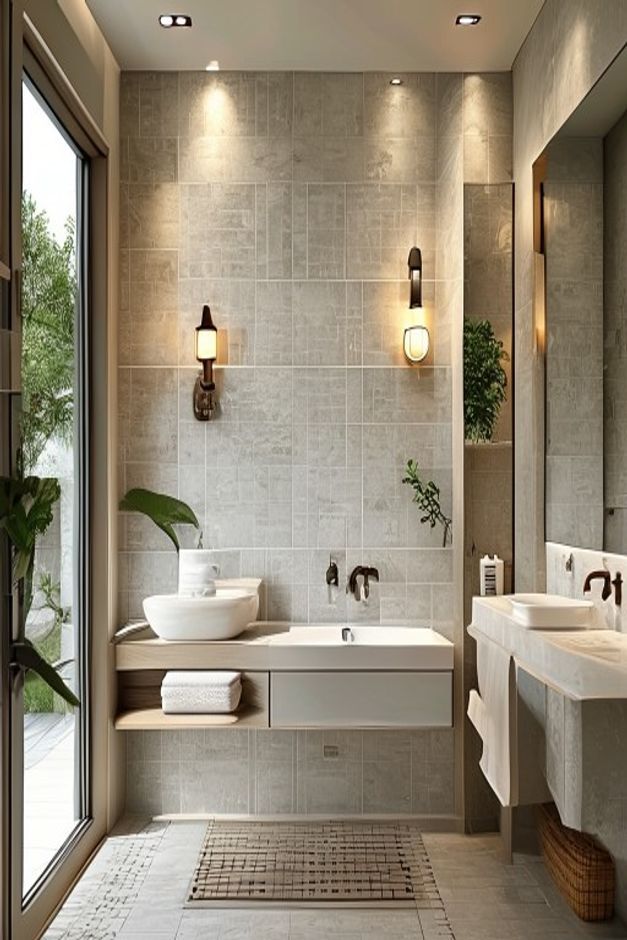

The modern bathroom has shifted from a purely utilitarian space into a sanctuary of architectural restraint, and this California Casual retreat serves as a masterclass in texture-driven design. By anchoring the room with a sophisticated tiled vanity wall, the space achieves a sense of permanence that is often missing in purely minimalist interiors. This design approach highlights how subtle shifts in material application can define the entire atmosphere of a private washroom, turning mundane morning routines into a tactile experience that balances warmth with crisp, clean lines.
Studying this specific arrangement reveals a deliberate choice to prioritize organic materials over ornate detailing. The interplay between the structured, stone-look ceramic tiles and the softened edges of the light wood vanity creates a dialogue between industrial precision and natural comfort. For those seeking to replicate this aesthetic, understanding how these elements interact is essential, as the success of the room relies on a measured application of contrast and a commitment to a cohesive, greige-inspired color palette that feels both grounded and expansive.
The Architectural Impact of Textured Tiled Vanity Walls
Integrating a tiled surface behind the vanity serves as the primary structural anchor for the entire room, providing a backdrop that is both visually engaging and highly durable. Unlike standard painted walls, these stone-look ceramic tiles introduce a depth of shadow and light that changes throughout the day, ensuring the space never feels static or one-dimensional. This elevating the warm neutral bathroom with the power of tiled feature walls concept demonstrates how a single material choice can establish a sophisticated mood without requiring excessive decoration or complex millwork.
When selecting tiles for this purpose, prioritize options that mimic natural stone textures to maintain that essential California Casual vibe. The goal is to achieve a surface that feels authentic and tactile, inviting the eye to linger on the subtle variations in the ceramic finish. By extending these tiles across the entire vanity wall, you create a seamless transition that hides plumbing connections and simplifies the visual field, allowing the individual fixtures—such as the vessel sinks and wall-mounted sconces—to stand out as deliberate, sculptural interventions against the textured landscape.
Floating Vanities and the Illusion of Spaciousness
The decision to utilize a floating vanity is a strategic move that enhances the perceived floor area while maintaining a modern, airy silhouette. By lifting the storage unit off the ground, the design allows for an uninterrupted view of the floor, which contributes to a sense of openness that is particularly effective in smaller or mid-sized bathroom layouts. This approach to mastering the quiet luxury bathroom floating vanity aesthetic emphasizes how removing physical bulk can actually increase the perceived value and comfort of the room, making it feel more like a high-end spa than a standard washroom.
Beyond the physical benefits, the floating vanity provides a clean, horizontal line that complements the verticality of the tiled wall. The open shelving beneath the vanity offers a practical space to store necessities like folded white towels or woven baskets, which keeps the countertop free of clutter. This configuration forces a higher level of organization, ensuring that only items that contribute to the room’s overall aesthetic are kept in plain sight, thereby reinforcing the curated, intentional nature of the California Casual style.
Balancing Warmth with a Greige and Wood Palette
A successful California Casual bathroom relies heavily on a restrained color palette that avoids harsh contrasts in favor of harmonious, earth-toned transitions. The combination of greige wall tiles and light wood vanity surfaces creates a neutral foundation that feels warm, inviting, and inherently sophisticated. By keeping the color scheme tight and focused, the design allows the textures of the stone-look tile and the grain of the wood to become the primary decorative elements, effectively eliminating the need for loud patterns or aggressive color choices.
This color strategy works because it mimics the natural world, grounding the room in a sense of calm that is essential for a space dedicated to rejuvenation. When introducing additional accessories, such as potted indoor plants or textured floor mats, stick to colors that exist within this established spectrum of whites, greiges, and warm wood tones. This consistency ensures that every object feels like a natural extension of the architecture, rather than an afterthought, ultimately creating a cohesive environment that feels both curated and effortlessly livable.
The Role of Symmetrical Lighting in Vanity Design
Lighting is the final layer that brings the architectural elements of the vanity wall into sharp focus, particularly when applied with a sense of symmetry. By installing wall-mounted sconces on either side of the mirror, the design creates a balanced distribution of light that minimizes harsh shadows on the face, which is both practical for daily grooming and aesthetically pleasing. This mastering the modern organic bathroom floating vanity aesthetic approach highlights how lighting can act as a bridge between the functional requirements of a bathroom and the desire for a sophisticated, hotel-inspired atmosphere.
In addition to the sconces, the inclusion of recessed ceiling downlights provides a necessary baseline of illumination that ensures the entire room feels bright and welcoming. The combination of these two light sources allows for flexibility; you can rely on the softer, more directional glow of the sconces for evening relaxation, while the overhead lighting provides full visibility during more active times of the day. This layered lighting scheme is a hallmark of professional design, ensuring that the vanity area remains the functional and visual heart of the bathroom regardless of the time of day.
Selecting Vessel Sinks for a Sculptural Finish
Vessel sinks offer a unique opportunity to introduce sculptural form into the bathroom, acting as individual pieces of art perched atop the vanity surface. Choosing white porcelain sinks provides a clean, crisp contrast against the warm wood vanity, reinforcing the balance between organic materials and refined, man-made finishes. This choice elevates the vanity from a simple storage unit to a prominent design feature, drawing the eye and establishing a clear hierarchy of elements within the room.
When working with vessel sinks, consider the height of the vanity surface to ensure that the rim of the sink remains at a comfortable level for daily use. The interplay between the height of the sink and the placement of the wall-mounted faucet is critical; the faucet should be positioned to provide an elegant arc of water that lands precisely in the center of the bowl. This level of technical precision is what separates a standard installation from a well-considered architectural design, proving that even the most functional components can contribute to the overall beauty of the space.
Integrating Organic Decor to Soften Hard Surfaces
While the tiled wall and wood vanity provide the structural backbone of the room, it is the small, organic decor items that truly define the California Casual aesthetic. Potted indoor plants, for instance, introduce a vibrant touch of life that softens the rigid lines of the tiles and the vanity, creating a more relaxed and breathable atmosphere. These living elements serve as a vital counterpoint to the stone and ceramic surfaces, reminding the user of the connection to the outdoors that is so central to this design philosophy.
Similarly, the use of woven baskets and folded white towels adds a layer of tactile comfort that makes the room feel lived-in rather than sterile. These items are not merely decorative; they serve a functional purpose while simultaneously introducing texture and warmth. By carefully curating these accessories—choosing items that feel authentic and humble—you can prevent the bathroom from feeling too formal or cold, ensuring it remains a space of comfort and personal retreat.
The Importance of Layout and Flow
The linear arrangement of the vanity, paired with floor-to-ceiling window access, demonstrates a sophisticated understanding of spatial flow and light management. Positioning the vanity to take advantage of natural light not only enhances the visibility of the materials but also creates a seamless connection between the interior space and the exterior environment. This layout strategy is particularly effective in California Casual design, where the blurring of boundaries between inside and outside is a recurring theme that promotes a sense of well-being.
Maintaining a clear, uncluttered path in front of the vanity is essential for the room to function effectively. By keeping the floor space open and ensuring that the vanity remains the primary feature, the design avoids the feeling of overcrowding that can plague smaller bathrooms. This focus on clear circulation paths allows the architecture to breathe, ensuring that the room feels spacious and serene, even when it is being used by multiple people during the busiest times of the morning.
Refining the Details for Long-Term Satisfaction
The ultimate success of a California Casual bathroom lies in the meticulous attention to the smallest details, from the texture of the floor mat to the finish of the faucet hardware. These minor elements collectively influence how the space is perceived, creating a sense of quality that is felt rather than just seen. When every component is chosen with care, the result is a room that feels timeless, resisting the urge to follow fleeting trends in favor of a design that remains relevant and beautiful for years to come.
For homeowners, the lesson here is that you do not need to overhaul your entire home to achieve this level of design excellence. By focusing on one or two high-impact changes—such as installing a feature tiled wall or upgrading to a floating vanity—you can transform your existing bathroom into a space that reflects your personal style and commitment to quality. Start by identifying the most prominent wall in your current layout and consider how a change in material or texture could redefine the entire room, then build your design outward from that central decision.
How do I choose the right tile for a vanity wall?
Select stone-look ceramic tiles with neutral tones like greige or soft white, focusing on matte finishes that provide a tactile, organic quality without being overly porous or difficult to maintain.
What is the benefit of a floating vanity over a cabinet?
A floating vanity creates a sense of openness by exposing the floor, which makes the bathroom appear larger and provides a sleek, modern aesthetic that is easier to clean and maintain.
Can I mix different wood tones in a bathroom?
While mixing is possible, sticking to a single, consistent wood tone for your vanity creates a stronger, more cohesive look that aligns perfectly with the minimalist, California Casual design ethos.