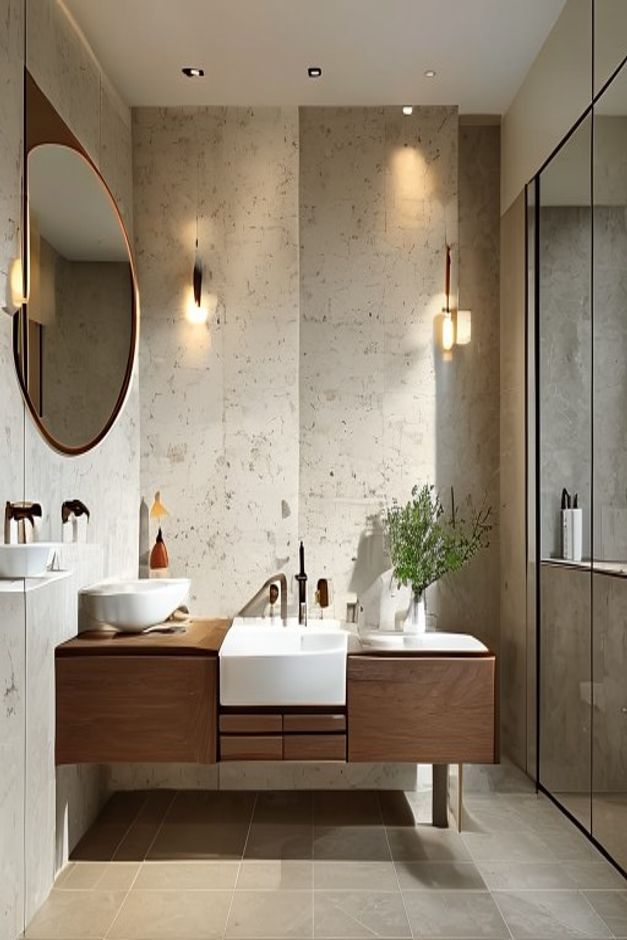

The composition demonstrates how the juxtaposition of raw, earth-toned textures and clean, architectural lines can elevate a functional space into a sanctuary. By stripping away unnecessary ornamentation, the design prioritizes the inherent beauty of natural wood and stone, creating a dialogue between warmth and structural rigor that is both timeless and deeply contemporary.
Studying this space reveals the power of a restrained palette to command attention. The deliberate choice to anchor the room with a floating wooden vanity against a backdrop of expansive stone tiles illustrates a sophisticated approach to spatial volume, proving that luxury is often found in the deliberate curation of materials rather than the abundance of objects.
The Architectural Impact of Floating Vanities
A floating vanity does more than save floor space; it fundamentally alters the perceived dimensions of a bathroom by maintaining a continuous visual plane across the floor. This design choice draws the eye toward the wall, reinforcing the room’s horizontal geometry and emphasizing the structural integrity of the cabinetry itself. By detaching the unit from the ground, the design achieves a sense of weightlessness that contrasts beautifully with the heavy, grounded nature of stone wall cladding.
When selecting a floating vanity for a modern organic scheme, the quality of the finish is paramount. Natural wood veneers provide a tactile softness that balances the cold, hard surfaces typical of bathroom environments. This Warm Neutral Bathroom Double Vanity Ideas approach highlights how timber can act as a bridge between the clinical requirements of a wet room and the comfort of a private retreat, ensuring the vanity remains the primary anchor of the layout.
Utilizing Large-Format Stone for Visual Continuity
Large-format stone or porcelain tiles represent a significant departure from traditional, grid-heavy wall treatments. By minimizing grout lines, these expansive surfaces create a seamless, monolithic appearance that allows the natural veining and color variations of the stone to take center stage. This choice reduces visual clutter, allowing the room to feel more expansive and serene, which is essential for a space dedicated to daily restoration.
The interaction between these large tiles and the ambient light is critical to the room’s success. As light hits the stone, it reveals subtle shifts in tone, from deep charcoal to soft beige, adding a layer of complexity that paint or smaller tiles simply cannot replicate. This Scandinavian Bathroom Shower Tile Ideas inspiration shows that when walls are treated as canvases, the entire atmosphere of the bathroom shifts toward a more gallery-like, intentional aesthetic.
The Role of Matte Black Hardware in Modern Spaces
Matte black fixtures serve as the necessary punctuation marks in an otherwise neutral, organic-leaning interior. Their dark, non-reflective finish provides a sharp contrast against lighter stone surfaces and the warm tones of the wood vanity, preventing the space from feeling overly muted or monotonous. This contrast is not merely decorative; it provides a sense of definition that helps distinguish the functional elements—faucets, handles, and trim—from the architectural backdrop.
Beyond the immediate visual impact, matte black hardware is remarkably versatile, bridging the gap between industrial design and modern minimalism. When these fixtures are paired with clean-lined cabinetry, they ground the room, providing a sense of weight and permanence. This approach ensures that the hardware does not compete with the natural materials, but rather supports them, creating a cohesive narrative that feels both curated and effortless.
Asymmetrical Mirror Placement and Design
The choice of an asymmetrical round mirror introduces a necessary organic curve into an otherwise linear and rectangular environment. In a space defined by the rigid horizontal lines of the vanity and the verticality of the wall tiles, the mirror acts as a soft counterpoint, preventing the room from feeling too sterile or harsh. Its thin frame keeps the focus on the reflection and the wall behind it, maintaining the minimalist ethos of the design.
Placement is equally important; positioning a mirror with an unconventional shape forces a more dynamic interaction between the user and the space. It breaks the symmetry often found in traditional vanity setups, encouraging a more fluid and intuitive use of the area. This strategy is an excellent way to introduce personality into a bathroom without relying on decorative art, allowing the architecture itself to provide the visual interest.
Integrating Lighting for Atmospheric Depth
Lighting in a modern organic bathroom must serve both functional and aesthetic roles, moving beyond simple task illumination to create a layered, atmospheric experience. Recessed ceiling spotlights provide the foundational light necessary for daily routines, while dual minimalist pendant lights offer a more focused, intimate glow. This combination allows for a flexible environment that can transition from a bright, invigorating morning space to a calm, dimmed evening retreat.
The placement of these lights relative to the stone wall is particularly effective, as it accentuates the texture and depth of the material. By casting light across the surface rather than directly onto it, the design highlights the natural variations in the stone, creating shadows that add a sense of movement and drama. This technique transforms the wall from a static background into a living element that changes throughout the day.
Minimalist Countertop Curation and Organization
Maintaining a clean, uncluttered countertop is essential for preserving the modern organic aesthetic. By limiting accessories to only the most necessary items, the design respects the integrity of the vanity’s surface and the beauty of the integrated sink. Minimalist accessories, such as stone or ceramic vessels, can complement the room’s palette while providing functional storage that doesn’t overwhelm the space.
This philosophy of restraint encourages a more mindful approach to storage. If the vanity is the only surface, then every object placed upon it must be both useful and visually harmonious. This Minimalist Bathroom Mirror Wall Ideas perspective emphasizes that true luxury in a bathroom is the ability to keep surfaces clear, allowing the quality of the materials—the wood, the stone, and the matte black accents—to shine without distraction.
The Importance of Organic Greenery in Bathrooms
Introducing potted greenery into a bathroom is perhaps the most effective way to reinforce a modern organic theme. Plants provide a living, breathing texture that contrasts with the rigid, manufactured nature of stone and tile. The vibrant, deep greens of foliage break up the neutral beige and charcoal palette, injecting a sense of vitality and freshness that is synonymous with nature-inspired design.
When choosing plants for this environment, consider species that thrive in humid conditions and low-to-medium light. Placing a plant on the vanity or near a light source ensures it remains a healthy, integral part of the room’s composition. This living element serves as a reminder of the design’s organic roots, softening the edges of the room and creating a more welcoming, human-centric space that feels grounded in the natural world.
Achieving Balance in Linear Layouts
The linear arrangement of this bathroom is a testament to the efficiency of modern design. By aligning the vanity, mirror, and lighting in a single, cohesive path, the layout maximizes the available space while creating a clear, logical flow. This linearity is not about restriction; it is about creating a path of least resistance that simplifies the user experience and emphasizes the room’s architectural length.
To prevent a linear layout from feeling like a corridor, it is vital to introduce variations in texture and depth. The floating vanity, the recessed lighting, and the textured stone wall all work together to break the monotony of the straight line. By carefully managing these elements, the design achieves a perfect equilibrium, proving that a linear floor plan can be just as dynamic and engaging as a more complex, multi-layered layout.
How can I make a small bathroom feel larger using these design principles?
Focus on using large-format tiles to reduce grout lines and installing a floating vanity to expose more floor area. These choices create an illusion of continuity that makes the space feel significantly more open and less segmented.
What are the benefits of using natural wood in a bathroom environment?
Natural wood introduces warmth and a tactile, organic quality that balances the coldness of stone and tile. When properly sealed and maintained, wood veneer adds a layer of depth and visual comfort that synthetic materials cannot match.
Why is matte black hardware preferred in modern organic design?
Matte black hardware provides a bold, high-contrast definition against neutral stone and wood surfaces. It acts as a grounding element that bridges the gap between industrial precision and the softness of natural materials, ensuring the design feels sophisticated and intentional.