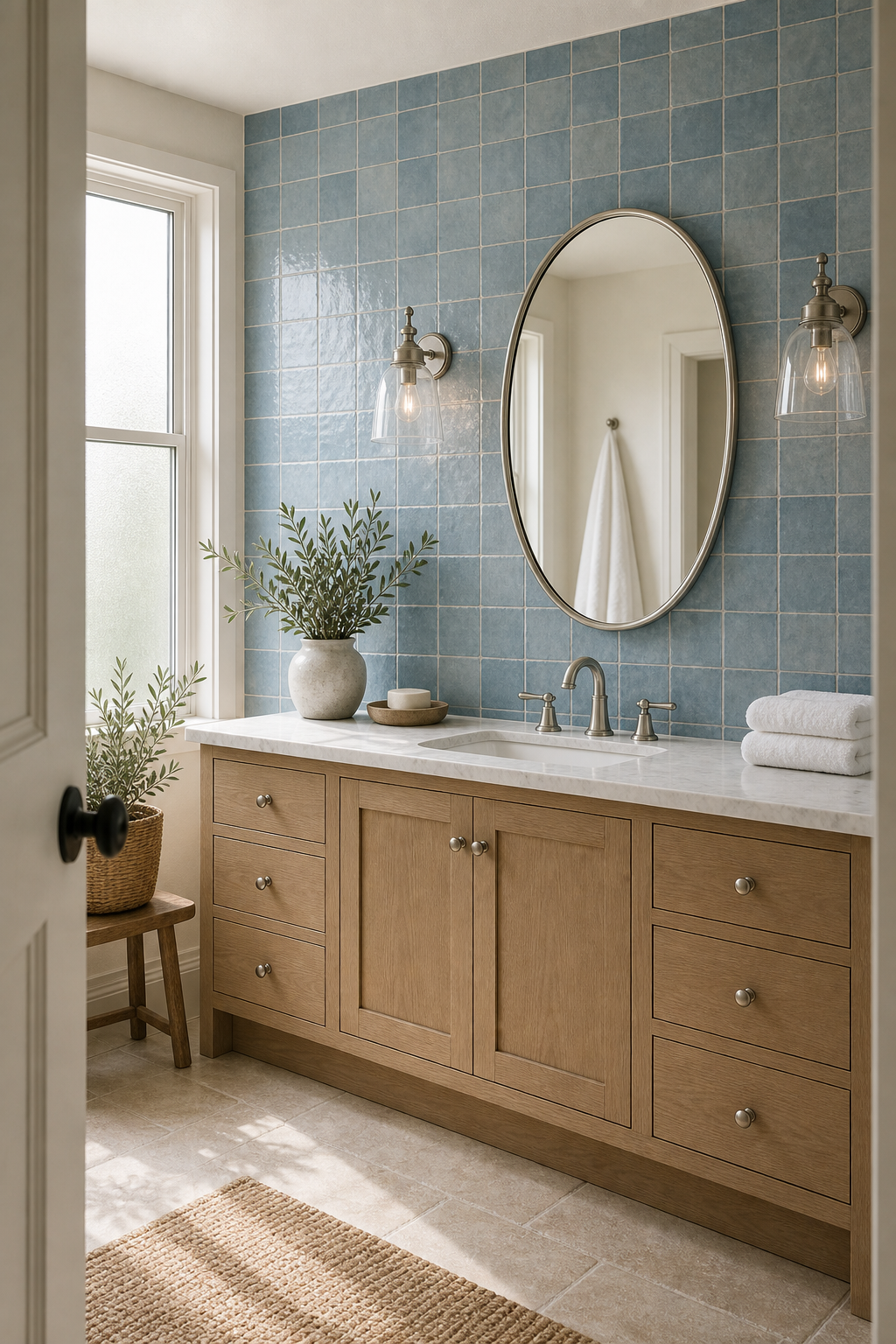

Blue is given enough area to shape the bathroom rather than appearing as a small accent. Square soft-blue tiles cover the full vanity wall visible around an oval mirror and paired glass sconces. Below, a light timber-toned cabinet and pale counter add warmth without weakening the color field. Side daylight catches variations across the glazed surface, while cool-toned fittings remain fine enough to preserve the room's fresh coastal balance.
Blue Tile Occupies the Entire Vanity Elevation
The soft blue tile covers a large section of the vanity wall, which makes it feel architectural rather than decorative. Its handmade surface catches daylight and gives the wall subtle movement. Because the grout grid is clear, the color still feels orderly. That balance keeps the bathroom coastal without becoming overly casual.
Tile continues behind both lights and beyond the mirror, so the color reads as architecture rather than a framed splashback. The blue remains muted enough for grout lines and reflected light to create interest without requiring another pattern.
The light timber-toned vanity brings warmth below the cool blue wall. Its natural tone prevents the bathroom from feeling too cold or purely white and blue. The drawer and door fronts are simple, which allows the tile to stay visually dominant.
The Oval Mirror Interrupts the Square Geometry
The oval mirror interrupts the square tile grid with a gentle curve. This is a useful move because the wall has many straight grout lines. Its slim metallic frame adds definition without becoming the strongest feature.
The mirror's tall curve removes a large portion of the square grid but leaves a consistent tile margin around its perimeter. The published Scandinavian shower-tile analysis uses tile to order a wet enclosure; here, the grid organizes the washing elevation.
Paired Glass Sconces Preserve the Color Field
The glass sconces sit directly on the blue tile and add a warm layer of light. Their transparency keeps them from covering too much of the wall surface. Placed on both sides of the mirror, they make the vanity wall feel balanced and finished.
A Light Vanity Warms the Lower Wall
The pale tiled floor keeps the bathroom grounded while staying quieter than the tile wall. Its larger format gives the room a calmer base. That restraint helps the blue wall remain the design focus from doorway height.
Warm timber tones below prevent the blue from becoming cold, yet the cabinet fronts are plain enough to remain subordinate. The contrast is material and tonal, not thematic: there are no nautical symbols or unrelated coastal objects in the scene.
The brushed cool-toned metal faucet and mirror frame feel lighter than black or heavy brass would in this setting. Their cooler finish relates naturally to the blue tile. The metal choice keeps the bathroom bright and coastal without making the palette feel themed.
Side Daylight Reveals Subtle Tonal Shifts
Choose blue tile for one major wall, preferably the vanity wall, so the color has enough scale to matter. A small strip of blue would not create the same effect. Pair it with light wood, pale stone, simple mirror shapes and clear or lightly framed sconces.
Building a Coastal Palette Without Literal Motifs
I would avoid a second strong pattern in this bathroom. The tile grid and glaze already provide enough visual activity. I would also avoid dark bulky hardware because it would make the coastal palette feel heavier than the image suggests.
Keep the blue concentrated on one substantial wall and let adjoining floor, counter, and cabinetry stay quieter. The room's identity comes from scale and surface response to light, so an additional strong motif would make the small elevation feel crowded.
The sconces are narrow and transparent enough for grout lines to continue visually behind them. Their warm glow introduces a second color temperature only as a localized layer; daylight still determines the larger reading of blue, pale timber tones, and white surfaces.
The vanity doors use broad flat divisions below the finer tile grid. That change of scale is important. Matching every cabinet joint to the tile would make the elevation mechanical, while the current arrangement lets cabinetry ground a more animated upper wall. A small branch vessel sits below the mirror edge and introduces one irregular silhouette without covering a meaningful area of blue tile.