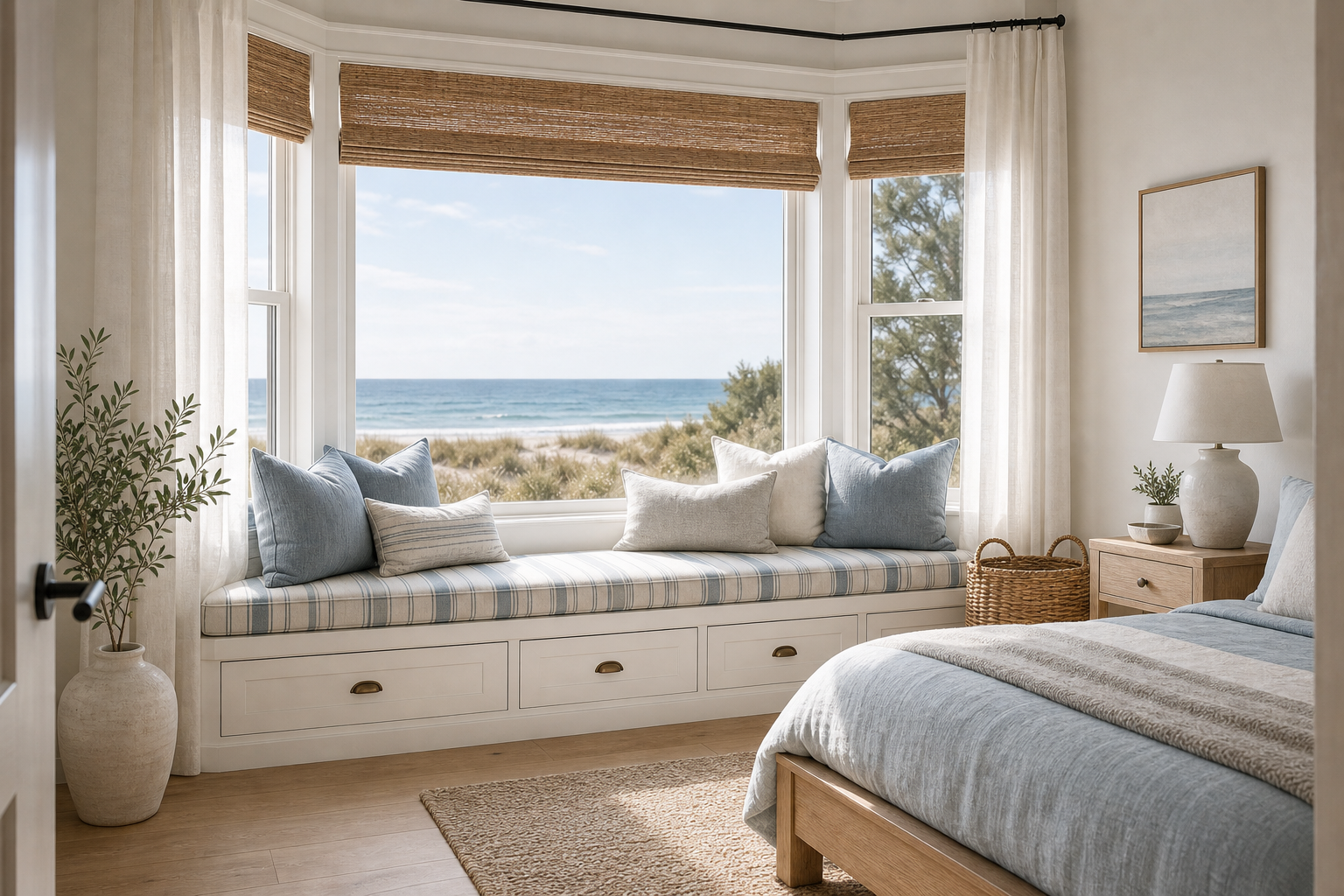

The bay window has been made inhabitable without sacrificing its broad coastal outlook. A fitted bench follows the angled opening, carrying a pale cushion and restrained blue-gray pillows beneath three glazed sections. Drawers form a quiet base below, while woven shades and sheer curtains filter the edges. The bed remains in the foreground rather than being pushed into the bay, so sleeping and sitting functions stay distinct.
The Bench Follows the Bay Geometry
The built-in seat sits directly below the largest window, so the architecture and the view work together. That placement gives the bedroom a second destination beyond the bed. It makes the window wall useful, not just pretty.
The seat runs continuously across the central and angled window sections, making the changing wall direction feel intentional. Its front edge remains straight enough to provide a clear sitting line while the deeper sill accommodates the bay behind it.
The blue-and-cream striped cushion brings coastal color into the room without turning the bench into a novelty piece. Its long horizontal pattern also reinforces the width of the window seat, making the built-in look broader and more settled.
Drawers Give the Window Base a Useful Rhythm
The drawer fronts below the cushion keep the built-in from looking like an empty platform. They also use the depth beneath the seat without adding separate furniture near the window. That is a smart move in a bedroom where floor space should stay calm.
Drawer fronts repeat at equal widths and use small dark pulls, forming a stable low band under the soft cushion. Their presence confirms accessible storage without revealing or justifying any internal system that is not visible.
Woven Shades Frame Each Glass Section
The woven shades add natural texture above the glass and connect to the basket and rug. They also warm the bright window wall. Against the white trim and blue view, the woven texture keeps the coastal bedroom from feeling too crisp.
The sheer curtains sit at the sides of the window wall, softening the strong rectangular geometry. They help the window seat feel like part of a bedroom rather than a hard built-in box. That softness is especially important beside the light wood bed.
Sheer panels gather at the two outer corners and do not cross the middle glass. This keeps the sea view open while softening the transition from angled bay to room wall, where a harder trim line could otherwise dominate.
The Bed Stops Before the Sitting Zone
The bed is visible on the right, but it does not steal attention from the window. Its pale blue bedding repeats the pillow color on the bench, linking the sleep zone and the window seat without making them compete.
The ocean view already provides the strongest coastal cue. Because of that, the room can stay subtle: linen, woven texture, pale wood, blue pillows and a simple coastal artwork are enough.
Designing a Window Bench as a Separate Destination
Start with the window width and build the seat to fit the bay or wall opening cleanly. Choose a cushion that fills the full seat, then use a few pillows for comfort. Keep the palette close to the view: soft white, sand, pale blue and natural woven tan.
The integrated approach in this rustic modern window-bench study combines seating with a more enclosed niche. Here, glazing and horizon remain primary, so the bench profile and textiles stay deliberately pale and low.
A small bedside table occupies the wall beside the bay but stays below the window-seat cushion line. This lets the fitted bench retain its full width while connecting it to the sleeping area through matching pale surfaces and modest ceramic objects. The distinction is useful: the bay provides a destination for sitting and viewing, whereas the table remains clearly attached to the bed's daily use.
The central cushion is deep enough to support sitting but does not extend over the drawer face. Pillows collect mainly at the angled ends, leaving a broad place in the middle from which the ocean view can be used directly. This distribution avoids turning the bench into a miniature sofa with an overfilled back and keeps the bay geometry readable through the textile arrangement. The open view remains the bay's strongest color field, so no additional wall accent is needed.