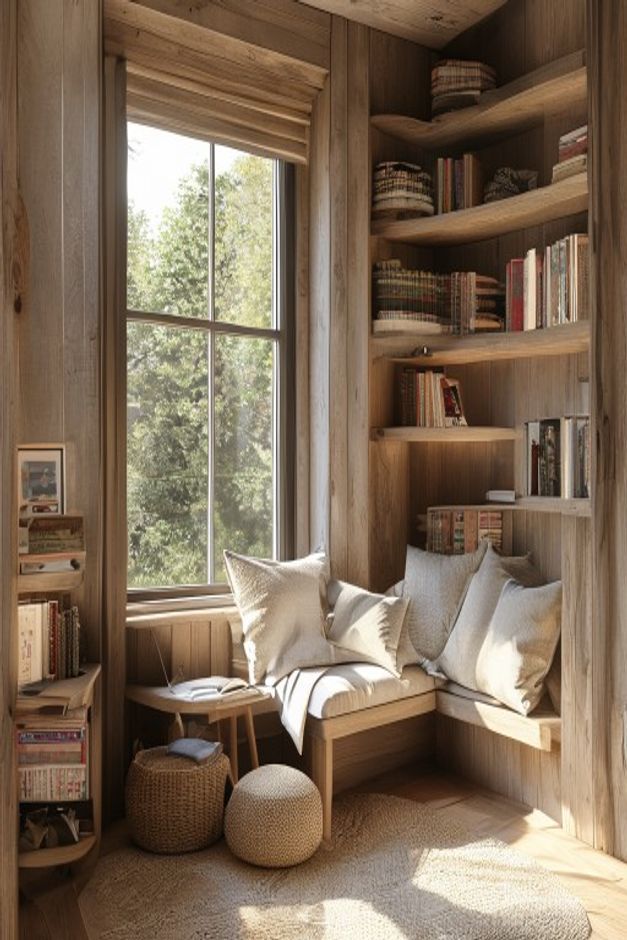

The allure of a dedicated reading nook lies in its ability to transform an underutilized corner into a sanctuary of stillness and intellectual engagement. This specific configuration demonstrates a sophisticated command of space, where the architectural envelope and the furniture elements are not merely adjacent but fundamentally unified. By prioritizing the integration of a window bench with vertical shelving, the design avoids the clutter typical of smaller residential spaces, instead offering a clean, cohesive aesthetic that invites prolonged periods of relaxation.
Studying this environment reveals how intentional carpentry can redefine the functionality of a corner. Rather than relying on disparate pieces of furniture that might compete for visual dominance, this approach utilizes the structural geometry of the room to dictate flow and utility. For homeowners looking to elevate their interior design, this project serves as a masterclass in maximizing square footage while maintaining an atmosphere of warmth and quiet sophistication through a curated selection of materials and forms.
The Architectural Logic of Corner-Integrated Seating
Integrating a window bench directly into the corner of a room serves as a strategic intervention that captures natural light while providing a stable, fixed foundation for the space. By anchoring the seating to the walls, the design creates a sense of permanence and security, which is essential for a reading environment. This layout effectively eliminates the wasted footprint often associated with freestanding chairs, allowing the floor area to remain open and uncluttered.
Furthermore, the physical connection between the bench and the adjacent wall surfaces ensures that the seating area feels like an intentional extension of the room’s architecture rather than an afterthought. This design choice fosters a seamless transition between the window’s edge and the interior, encouraging a deeper connection to the exterior environment. When the seating is built into the room’s bones, it naturally directs the user’s focus toward the window, framing the outside view as a living piece of art.
Maximizing Verticality with Built-in Open Shelving
Verticality is often the most overlooked asset in residential design, yet it remains the most effective tool for expanding storage capacity without sacrificing floor space. In this reading nook, the inclusion of open shelving that rises from the bench level creates a rhythmic verticality that draws the eye upward, effectively increasing the perceived height of the room. This approach to storage is both practical and aesthetic, allowing for the display of literature and personal artifacts in a way that feels curated and accessible.
The open nature of these shelves prevents the room from feeling heavy or enclosed, which is a common risk when incorporating large storage units into smaller nooks. By keeping the shelving exposed, the design encourages a tactile interaction with the collection, making the act of selecting a book a central part of the experience. The arrangement of books on these shelves adds a layer of color and texture that complements the neutral palette of the surrounding wood and upholstery, proving that utility can indeed function as decor.
The Role of Natural Wood in Rustic Modern Aesthetics
The choice of warm wood paneling as the primary material defines the room’s rustic modern character, providing a grounding element that feels both organic and refined. Natural wood has an inherent ability to soften the hard lines of architectural corners, introducing a sense of comfort that is essential for a space intended for rest. The grain and tone of the wood create a visual warmth that persists even when natural light levels fluctuate, ensuring the nook remains inviting throughout the day.
Beyond its aesthetic appeal, wood acts as a bridge between the rustic tradition of craftsmanship and the modern requirement for clean, functional lines. The paneling here is applied with precision, highlighting the structural integrity of the nook without feeling overly decorative or ornate. This restrained application allows the material’s natural beauty to take center stage, creating a backdrop that is sophisticated enough for a contemporary home yet grounded enough to feel like a timeless retreat. For more on integrating wood into your home, consider these Serene Cottage Reading Nook with Built-in Wood Shelving design principles.
Selecting Textiles for Comfort and Texture
Comfort in a reading nook is largely dictated by the quality and placement of textiles, which must provide both physical support and visual softness. The use of linen-textured upholstery on the window bench offers a durable yet refined surface that invites the user to linger. This choice of fabric is particularly effective in a rustic modern setting, as its subtle weave adds depth to the overall palette without overwhelming the space with patterns or excessive color.
Layering is the key to successfully implementing textiles in this environment. By introducing decorative throw pillows, the design adds a necessary layer of plushness that contrasts with the firm structure of the wooden bench. These pillows serve a dual purpose: they provide ergonomic support for extended reading sessions and introduce a soft, tactile element that breaks up the continuous surfaces of the wood. The interaction between the smooth wood and the textured fabric creates a balanced sensory experience that is vital for a relaxing atmosphere.
Enhancing the Nook with Versatile Furniture Pieces
While the built-in elements provide the primary structure, the addition of movable furniture pieces like a small wooden side table and woven pouf ottomans introduces necessary flexibility. A side table provides a stable surface for a cup of tea or a lamp, acting as a functional anchor point near the bench. Its modest size ensures that it does not disrupt the flow of the room, yet it remains indispensable for the daily rituals associated with reading.
The inclusion of woven poufs offers an adaptable seating solution that can be moved as needed, whether for propping up feet or providing extra surface space. These pieces add an element of organic texture that mirrors the natural feel of the wood paneling, reinforcing the rustic modern theme. This combination of fixed, permanent architecture and mobile, lightweight furniture creates a dynamic environment that can evolve according to the needs of the user, much like the Bohemian Reading Nook with Rattan which emphasizes layered textures.
Optimizing Natural Light for Reading
Natural daylight is the most valuable asset in any reading nook, and its management is critical to the room’s overall success. By positioning the bench directly beneath a window, the design maximizes the availability of ambient light, reducing the need for artificial illumination during daytime hours. This connection to the outside world not only improves visibility for reading but also enhances the psychological benefits of the space, as sunlight is known to improve mood and focus.
The design effectively uses the window as a light source while maintaining a sense of privacy through the careful placement of the surrounding built-ins. This balance ensures that the nook feels protected and intimate, rather than exposed. The way light interacts with the wood paneling throughout the day, shifting from bright morning rays to softer afternoon glows, adds a temporal dimension to the room that keeps the space feeling alive and constantly changing.
Creating a Cohesive Color Palette
A restricted color palette is the hallmark of a successful rustic modern design, and this nook excels by focusing on warm wood, beige, and cream tones. These colors work in harmony to create an environment that is tranquil and free from visual noise. By avoiding bold or contrasting colors, the design allows the focus to remain on the textures and the architectural forms, resulting in a space that feels calm and composed.
The cream and beige elements act as neutral stabilizers, preventing the wood from appearing too heavy or monochromatic. This layering of light, neutral tones creates a sense of airiness that is essential for smaller reading areas. When the color palette is kept simple, the eye is free to appreciate the subtle details—the grain of the wood, the weave of the upholstery, and the arrangement of books—which collectively build a space of quiet elegance. Similar principles of color and structure can be seen in a Japandi Reading Nook with Floor-to-Ceiling Built-in Shelving.
The Importance of Curated Decor
Decor in a reading nook should be meaningful and sparse, serving to enhance the room’s purpose rather than distract from it. Framed artwork and carefully selected books on the shelves provide personal touches that make the space feel unique to the inhabitant. These items are not just filler; they represent the interests and history of the user, turning the nook into a reflection of their personality.
The restraint shown in the decoration is what allows the room to remain a functional retreat. By avoiding excessive ornaments, the design maintains a clean, open feel that supports deep concentration. Every object in the nook has a reason for being there, whether it is the books for reading or the poufs for comfort. This curated approach ensures that the space remains a place of calm, where the mind can wander without the interruption of unnecessary clutter.
How do I choose the right wood for my built-in bench?
Select a wood species that complements your existing flooring and trim, focusing on warm, natural tones that offer durability and a pleasant tactile quality for seating areas.
Can I add storage to a reading nook that lacks built-ins?
Yes, consider using modular shelving units or low-profile cabinets that can be secured to the wall to mimic the look of built-ins while providing essential storage for your book collection.
What is the best way to light a nook without a window?
If natural light is unavailable, utilize a combination of warm-toned wall sconces and a floor lamp to create a layered lighting scheme that mimics the softness of daylight.