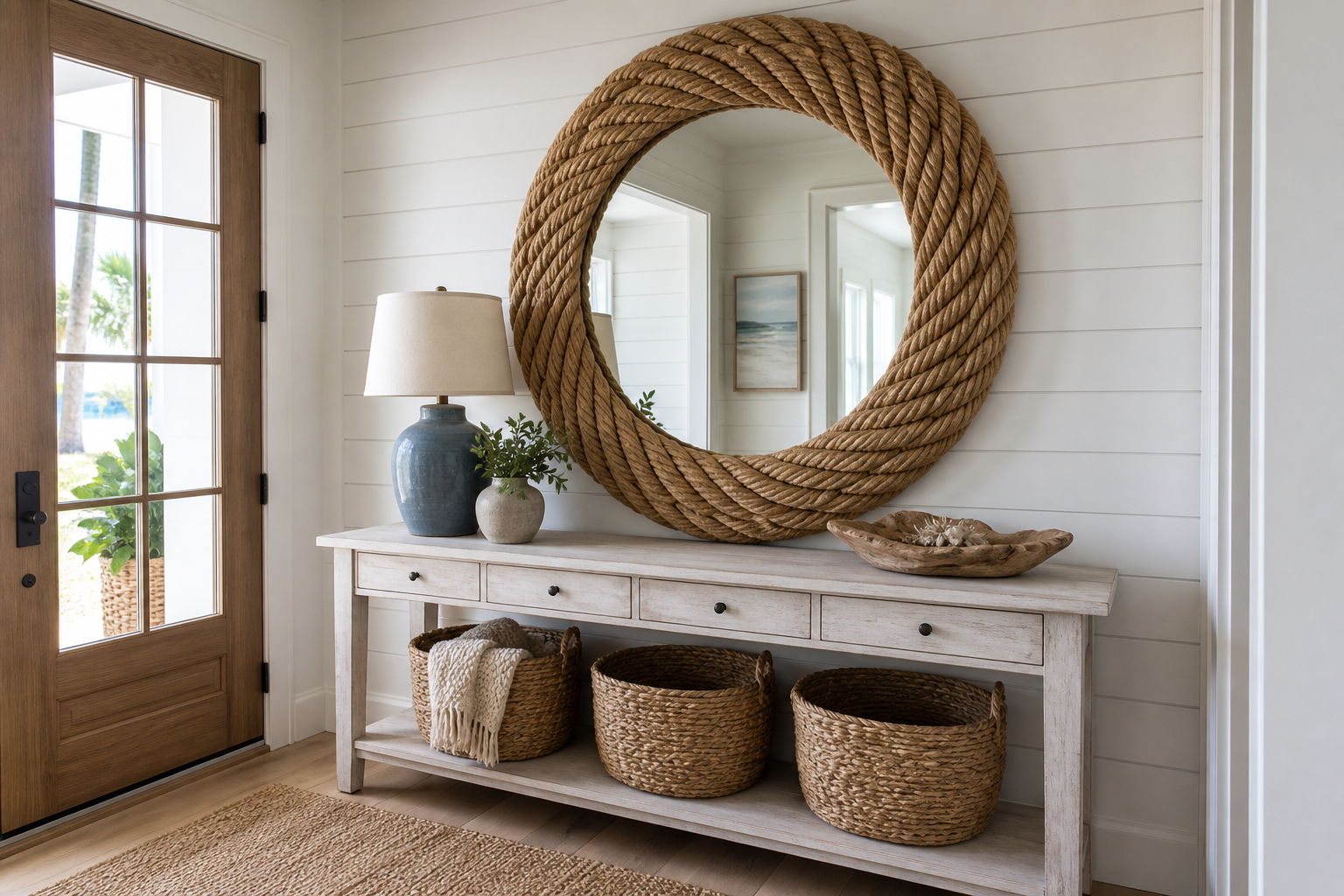

The rope-framed mirror is large enough to operate as the entryway's principal wall element. Its thick braided border turns a simple circle into a deeply textured form above a long pale timber-toned console. Three woven baskets fill the open lower bays, while a blue-gray lamp, shell-like objects, greenery, and daylight from the glazed door remain secondary. Coastal identity is carried by tactile evidence and restrained color rather than signs or themed ornament.
The Mirror Uses Scale Before It Uses Texture
The mirror is oversized enough to dominate the console wall, and its thick rope frame adds texture that can be read from across the room. That scale is the reason the entry feels designed. A smaller mirror would leave the console doing too much visual work.
The frame extends across much of the available wall width and leaves only a narrow band of paneling at each side. That generous diameter prevents the console from appearing longer and heavier than the element above it.
The console is long and rectangular, so the round mirror breaks up the straight lines of the drawers, shelf and horizontal wall paneling boards. This contrast keeps the entryway relaxed. Coastal rooms usually need some softness to balance all the horizontal wall and floor lines.
Individual rope turns create shadow around the complete circumference. The coastal rattan-console entryway article puts woven texture into the furniture itself; this room concentrates the coarsest texture around the reflective surface.
Horizontal Paneling Makes the Curved Frame More Legible
The horizontal wall paneling gives the mirror a clean white field and a subtle horizontal rhythm. It reinforces the coastal setting without adding another competing pattern. Because the boards are painted warm white, the rope frame remains the strongest texture on the wall.
Repeated horizontal wall grooves establish a quiet linear backdrop that contrasts with both the mirror circle and braided border. Their pale finish allows shadow, not strong color, to describe the wall.
The Long Console Supplies a Stable Lower Datum
The console has a weathered pale finish that sits between painted furniture and raw wood. That makes it a good bridge between the horizontal wall paneling and woven baskets. Its narrow depth also suits an entryway, where furniture should give function without blocking the door path.
Open Bays Give Woven Baskets a Precise Location
The three woven baskets under the console repeat the natural texture of the rope mirror at a lower level. They make storage visible without looking messy. This is especially useful in an entry: the baskets can hold everyday items while still supporting the design language.
Three baskets occupy separate open bays and stop below the console top. Their contents cannot be verified, but their visible scale and spacing show how practical containers can reinforce the composition without spilling into the arrival path.
The ceramic lamp introduces a soft blue-gray note that feels coastal without becoming bright or literal. It stands out against the white wall and tan rope. The restrained color keeps attention on texture, which is the more sophisticated move in this entryway.
Door Light Keeps Pale Surfaces From Merging
Daylight from the glass-panel door brightens the console wall and gives the mirror useful reflection. It also keeps the entry from feeling like a closed hallway. The wood door adds warmth beside the white horizontal wall paneling, so the palette does not become too stark.
Composing a Coastal Entry Without Literal Theme Decor
Start with a rope mirror large enough to visually anchor the console. The frame should feel substantial, not like a thin trim. Pair it with one pale console, woven storage and a single muted color accent. That is enough to establish the coastal mood.
Begin with mirror diameter and console width, then limit accessory height so the rope frame stays uninterrupted. Nautical signs, several blue objects, or another woven wall piece would turn a material-led room into a literal theme.
The console top is narrow and lightly styled, which leaves the mirror's lower curve fully visible. A lamp and small vessels occupy the ends instead of building a decorative mound at the center.
The mirror reflects a pale interior opening rather than another busy display, extending perceived depth through the center. Its clear reflective field also prevents the thick rope border from feeling visually closed or heavy.