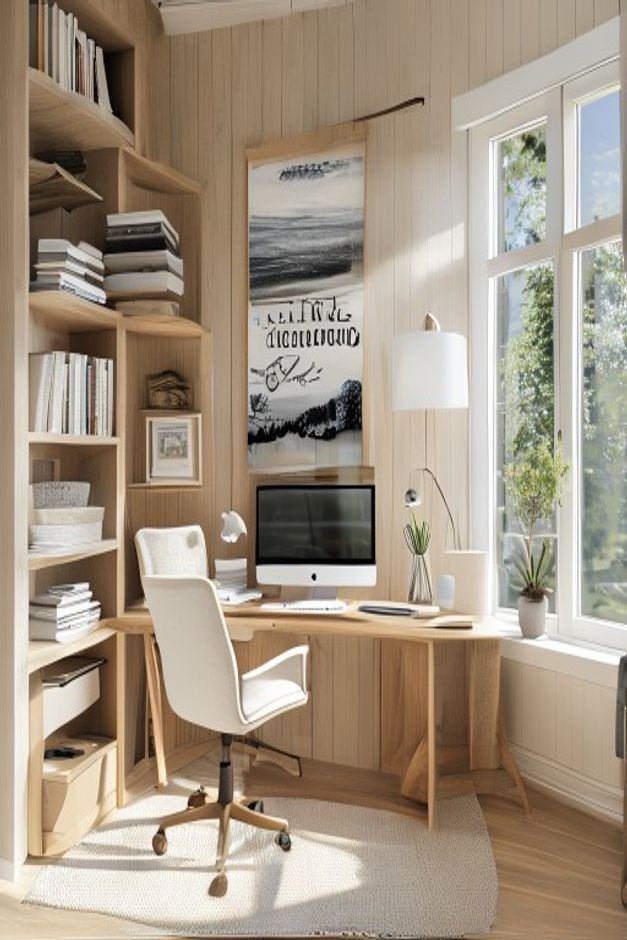

This home office serves as a definitive case study in how coastal design principles can be adapted for a professional, high-functioning workspace. By prioritizing a palette of light oak, soft grey, and crisp white, the room achieves a sense of calm that is often missing from traditional, high-contrast office environments. The result succeeds because it balances the rigid requirements of a desk-based workspace with the fluid, organic aesthetic of coastal living.
The integration of vertical wood paneling across the walls creates a rhythmic texture that draws the eye upward, effectively softening the transition between the floor and the ceiling. This architectural choice provides a backdrop that feels intentional and grounded, proving that small-scale residential offices benefit significantly from a cohesive material narrative. By analyzing the way light interacts with these surfaces, we can better understand how to manipulate atmosphere through the careful selection of finishes.
The Role of Curved Furniture in Softening Workspace Geometry
The choice of a curved light wood corner desk is perhaps the most significant departure from the standard rectangular workstation. In a room defined by linear vertical paneling, the soft arc of the desk provides a necessary visual counterpoint that encourages natural movement and flow. This ergonomic approach to furniture selection minimizes harsh corners, making the room feel more expansive and inviting for long hours of focused activity.
Beyond its aesthetic contribution, the curved desk optimizes the corner layout, allowing for a more efficient use of floor space without sacrificing surface area. The light oak finish maintains the room’s airy quality, reflecting natural light from the adjacent window and preventing the furniture from feeling heavy or imposing. This design decision proves that functional office equipment can be both highly practical and stylistically aligned with a serene coastal vision.
Maximizing Verticality with Integrated Light Oak Shelving
Built-in shelving units that mirror the room’s primary wood tones provide an essential structural anchor for the office. By extending these shelves vertically, the design utilizes the wall plane to its fullest potential, offering ample storage for books and decorative objects without cluttering the floor. This verticality is crucial in smaller office footprints, as it directs attention toward the ceiling, creating an illusion of greater height and architectural volume.
The open nature of the shelving allows for a curated display that feels personal yet professional, bridging the gap between a home library and a corporate workspace. When these shelves are populated with stacked books and subtle coastal accents, they contribute to the room’s overall texture. This approach to storage demonstrates that organization does not have to be hidden behind closed doors to be effective; rather, it can serve as a design element that reinforces the room’s thematic intent.
Selecting an Ergonomic Chair for Coastal Aesthetics
The inclusion of a white ergonomic office chair with casters is a masterstroke in balancing comfort with a clean, coastal aesthetic. While many office chairs rely on dark meshes or industrial plastics, this piece utilizes a bright, neutral frame that blends seamlessly with the surrounding walls and light oak surfaces. The mobility afforded by the casters ensures that the user can easily transition between the desk and the surrounding shelving, maintaining the fluidity of the workspace.
Comfort remains the primary requirement for any home office, and this chair proves that ergonomic support does not necessitate a sacrifice in style. The soft grey and white tones of the seating fabric complement the room’s neutral palette, ensuring that the chair acts as a harmonious component rather than a jarring visual interruption. Choosing furniture that shares a common color language is essential for achieving a cohesive and professional look in a residential setting.
Harnessing Natural Light and Ambient Illumination
The office benefits from a deliberate approach to lighting, anchored by the presence of a window that invites an abundance of natural daylight. This source of light is vital for coastal design, as it highlights the natural grain of the oak surfaces and enhances the crispness of the white walls. By positioning the workspace near this source, the design ensures that the user remains connected to the outdoors, which is a hallmark of the coastal style.
To supplement this natural light, a white drum shade floor lamp provides a soft, diffused glow that is perfect for evening work or overcast days. The drum shape echoes the curves found in the desk, creating a subtle repetition of form that ties the room together. This layering of light—combining natural daylight with intentional, shaded artificial sources—prevents the room from feeling flat or clinical, ensuring a warm, inviting atmosphere throughout the day.
The Impact of Vertical Wood Paneling on Acoustic Quality
Vertical wood paneling serves a dual purpose in this office, acting as both a visual texture and a subtle acoustic modifier. The linear grooves of the paneling can help to diffuse sound, reducing the harsh echoes often found in rooms with hard surfaces. This creates a more pleasant sonic environment, which is particularly important for individuals who engage in frequent video calls or require deep concentration for extended periods.
From an architectural standpoint, the choice to use light-toned wood paneling instead of traditional paint or wallpaper adds a layer of depth that changes throughout the day. As the sun moves across the sky, the depth of the wood grain and the shadows within the paneling grooves shift, providing a dynamic backdrop that feels alive. This is a sophisticated way to add character to a room without relying on bold colors or busy patterns, keeping the focus on the quality of the materials.
Curating Coastal Decor for a Professional Environment
Coastal decor in a home office should be understated to maintain a professional atmosphere, and this room handles that balance with precision. A coastal-themed wall hanging and small framed artwork provide enough thematic interest to define the style without overwhelming the workspace. These elements are chosen for their simplicity, ensuring they do not distract from the primary function of the room as a place of work.
Potted plants on the windowsill add a touch of organic life, which is essential for softening the hard lines of the office environment. The presence of greenery creates a bridge between the indoor space and the natural world, reinforcing the coastal theme in a subtle, sophisticated manner. When selecting decor for a workspace, prioritizing items that bring a sense of tranquility—rather than clutter—is key to sustaining focus and productivity.
Optimizing the Corner Layout for Workflow Efficiency
The corner-oriented workspace is a strategic layout choice that maximizes available square footage while creating a dedicated zone for productivity. By utilizing the corner, the design effectively separates the office from the rest of the home, fostering a sense of enclosure that is beneficial for concentration. This arrangement also allows for easy access to the integrated shelving, keeping essential resources within arm’s reach.
For those looking to refine their own home offices, this layout serves as a reminder that the orientation of furniture is just as important as the furniture itself. By aligning the desk with the corner and surrounding it with vertical storage, the room creates a self-contained hub that feels both expansive and secure. This spatial organization is a testament to the effectiveness of thoughtful planning in residential interior architecture, especially when compared to Japandi Home Office Wood Desk Ideas which often prioritize similar minimalist principles.
Integrating Textures for a Layered Coastal Feel
The use of a woven fabric rug adds a necessary layer of softness to the floor, grounding the desk area and providing a tactile element that contrasts with the smooth wood surfaces. This texture is vital in a coastal-inspired room, where the goal is to evoke the feeling of natural, weathered materials. The rug’s neutral tone ensures it complements the light oak and white palette, reinforcing the room’s cohesive and serene aesthetic.
When designing a workspace, it is easy to overlook the floor, yet a well-chosen rug can completely transform the room’s comfort level and sound profile. By selecting a material that aligns with the coastal theme, the rug becomes more than just a floor covering; it acts as a foundational element that ties the various pieces of furniture together. This attention to detail is what separates a standard office from a professionally designed space, much like the principles found in Coastal Outdoor Patio Seating Ideas where material selection is paramount.
FAQ: Coastal Home Office Design
How can I achieve a coastal look without using blue and white?
Focus on natural materials like light oak, woven fabrics, and vertical wood paneling. Use a palette of beige, soft grey, and white to maintain the airy, beach-inspired feel while keeping the room sophisticated and professional.
What is the best way to organize a small office corner?
Utilize built-in or floor-to-ceiling shelving to maximize vertical space. A curved desk can help optimize the corner footprint, allowing for a more ergonomic workflow while keeping the room feeling open and uncluttered.
How do I balance comfort and style in an office chair?
Prioritize ergonomic features like adjustable height and casters, then select a model with a neutral, light-colored upholstery that matches your room’s color scheme. This ensures the chair serves as a functional piece of furniture that integrates seamlessly into your design.