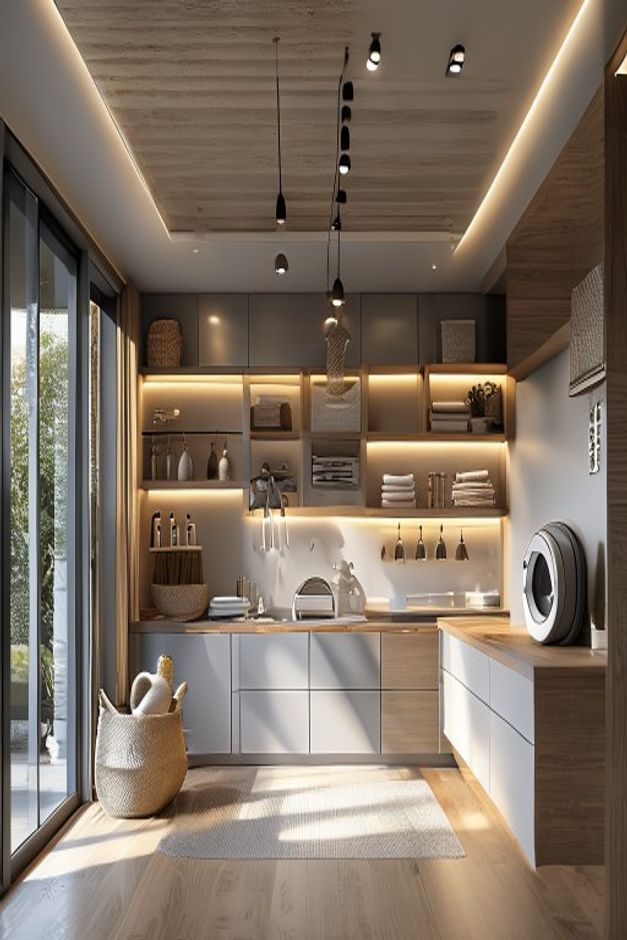
The contemporary laundry room has evolved from a hidden utility closet into a refined architectural statement, where material selection and lighting design converge to elevate daily chores. By examining this specific galley-style layout, we uncover how the strategic application of light oak wood cabinetry combined with matte grey finishes creates a balanced, serene atmosphere. The layout is useful because it rejects the sterile, clinical aesthetic often associated with utility rooms, opting instead for a warm, organic palette that integrates seamlessly with the rest of a modern home’s interior design.
Achieving this level of cohesion requires a disciplined approach to both vertical storage and illumination. The integration of floor-to-ceiling cabinetry serves to maximize every inch of the linear footprint, while the specific choice of materials—ranging from natural wood grains to clean, matte surfaces—establishes a tactile richness. Understanding how these elements interact allows homeowners to replicate a professional-grade finish that prioritizes both long-term durability and visual harmony, proving that even the most functional zones deserve a thoughtful design narrative.
The Architectural Impact of Light Oak Cabinetry
Light oak cabinetry acts as the foundational anchor for this contemporary laundry room, introducing a natural warmth that softens the rigid geometry of the galley layout. The wood grain offers a subtle, organic texture that contrasts beautifully against the surrounding neutral tones, preventing the space from feeling cold or impersonal. By utilizing light-toned wood, the design successfully maintains an airy, expansive quality even within a compact footprint, effectively reflecting light and enhancing the room’s overall sense of volume.
Beyond aesthetics, the choice of oak provides a durable, timeless material that ages gracefully, which is essential for high-traffic utility areas. The flat-panel construction of these cabinets emphasizes a clean, minimalist silhouette that aligns with contemporary design principles, ensuring that the visual focus remains on the quality of the materials rather than ornate detailing. This approach to cabinetry design creates a sophisticated backdrop that allows for the integration of various storage solutions without disrupting the room’s architectural integrity.
Mastering the Galley Layout for Maximum Utility
A linear galley-style layout is perhaps the most efficient configuration for a laundry room, as it facilitates a logical workflow between the washing, drying, and folding stations. By placing the cabinetry and built-in countertop workspace along the primary wall, the design ensures that all essential tools are within arm’s reach. This arrangement minimizes unnecessary movement, allowing for a streamlined process that transforms the act of laundering into a more manageable and organized task.
The verticality of the floor-to-ceiling storage units is a critical component of this design, as it utilizes the full height of the room to house linens, cleaning supplies, and seasonal items. By keeping the floor area clear and uncluttered, the layout promotes a sense of order that is vital for maintaining a peaceful home environment. The integration of an open shelving unit further breaks up the solid mass of the cabinetry, providing a space for decorative glass bottles and organized linens that add a personal, curated touch to the utility zone.
Layering Light for Functional and Ambient Effects
Lighting in this laundry room is treated as a sophisticated design layer rather than a mere necessity, utilizing a combination of recessed ceiling lights and linear LED under-cabinet illumination. The recessed fixtures provide a consistent, general wash of light that ensures the entire room is well-lit, which is crucial for identifying stains or sorting delicate fabrics. This foundational lighting prevents deep shadows from forming in the corners, maintaining the bright and inviting character of the space.
Complementing the overhead light, the under-cabinet LEDs serve a dual purpose by providing focused task lighting directly onto the countertop workspace. This ensures that folding and ironing tasks are performed with precision, reducing eye strain and increasing overall efficiency. The addition of a cluster of pendant lights introduces a decorative element that draws the eye upward, highlighting the height of the ceiling and adding a touch of elegance to the utilitarian environment. For those interested in how these techniques translate to other areas, exploring modern organic laundry room design can provide further inspiration on balancing ambient light with wood textures.
Integrating Matte Grey Finishes for Modern Contrast
The strategic use of matte grey cabinet doors introduces a contemporary edge that balances the warmth of the light oak. This color pairing is a hallmark of modern design, as it creates a sophisticated interplay between natural organic elements and refined, industrial-inspired tones. The matte finish is particularly effective in a laundry setting, as it minimizes the appearance of fingerprints and water spots, ensuring that the room remains looking pristine with minimal maintenance.
By alternating between wood and grey finishes, the design avoids the monotony of a single-material installation, creating a visual rhythm that guides the eye through the space. This deliberate contrast highlights the craftsmanship of the cabinetry, making each section feel distinct yet part of a unified whole. For homeowners looking to apply similar principles to other rooms, the power of light wood cabinetry is further explored in our guide on Japandi-style laundry room transformations, which emphasizes the versatility of these material combinations.
The Role of Woven Textures in Utility Design
Woven wicker baskets are utilized throughout this laundry room to introduce a soft, tactile contrast to the hard surfaces of the cabinetry and tile. These baskets serve as highly functional storage vessels, allowing for the organized containment of linens and laundry essentials while adding an earthy, artisanal quality to the room. The natural fibers of the wicker complement the light oak wood, reinforcing the organic theme and bridging the gap between high-end cabinetry and everyday utility.
Beyond their aesthetic contribution, these baskets provide a flexible storage solution that can be easily rearranged or replaced as needs evolve. By incorporating natural materials into a contemporary setting, the design achieves a sense of balance that feels both curated and comfortable. This approach demonstrates that utility rooms do not have to sacrifice warmth for functionality; rather, they can be designed as an extension of the home’s overall aesthetic, where every storage accessory is chosen with both beauty and purpose in mind.
Countertop Workspace and Ergonomic Considerations
The built-in countertop workspace is a defining feature of this laundry room, providing a dedicated surface for folding, sorting, and treating garments. Its placement at a comfortable height is essential for ergonomic health, allowing for extended periods of work without causing strain. The material of the countertop is chosen for its durability and ease of cleaning, ensuring it can withstand the rigors of daily use while maintaining its aesthetic appeal within the contemporary design scheme.
This workspace serves as the heart of the laundry process, acting as a bridge between the various storage zones and the appliances. By keeping this area clear of clutter, the room maintains its clean, minimalist aesthetic, reinforcing the idea that a well-designed utility space is one that prioritizes both form and function. The integration of open shelving above the workspace allows for quick access to frequently used items, further enhancing the efficiency of the room and ensuring that the design supports the user’s daily habits.
The Aesthetic Value of Open Shelving
Open shelving provides a necessary visual break in the linear wall of cabinetry, preventing the space from feeling overly enclosed or heavy. By displaying curated items like decorative glass bottles and neatly folded linens, the shelves transform mundane laundry supplies into part of the room’s decor. This design choice encourages a high standard of organization, as the contents of the shelves are always visible, prompting users to maintain a tidy and orderly environment.
The illuminated nature of the shelving unit adds an extra layer of depth, making the items on display appear as if they are in a boutique retail setting. This attention to detail elevates the laundry room from a back-of-house area to a space that is worthy of display. It is a testament to the idea that thoughtful placement and lighting can turn even the most basic storage solutions into a significant design feature, contributing to the overall luxury of the contemporary home.
Lessons in Sustainable Utility Design
The design of this laundry room offers several key takeaways for homeowners looking to renovate their own utility spaces. First, the importance of material longevity cannot be overstated; choosing high-quality wood and durable finishes ensures that the room remains functional and beautiful for years to come. Second, the value of layered lighting is clear—by combining general, task, and decorative light, one can create a space that is both highly practical and aesthetically pleasing at any time of day.
Finally, the room teaches us that organization is the ultimate luxury. By incorporating dedicated spaces for every item, from woven baskets for small accessories to floor-to-ceiling cabinetry for bulkier linens, the design minimizes visual noise and creates a sense of calm. These principles are not limited to the laundry room; they can be applied to any utility area, including home offices or mudrooms, to create a home that is as efficient as it is beautiful. By focusing on the interplay between natural materials and modern technology, one can build a space that truly serves the needs of a contemporary lifestyle.
How do I choose the right wood finish for a laundry room?
Select light oak or similar hardwoods that are sealed with a moisture-resistant matte finish to protect against humidity while maintaining a natural, warm aesthetic.
What is the best way to light a laundry room?
Use a layered approach: recessed lights for general coverage, LED strips under cabinets for task lighting, and decorative pendants to define the style.
Are open shelves practical for laundry storage?
Open shelves are excellent for displaying organized linens and decorative items, provided you maintain a consistent aesthetic to prevent the space from looking cluttered.