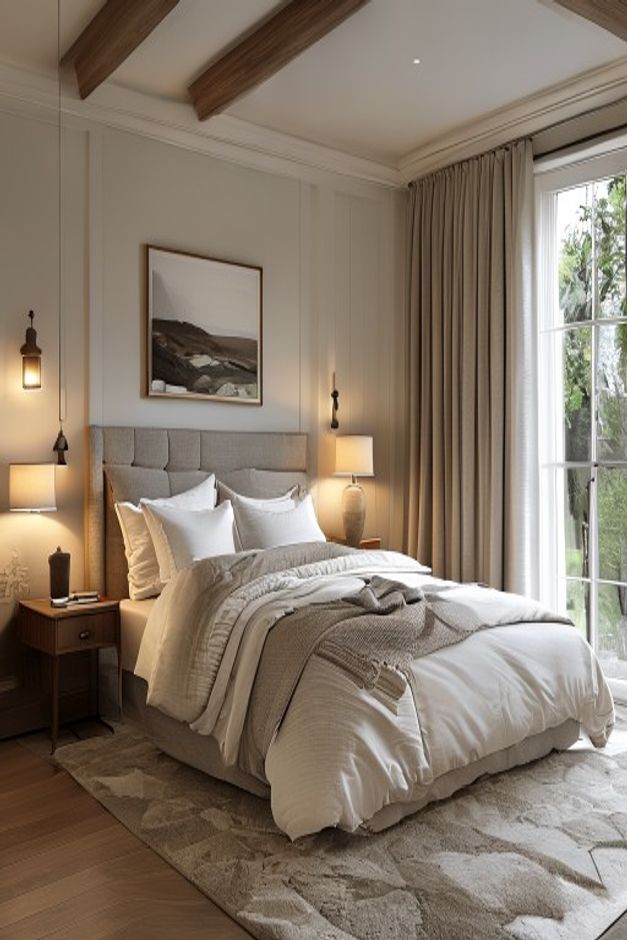

The allure of the English country bedroom lies in its ability to reconcile formal structure with an inherent sense of domestic ease. This particular space serves as a masterclass in tonal layering, where the architecture of the room—defined by exposed ceiling beams and soft, neutral palettes—provides a grounded backdrop for the central furniture piece. By prioritizing a tactile, upholstered bed as the anchor, the design avoids the sterile coldness often found in contemporary minimalist schemes, instead opting for a sophisticated, lived-in aesthetic that feels both curated and comfortable.
Studying this interior reveals a deliberate rejection of high-contrast color in favor of a monochromatic spectrum ranging from cream to deep taupe. This choice forces the eye to appreciate the subtle interplay of materials, from the structured weave of the tufted headboard to the organic grain of the wooden nightstands. Such a disciplined approach to color allows the architectural bones of the room to breathe, proving that a space does not require vibrant hues to possess a strong, memorable character.
The Architectural Significance of Upholstered Headboards
Choosing an upholstered bed and headboard is a strategic decision that fundamentally alters the acoustics and visual softness of a sleeping space. In this setting, the tufted headboard acts as a bridge between the rigid geometry of the wood ceiling beams and the fluid, soft lines of the floor-to-ceiling drapery. The tufting adds a necessary layer of depth, creating a rhythmic pattern that breaks up the expanse of beige fabric, while the substantial frame provides a sense of enclosure that is essential for a restful environment.
When selecting such a centerpiece, one must consider how the textile interacts with the rest of the room’s light. The linen-look fabric here absorbs ambient light rather than reflecting it, which helps to soften the overall atmosphere and minimizes glare. This tactile quality is what differentiates a standard bedroom from one that feels truly bespoke, as the headboard serves not merely as a functional backrest, but as a sculptural element that dictates the scale and proportion of the entire wall.
Layering Bedding for Depth and Comfort
The art of layering bedding in an English country bedroom is less about decorative excess and more about creating a narrative of comfort. By stacking various textures—from crisp, smooth linens to heavier, woven throws—the bed becomes a landscape of tactile experiences. This approach mimics the complexity of traditional country estates where utility and luxury were often intertwined, resulting in a display that is both inviting and visually substantial.
To achieve this balance, consider the weight and drape of each layer. The base sheets provide a clean, neutral foundation, while the addition of a throw blanket at the foot of the bed introduces a touch of warmth and informality. This technique prevents the bed from looking too static or staged, ensuring that the room retains its primary purpose as a place of rest. Those seeking to refine their own spaces might find inspiration in California casual bedroom affordable bedding ideas, which offer similar principles of layering for a relaxed, approachable finish.
Balancing Lighting Through Asymmetry
Lighting in a well-designed bedroom should rarely be perfectly symmetrical, as true comfort often stems from the thoughtful placement of task-specific fixtures. In this room, the juxtaposition of a wall-mounted pendant on one side and a traditional table lamp on the other creates a dynamic visual tension. This asymmetrical arrangement acknowledges that the two sides of the bed serve different functions, perhaps catering to different reading habits or nighttime routines while maintaining a cohesive style.
The choice of fixtures also reinforces the room’s aesthetic. A pendant light allows for more surface area on the nightstand, keeping the bedside clear for books or other essentials, while the table lamp provides a more grounded, intimate glow. By mixing these two types of lighting, the designer ensures that the room remains flexible. For those interested in how lighting impacts the perception of materials, exploring quiet luxury bedroom light wood materials ideas provides excellent context on how to illuminate natural surfaces effectively.
The Role of Wood in Neutral Spaces
Wood elements are vital in preventing a neutral room from feeling flat or clinical. The presence of wood ceiling beams and wooden nightstands introduces an organic element that connects the interior to the natural world. These pieces add a sense of history and permanence, grounding the lighter, softer textiles of the bed and curtains. The grain of the wood provides a subtle pattern that is far more sophisticated than any applied wallpaper or paint treatment.
When incorporating wood into a bedroom, consistency in tone is key to maintaining a serene environment. The wood used here shares a similar warmth to the taupe and beige textiles, creating a harmonious color story that feels intentional. This integration of timber is a hallmark of the English country style, where the structural elements of the house are celebrated rather than hidden, allowing the architecture to dictate the mood of the interior.
Textural Rugs as a Foundation
A rug in a bedroom serves a dual purpose: it anchors the furniture and adds a layer of insulation that enhances the room’s acoustic quality. In this space, the textured area rug provides a neutral, yet complex, base that echoes the colors of the headboard and walls. Its texture is subtle enough to avoid competing with the tufting of the bed, yet distinct enough to provide visual interest underfoot.
Selecting a rug for a bedroom requires careful consideration of scale. It should be large enough to extend well beyond the sides and foot of the bed, creating a unified zone that defines the sleeping area. By choosing a material that complements the linen-look fabric of the bed, the rug helps to tie the disparate elements of the room together, ensuring that the floor space feels as curated as the furniture itself.
Curtains and the Softening of Architecture
Floor-to-ceiling drapery is an essential component in tempering the hard lines of a room’s architecture. By extending the curtains from the ceiling to the floor, the designer creates an illusion of height and elegance, effectively softening the transition between the walls and the window frames. This treatment also provides a sense of privacy and intimacy, essential for a bedroom that aims to feel like a private sanctuary.
The fabric choice for these curtains should be substantial enough to hang with clean, weighted folds. In this English country setting, the neutral tone of the drapery ensures that the focus remains on the bed, while the sheer volume of the fabric adds a layer of luxury. When paired with the tufted headboard, the curtains contribute to the overall softness of the room, creating an environment that feels enveloped in fabric and calm.
Curating Wall Art for a Personal Touch
Framed landscape art serves as the perfect finishing touch in a room that emphasizes natural, quiet beauty. The choice of landscape imagery aligns with the English country theme, bringing the serenity of the outdoors inside. By keeping the frames simple and the art consistent in tone, the wall decor enhances the room without overwhelming the senses.
Placement is crucial when hanging art in the bedroom. Positioning pieces above the bed or near the nightstands creates a focal point that draws the eye upward, reinforcing the room’s vertical proportions. This thoughtful selection of art is what elevates a space from merely functional to deeply personal, reflecting the inhabitant’s appreciation for nature and refined, understated design.
The Integration of Functional Nightstands
Nightstands are often the most overlooked furniture pieces, yet they are critical for maintaining the functionality of the bedroom. The wooden nightstands featured here are perfectly scaled to the bed, offering enough surface area for essential items while maintaining a light, airy footprint. Their design is simple, allowing the beauty of the wood grain to take center stage, which is a common thread in modern organic design; see more in modern organic bedrooms: elevating the upholstered tufted headboard.
The relationship between the nightstand and the bed should be one of balance. If the headboard is large and dramatic, the nightstands should provide a stable, grounding presence. By keeping these pieces consistent in style and material, the room achieves a sense of order that is conducive to relaxation. A well-chosen nightstand is not just a storage unit; it is an extension of the bed’s design, completing the ensemble with grace and utility.
How do I choose the right fabric for an upholstered headboard?
Select durable, tightly woven fabrics like linen blends or performance velvets that offer a soft touch while resisting wear and tear over time.
What is the secret to achieving a layered bedding look without it appearing cluttered?
Focus on a monochromatic color palette and prioritize different textures—such as linen, wool, and cotton—to create depth without visual noise.
How can I incorporate asymmetrical lighting into a small bedroom?
Use one wall-mounted sconce on the side with less floor space and a slim table lamp on the other to maintain balance while maximizing surface area.