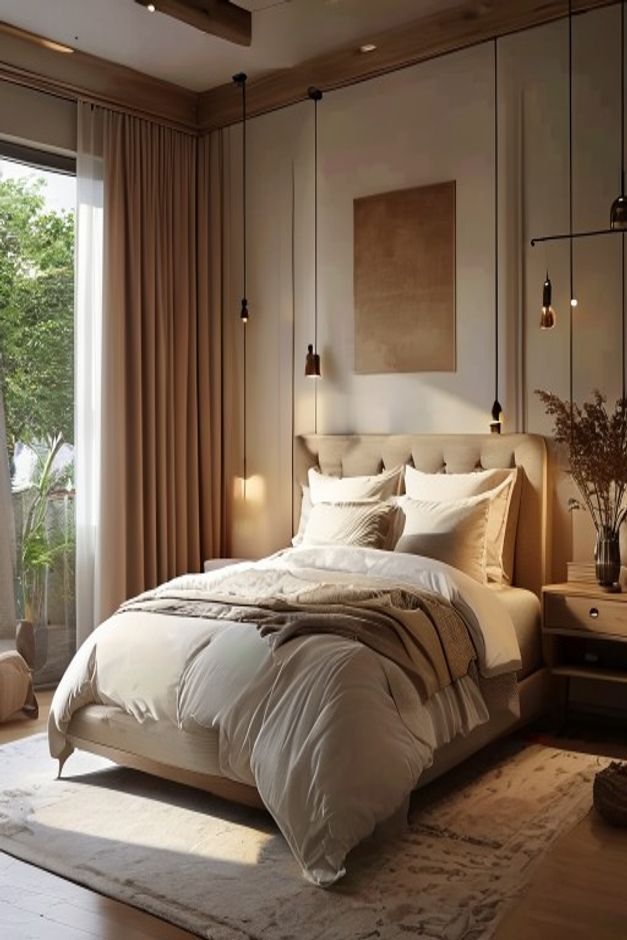

The composition demonstrates how a restrained color palette and tactile furniture choices can create a sanctuary of profound calm. By prioritizing a monochromatic scheme of beige, cream, and taupe, the space achieves a sense of visual cohesion that many residential projects struggle to maintain. It is a rare example of how architectural simplicity and high-quality textiles can define a room’s character without relying on bold patterns or aggressive ornamentation.
Understanding the success of this layout requires looking beyond the individual pieces to the way they interact within the volume of the room. The deliberate choice of an upholstered tufted headboard creates an immediate sense of softness, effectively balancing the structural rigidity of the surrounding architecture. This approach provides a blueprint for homeowners looking to elevate their sleeping quarters into a space that feels both curated and inherently livable.
The Architectural Power of the Upholstered Tufted Headboard
The upholstered tufted headboard acts as the structural anchor of the entire room, providing a soft yet substantial presence against the wall. Its tufted detailing introduces a necessary layer of geometry that prevents the large, fabric-covered surface from feeling overly flat or monotonous. This specific piece of furniture bridges the gap between traditional craftsmanship and contemporary clean lines, making it an ideal candidate for a modern organic aesthetic that values both comfort and form.
When selecting such a prominent piece, the texture of the fabric is just as critical as the silhouette itself. Choosing a neutral, high-quality textile ensures that the bed remains a timeless fixture rather than a trend-driven purchase. By integrating this piece into a space that emphasizes light-toned surfaces, the headboard takes on a sculptural quality, drawing the eye inward without overwhelming the room’s carefully balanced atmosphere.
Curating a Palette of Warm Neutrals
A successful modern organic bedroom relies heavily on the nuanced application of a neutral color palette. In this environment, the transition between beige, cream, and taupe is handled with surgical precision, ensuring that the room feels warm rather than clinical. These tones are not merely background colors; they are active design elements that dictate the overall sensory experience of the inhabitant, encouraging a slower, more deliberate pace of living.
Layering these shades requires an understanding of how light interacts with different materials throughout the day. By utilizing linen or cotton bedding in varying shades of white and cream, the room gains depth through subtle tonal shifts rather than high-contrast accents. This approach is explored further in these Warm Neutral Bedroom Fabric Headboard Ideas, which highlight how fabric choice influences the way light is absorbed and reflected within a private space.
The Role of Minimalist Lighting in Bedroom Design
Lighting in a bedroom should prioritize mood and utility, and the use of minimalist pendant lights suspended from the ceiling is a masterstroke of design restraint. By opting for pendants instead of traditional table lamps, the floor and nightstand surfaces remain uncluttered, contributing to the overall feeling of spaciousness. These fixtures provide a focused, downward glow that highlights the textures of the bedside area without creating harsh shadows or visual noise.
The placement of these pendants is equally important, as they frame the bed and reinforce the symmetry of the room’s layout. This deliberate positioning ensures that the light serves a functional purpose for reading while simultaneously acting as a stylistic punctuation mark. When lighting is treated as an integrated architectural feature rather than an afterthought, it elevates the entire room, turning a standard sleeping area into a highly considered environment.
Utilizing Light-Toned Wood for Organic Balance
Incorporating light-toned wood into a bedroom is an essential strategy for grounding the airy, fabric-heavy elements of the space. The wooden nightstands with open shelving provide a necessary visual break from the softness of the upholstered bed frame, introducing a natural, earthy element that connects the interior to the broader modern organic philosophy. This wood grain adds a layer of organic complexity that is vital for preventing a room from feeling too synthetic or overly manufactured.
The open shelving within these nightstands allows for a curated display of personal items, which keeps the room feeling lived-in without sacrificing order. This balance of solid mass and open space is a hallmark of thoughtful design, ensuring that every piece of furniture contributes to a sense of equilibrium. For those interested in how wood and fabric can work in tandem, these Quiet Luxury Bedroom Linen And Wood Ideas offer additional context on creating a refined, balanced aesthetic.
The Impact of Textile Selection on Comfort
Textiles are the primary vehicle for comfort in this bedroom, with the bedding playing a pivotal role in the room’s tactile experience. The use of natural fibers like linen or cotton creates a breathable, inviting surface that is essential for a restful environment. These materials carry a weight and drape that synthetic alternatives simply cannot replicate, and their natural tendency to wrinkle adds a layer of relaxed sophistication that aligns perfectly with the modern organic style.
When combined with the upholstered tufted headboard, these linens create a cohesive landscape of soft, inviting textures. The layering of different weights of fabric—from the heavy upholstery of the bed to the lighter, airy bedding—creates a sophisticated sensory experience. This layering is not merely for comfort; it is a deliberate design choice that adds depth to the room’s monochromatic palette, proving that luxury is often found in the quality of the materials we touch every day.
Symmetry and Layout in the Modern Bedroom
The layout of this bedroom is defined by a rigorous adherence to symmetry, with the bed centered against the wall and flanked by identical nightstands. This arrangement is not just aesthetically pleasing; it creates a sense of order and predictability that is conducive to relaxation. By establishing a clear focal axis, the room allows the eye to travel naturally from the bed to the surrounding decor, creating a calm, meditative experience for the occupant.
Maintaining this symmetry requires discipline, as it limits the placement of other furniture and decor items. However, the payoff is a room that feels intentional and balanced, where every element has a designated place. This level of planning is essential for smaller rooms or spaces where visual clutter can quickly overwhelm the design. When the layout is this disciplined, the room feels larger, more open, and significantly more professional in its execution.
Integrating Art and Decor with Restraint
Decor in a modern organic bedroom should be sparse and highly curated, as seen in the inclusion of abstract wall art and a simple dried botanical arrangement. These items are not meant to dominate the space; instead, they provide subtle points of interest that reward closer inspection. The abstract art introduces soft, organic shapes that complement the tufting on the headboard, while the botanical arrangement brings a literal touch of nature into the room.
This restraint is the most difficult aspect of design to master, as it requires the confidence to leave walls and surfaces largely empty. By resisting the urge to over-decorate, the room retains its sense of peace and clarity. The area rug with its subtle pattern further grounds the space, providing a soft transition between the floor and the furniture without competing for attention with the more prominent design elements.
The Importance of Window Treatments
Floor-to-ceiling curtains are a non-negotiable element in this design, as they soften the transition between the interior space and the exterior world. These curtains serve a dual purpose: they provide necessary privacy and light control while also adding a vertical element that draws the eye upward, making the room feel taller and more expansive. The choice of fabric here is crucial, as it should be heavy enough to drape elegantly but light enough to maintain the room’s airy, organic feel.
By extending the curtains from the ceiling to the floor, the design effectively hides the architectural transition of the window frame, creating a seamless, clean look. This technique is a standard practice in high-end residential design, as it simplifies the room’s visual profile. For more inspiration on how to handle window treatments in a neutral space, these Warm Neutral Bedroom Linen Curtain Ideas provide excellent guidance on achieving this look.
How do I choose the right fabric for an upholstered headboard?
Prioritize natural, durable textiles like linen blends or high-quality cotton that offer a soft hand-feel while maintaining their shape over years of use.
What is the benefit of open-shelf nightstands?
Open shelving reduces visual weight, making a room feel larger, and encourages a curated approach to storage by keeping essential items visible and organized.
How can I make a monochromatic bedroom feel less flat?
Use a variety of textures—such as tufted fabric, smooth wood, and woven rugs—to create depth, ensuring the space feels rich and layered despite the limited color palette.
Final Reflections on Modern Organic Design
The true lesson of this bedroom is that luxury is defined by the quality of the atmosphere rather than the quantity of the objects. By focusing on a few high-impact pieces—the upholstered tufted headboard, the minimalist lighting, and the careful selection of natural textiles—homeowners can create a space that feels both grounded and aspirational. The room succeeds because it respects the architecture, prioritizes comfort, and maintains a strict commitment to its chosen aesthetic.