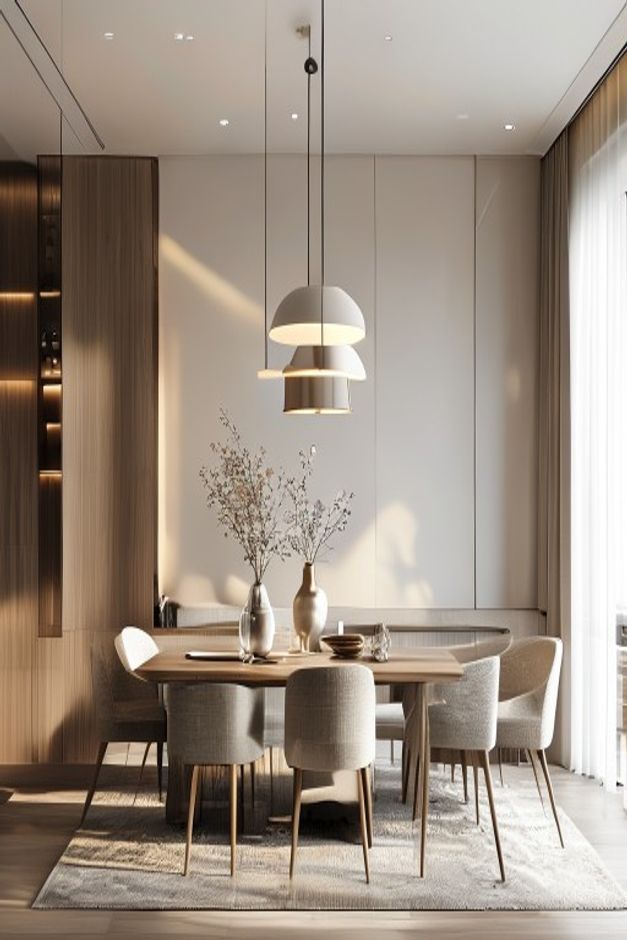

The contemporary dining room has evolved into a sanctuary of understated elegance, where the interplay of form and light dictates the atmosphere. This particular space serves as a masterclass in quiet luxury, demonstrating how a disciplined color palette and intentional lighting choices can transform a standard eating area into a sophisticated architectural statement. By focusing on the synergy between stacked pendant lighting and warm wood textures, we uncover a design language that prioritizes sensory comfort over ostentatious displays of wealth.
Studying this room provides essential insights for homeowners seeking to elevate their interiors through restraint. The room is worth examining because it avoids the common pitfalls of over-accessorizing, instead relying on the structural integrity of its lighting and the tactile quality of its furnishings to command attention. As we dissect the elements within, we find a blueprint for creating a dining environment that feels both timeless and deeply personal, proving that true luxury is often found in the deliberate curation of simple, high-quality components.
The Architectural Role of Stacked Pendant Lighting
The stacked pendant light fixture serves as the primary geometric anchor of the room, drawing the eye upward and defining the vertical volume above the table. Its layered dome construction creates a rhythmic silhouette that contrasts beautifully with the linear nature of the surrounding wall paneling, providing a sculptural element that feels both modern and grounded. By utilizing a matte finish, the fixture avoids harsh reflections, ensuring that the light emitted remains soft and diffused, which is essential for maintaining a serene dining atmosphere.
Beyond its aesthetic appeal, this lighting choice functions as a zoning tool, effectively delineating the dining area from the rest of the open floor plan. When selecting such a piece, the scale must be carefully considered in relation to the table beneath it; here, the fixture maintains a proportional balance that prevents it from overpowering the space. This integration of a complex, multi-tiered light source within a neutral room highlights the importance of choosing one strong focal element that can carry the weight of the design without requiring additional, competing ornaments.
Embracing a Neutral Palette for Sensory Calm
The color palette, dominated by shades of beige, cream, and warm taupe, establishes a foundation of tranquility that is central to the quiet luxury movement. By stripping away bold color, the design forces an appreciation for the subtle variations in hue and shadow that exist within the room. This monochromatic approach is not merely a stylistic choice but a functional one, as it minimizes visual noise and allows the natural beauty of the materials to take center stage, creating a cohesive environment that feels effortless to inhabit.
To prevent this neutral scheme from feeling sterile, the designer has introduced depth through layering different textures within the same color family. The light oak wood of the table provides a warm, organic base, while the textured linen-look upholstery on the chairs introduces a tactile softness that invites physical comfort. This layering of materials ensures that the space feels lived-in and approachable, proving that a restricted palette can actually offer more visual interest than a vibrant one when the focus is shifted toward the quality of the surfaces themselves.
The Importance of Wood Tones in Dining Design
Light oak wood serves as the backbone of this dining room, offering a natural warmth that bridges the gap between the architectural elements and the furniture. The rectangular dining table, crafted with clean lines and a visible grain, acts as a grounding force that anchors the room’s composition. This choice of wood is particularly effective in a quiet luxury setting, as it avoids the dark, heavy connotations of traditional mahogany or walnut, instead favoring a lighter, more ethereal quality that reflects light and keeps the space feeling airy and expansive.
Integrating wood in this manner requires an understanding of how it interacts with other finishes in the room. By pairing the light oak with the matte metal of the pendant fixture and the soft fabrics of the chairs, the design creates a balanced environment where no single material dominates. This approach is highly recommended for those looking to replicate the look, as it allows for a harmonious blend of natural and manufactured elements that feel authentic to the architecture of the home. You can explore more on this approach in our guide to modern organic dining room wood dining table ideas.
Wall Paneling as a Structural Backdrop
Wall paneling with integrated vertical lighting elevates the room from a simple functional space to a designed architectural interior. This feature adds a layer of sophistication that traditional paint or wallpaper cannot achieve, providing a sense of depth and shadow that changes throughout the day. The vertical lines of the paneling draw the eye upward, reinforcing the height of the room and creating a sense of grandeur that remains humble and understated, perfectly encapsulating the quiet luxury ethos.
The integration of lighting within these panels is a brilliant design decision that provides ambient illumination while highlighting the texture of the wall treatment. This secondary layer of light ensures that the room remains well-lit even when the main pendant is dimmed, creating a flexible environment that can transition from a bright breakfast setting to a moody, intimate dinner space. Such architectural details are the hallmarks of a well-thought-out home, where the walls themselves contribute to the overall experience rather than simply serving as boundaries.
Tactile Comfort Through Upholstery Choices
The dining chairs, upholstered in a light-toned, textured linen-look fabric, are essential for balancing the harder, more rigid surfaces of the table and the wall panels. In a quiet luxury space, comfort is not an afterthought; it is a primary design driver. The choice of a soft, woven material adds a layer of domesticity that makes the room feel inviting rather than purely decorative, encouraging guests to linger long after the meal has concluded.
Choosing the right upholstery for a dining chair involves finding a balance between durability and aesthetic appeal. The light color palette seen here requires a fabric that feels high-quality and substantial, avoiding anything that appears too thin or synthetic. By opting for a textured weave, the chairs gain a sense of character and depth that complements the wood grain of the table. This focus on tactile quality is what differentiates a high-end design from a standard one, as it appeals to the sense of touch as much as the sense of sight.
The Role of Minimalist Decor
Minimalism in this dining room is not about the absence of objects, but rather the careful selection of pieces that add value to the composition. The two decorative ceramic vases with dried botanicals placed on the table serve as the only major decorative accents, providing a touch of organic form that softens the linear geometry of the room. These items are chosen for their understated beauty and their ability to connect the interior to the natural world, reinforcing the theme of quiet, grounded luxury.
When styling a dining table, it is easy to clutter the surface with too many items, which can detract from the overall design. By limiting the accessories to a pair of vases, the designer maintains a sense of clarity and purpose. This restraint allows the viewer to focus on the interplay of light and shadow created by the pendant fixture and the wall paneling. Homeowners should take note: when you have strong architectural elements, you rarely need to fill the space with excess decor to make it feel complete.
Creating Flow with Centralized Layouts
The centralized dining arrangement is the most effective way to organize a space of this size, ensuring that the table remains the focal point while allowing for easy movement around the perimeter. By centering the table beneath the stacked pendant light, the designer creates a clear destination for the room, which is vital for open-plan living. This layout also ensures that the wall paneling and integrated lighting can be appreciated from every angle, as the furniture does not obstruct the view of these architectural features.
Maintaining a clear flow is essential for the functionality of any dining room. By keeping the perimeter relatively clear of large, bulky storage units, the room feels larger and more open. If storage is required, it should be integrated into the architecture or kept low-profile to avoid disrupting the visual lines. This commitment to an open, airy layout is a key component of the quiet luxury style, which values space and movement as much as the objects placed within the room.
The Future of Quiet Luxury Dining
As we look toward the future of residential design, the principles exemplified in this dining room—restraint, materiality, and intentional lighting—will continue to gain prominence. Homeowners are increasingly moving away from fast-furniture trends in favor of pieces that offer longevity and timeless appeal. By investing in high-quality lighting, natural wood finishes, and textured fabrics, you can create a space that feels both current and enduring, regardless of shifting design fads.
How do I choose the right pendant size for my dining table?
The pendant should be roughly one-third the width of your dining table to maintain visual balance. Ensure the bottom of the fixture hangs approximately 30 to 36 inches above the tabletop for optimal light distribution.
What materials best complement a quiet luxury aesthetic?
Focus on natural, tactile materials such as light oak, linen, wool, matte metals, and ceramics. Avoid high-gloss finishes or overly reflective surfaces that can disrupt the calm, diffused lighting characteristic of the style.
How can I incorporate vertical lighting without major renovations?
Consider installing wall-mounted sconces that provide an uplight effect, or use LED tape hidden behind crown molding or custom wood slats to mimic the look of integrated architectural lighting without needing to open up your walls.