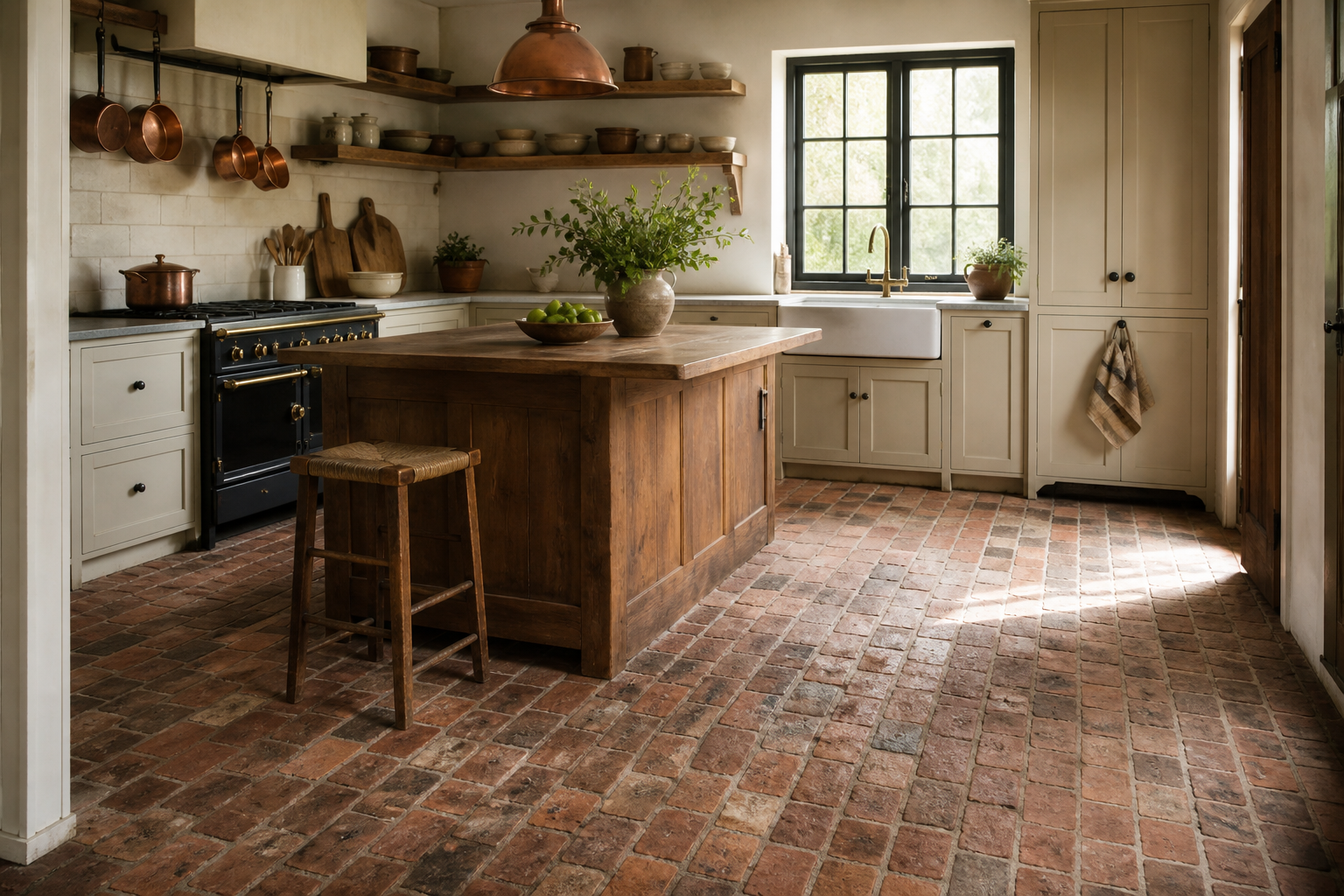

The brick floor determines the character of this kitchen before the cabinetry is read. Red-brown rectangular units run through the entire visible plan, carrying variation from the bright window edge to the darker foreground. Pale cabinets, a timber-toned island, dark range, open shelves, warm-metal cookware, and greenery sit above that active base. The room succeeds because all vertical surfaces are quieter than the ground plane.
The Brick Floor Establishes the Kitchen's Material Identity
The brick fills the foreground and gives the kitchen its strongest material identity. Its varied red-brown tones make the room feel older and more grounded. Because the floor is so expressive, the pale cabinets can stay simple. That restraint keeps the kitchen from feeling visually overloaded.
Brick fills the foreground and continues beneath both perimeter cabinetry and island, so it reads as the room's common ground rather than an accent patch.
The wood island repeats the floor's warmth but in a smoother, heavier form. It gives the room a central mass that feels natural against the brick. The open floor around the island matters too. It lets the brick pattern remain visible instead of being hidden under too much furniture.
The rustic kitchen brick-backsplash study places texture vertically. This kitchen keeps the walls calmer and lets the brick guide movement underfoot.
Color Variation Makes Wear Part of the Composition
The pale cabinets brighten the kitchen and prevent the brick floor from making the room feel too dark. They also give the eye a calm vertical surface. That contrast lets the floor remain rustic while the cabinetry keeps the room livable and clean.
Individual units shift from muted red to deeper brown, with pale joints making the running pattern legible. Age, sealing, and slip performance cannot be inferred from the photograph.
Pale Cabinets Give the Floor Visual Space
The warm-metal cookware and pendant pick up the warm undertones in the brick. They add a small amount of shine without shifting the kitchen away from its rustic base. Used sparingly, copper helps the floor feel intentional rather than merely old.
The Timber Island Mediates Between Brick and Paint
Pair brick with quieter cabinet faces, simple counters and wood that feels aged rather than polished. The floor already provides plenty of movement. Keep circulation paths open so the brick can be seen across the room. In this kitchen, the floor is part of the experience of moving around the island.
The island's warm timber tone belongs between the pale cabinets and red-brown floor. Its plain slab sides avoid adding another small-scale pattern near the brick joints.
Rustic kitchens work best when one honest material leads the room. Here, the brick floor gives the space history, while wood, cream paint and copper make that history feel warm rather than heavy.
Window Light Emphasizes Every Floor Joint
Is brick flooring good for a rustic kitchen? Yes. Brick flooring suits rustic kitchens because it adds warmth, texture and a durable visual base. What cabinets work with brick kitchen floors? Cream or warm white cabinets work well because they lighten the room and balance the brick. What materials pair with a brick kitchen floor? Aged wood, copper, painted cabinetry and simple stone counters pair well with brick. How do you keep a brick floor kitchen from feeling too busy? Keep cabinets, backsplash and counters quieter so the floor can be the main texture.
Using an Expressive Floor Without Multiplying Patterns
Cottage Kitchen Cafe Curtain Ideas Coastal Kitchen Glass Pendant Lighting Ideas Modern Farmhouse Kitchen Apron Sink Ideas Modern Organic Kitchen Arched Open Shelf Ideas Mediterranean Kitchen Arched Pantry Door Ideas
Limit competing tile, patterned textiles, and highly figured cabinet fronts. When the floor already supplies dense color and joint rhythm, restraint above counter height becomes an architectural necessity.
The island stools tuck beneath the overhang and keep their legs inside the island footprint, preserving the floor pattern around them.
Open shelves stop below the ceiling and leave pale wall above, preventing the warm cookware and brick floor from enclosing the room.
The brick units change direction subtly around the island but remain part of one continuous field, helping the central block feel placed within the floor rather than on a separate zone.
Warm-metal pans hang near the dark range and repeat the floor's warmth at eye level in a much smaller concentration.
The window at the far end produces the brightest floor area and gives the red-brown field a natural destination through the plan.