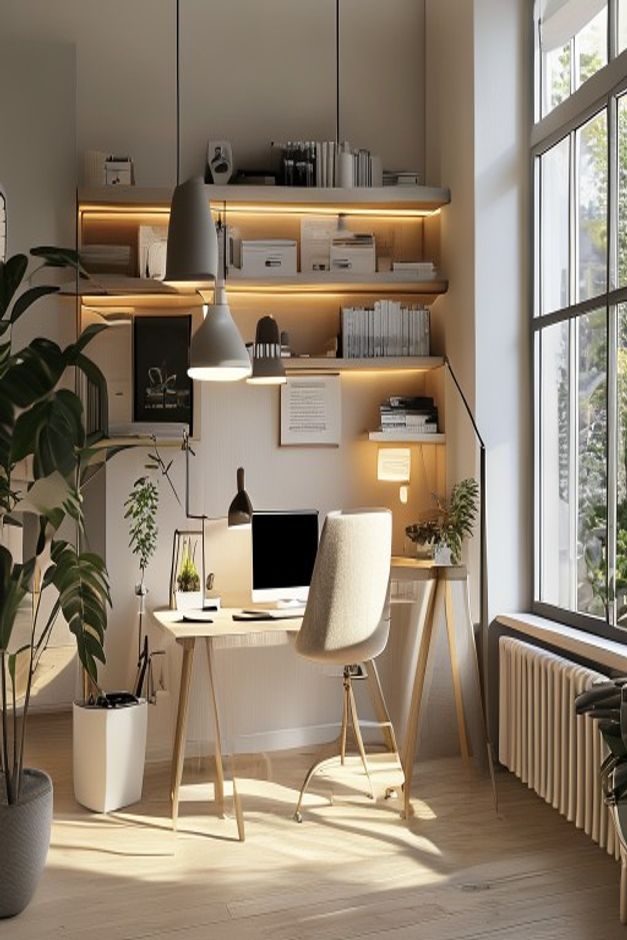

The composition demonstrates how light-toned timber and precise illumination can redefine a small footprint. By prioritizing a cohesive palette of beige, white, and natural oak, the design achieves a sense of expansive tranquility that is often elusive in residential work zones. Studying this setup provides invaluable insight into how material selection and light placement interact to influence daily productivity and psychological comfort.
The intentionality behind every element, from the trestle leg desk to the wall-mounted shelving, reveals a sophisticated approach to modern minimalism. Rather than relying on ornate decor, the design leverages the inherent beauty of light oak wood to anchor the room, proving that restrained aesthetics can yield high-impact results. For those looking to refine their own workspaces, this room offers a blueprint for balancing warmth with clinical precision.
The Role of Light Oak Wood in Scandinavian Interiors
Light oak wood acts as the primary architectural anchor in this workspace, providing a neutral yet warm foundation that prevents the minimalist aesthetic from feeling sterile. By utilizing this specific timber across the desk and shelving, the design maintains visual continuity, allowing the eye to travel seamlessly across the room without interruption. This consistency is essential in smaller offices where fragmented materials can quickly lead to a cluttered appearance.
Beyond its aesthetic appeal, the choice of light oak reflects a deep understanding of Scandinavian design principles, which emphasize natural textures and longevity. The matte finish of the wood surface absorbs light rather than reflecting it harshly, creating a soft, diffused glow that is easy on the eyes during long work sessions. When paired with white wall surfaces, the wood grain adds a layer of organic complexity that elevates the room from a simple utility space to a curated professional environment.
Implementing Layered Lighting for Maximum Productivity
Effective lighting in this office is achieved through a multi-tiered strategy that addresses both ambient and task-specific needs. By integrating LED strips directly into the shelving units, the design ensures that storage areas are not just functional but also serve as a source of soft, indirect light. This technique eliminates deep shadows on the desk surface, providing a balanced illumination that supports precision tasks like reading or writing.
The inclusion of a dedicated desk lamp further refines this lighting scheme, allowing for localized adjustments based on the time of day or specific project requirements. This layered approach is far superior to relying on a single overhead source, which often creates harsh contrast and eye strain. By carefully positioning these fixtures, the design manages to highlight the textures of the wood and the curated books on display, turning everyday office supplies into deliberate design elements.
Maximizing Vertical Space with Floating Shelving
Wall-mounted floating shelves represent a critical design decision in this home office, effectively utilizing vertical real estate to keep the floor plan open. By elevating storage off the ground, the room avoids the heavy, grounded feeling associated with traditional floor-standing bookcases. This creates a sense of airiness that is vital for maintaining focus and reducing the feeling of confinement in smaller residential rooms.
The arrangement of these shelves is not merely functional; it is a calculated exercise in balance and proportion. By staggering the items on the shelves—ranging from books to small indoor plants—the design introduces a rhythm that guides the gaze upward. This verticality draws attention to the height of the room, making the space feel larger than its actual dimensions while keeping essential tools within arm’s reach for maximum workflow efficiency.
The Impact of Trestle Leg Desk Geometry
The choice of a trestle leg desk provides a lightweight, architectural silhouette that complements the Scandinavian aesthetic perfectly. Unlike solid-sided desks that can feel bulky and obstructive, the open frame of the trestle design maintains a visual connection to the floor, enhancing the sense of space. This structural choice is particularly effective in corner placements, as it prevents the corner from becoming a dark, heavy void.
Furthermore, the trestle base offers a subtle nod to industrial design, grounding the otherwise soft and organic elements of the office. The clean lines of the legs provide a necessary counterpoint to the more textured upholstery of the task chair, creating a harmonious dialogue between different furniture forms. This balance ensures that the desk remains the functional heart of the room without dominating the visual landscape.
Selecting Upholstered Chairs for Ergonomic Comfort
The upholstered task chair introduces a soft, tactile element that contrasts beautifully with the hard surfaces of the oak desk and metal fixtures. By selecting a fabric that aligns with the grey and beige color palette, the chair integrates seamlessly into the room rather than acting as an outlier. This choice is a testament to the idea that ergonomic furniture does not need to sacrifice style for comfort.
Comfort in a home office is not just about physical support; it is about the psychological feeling of being ‘at home’ while working. The fabric upholstery adds a layer of warmth that makes the chair feel welcoming, encouraging longer periods of focused work. By prioritizing a chair that bridges the gap between residential comfort and professional functionality, the design successfully avoids the clinical look of standard office seating.
Curating Decor to Enhance Professional Serenity
Decor in this Scandinavian office is kept to a minimum, ensuring that every object serves a purpose or contributes to the overall sense of calm. Potted indoor plants are strategically placed to introduce a touch of life and vibrant color, breaking up the neutral tones of the oak and white walls. This connection to nature is a cornerstone of Scandinavian design, known to reduce stress and improve concentration in work environments.
Framed wall art is used sparingly, adding personal character without overwhelming the clean lines of the space. By keeping the walls relatively clear, the design maintains a sense of order that is essential for a productive mind. Every piece of decor acts as a deliberate accent, reinforcing the theme of ‘less is more’ while ensuring the room feels like a personal sanctuary rather than a cold, corporate cubicle.
Optimizing Corner Placements for Workflow
Placing the desk in a corner is a strategic move that maximizes the utility of a small room while creating a dedicated ‘zone’ for work. This configuration naturally defines the office space, separating it from the rest of the home and minimizing distractions. By aligning the desk with the wall-mounted shelves, the design creates a cohesive workstation that feels self-contained and highly organized.
This layout also allows for efficient cable management and proximity to power sources, which are often hidden behind or beneath the desk. The corner placement provides a sense of enclosure that many people find comforting, offering a degree of privacy even in open-plan homes. It is a practical solution that proves you do not need a dedicated room to create a high-functioning, professional-grade home office.
Balancing Textures and Materials for Depth
The success of this design lies in the careful layering of textures, from the smooth matte finish of the oak to the soft weave of the chair fabric. By combining these materials, the room avoids the monotony that can occur when using a single material throughout. This textural variety adds depth and interest, making the space feel curated and thoughtful rather than purely utilitarian.
For those interested in exploring similar design principles, consider looking into Mastering Light Oak Built-Ins in Mid-Century Modern Home Offices, which offers further insights into the versatility of wood in professional settings. Similarly, the integration of ambient lighting is a common thread in successful interiors, as discussed in Modern Organic Laundry Room: Mastering Wood Paneling and Ambient Lighting. By studying these diverse applications, one can better understand how to adapt these core design strategies to any room in the house.
FAQ
How can I incorporate light oak into a small office without it feeling heavy?
Use light oak sparingly through floating shelves or a trestle desk to maintain visual lightness. Pair these wood elements with white walls and soft, neutral textiles to keep the space feeling airy and expansive.
What is the best way to layer lighting in a home office?
Combine ambient overhead lighting with task-specific sources like under-shelf LED strips and a desk lamp. This three-tier approach ensures even illumination and reduces eye strain during long hours of work.
Why is it important to use fabric upholstery in an office chair?
Fabric upholstery adds a necessary layer of tactile warmth that balances the hard surfaces of a wooden desk. It improves comfort, enhances the room’s acoustic quality, and makes the workspace feel more inviting.