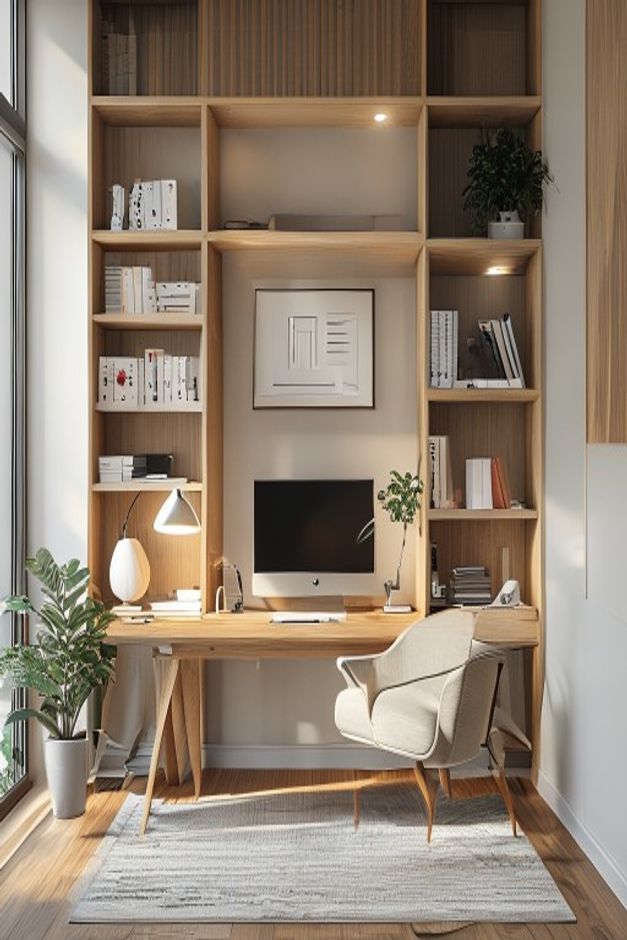
The composition demonstrates how a singular, cohesive material choice can transform a workspace into a sanctuary of productivity. By anchoring the room with floor-to-ceiling light oak built-ins, the design achieves a level of architectural continuity that larger, more chaotic offices often lack. It is a compelling study in how residential interiors can balance the rigors of professional work with the soft, inviting textures characteristic of mid-century aesthetics.
The intentionality behind the layout reveals a sophisticated approach to symmetry and balance. Every element, from the recessed shelf lighting to the placement of the upholstered chair, functions as part of a unified composition. This space is worth analyzing because it proves that minimalism does not require the sacrifice of utility; instead, it demands a higher degree of planning to ensure that every object has a permanent and logical home within the architecture itself.
The Architectural Impact of Light Oak Built-Ins
Choosing light oak as the primary material for a floor-to-ceiling shelving unit provides an immediate sense of organic warmth that prevents the office from feeling sterile. The wood grain acts as a subtle textural layer, interacting with the cream and grey tones of the surrounding walls to create a soft, diffused color palette. This choice of timber is particularly effective in smaller rooms where heavy, dark woods might otherwise overwhelm the visual field and shrink the perceived dimensions of the workspace.
Beyond aesthetics, the integration of these shelves directly into the wall structure serves a critical functional purpose. By building vertically, the design maximizes storage capacity without encroaching upon the floor area, leaving the central workspace feeling open and unencumbered. The clean, horizontal lines of the shelving act as a grounding force, drawing the eye upward and emphasizing the height of the room while providing a stable foundation for both professional equipment and decorative items.
Achieving Symmetry Through Integrated Desk Design
The central desk unit, seamlessly fused with the surrounding cabinetry, represents the pinnacle of custom millwork. By eliminating the visual clutter of independent furniture legs, the desk appears to float within the frame of the shelving, creating a streamlined profile that is synonymous with the mid-century modern movement. This integration ensures that the workspace feels like a permanent fixture of the home rather than an afterthought added to a spare room.
Symmetry plays a vital role in the success of this setup, as the desk is positioned at the exact midpoint of the built-in system. This arrangement creates a sense of order that can significantly reduce cognitive load during long hours of deep work. When the environment is balanced and predictable, the mind is better able to focus on the task at hand, making this architectural decision a practical tool for improving professional output and daily organization.
Layering Light for Functional Versatility
Lighting in a home office must bridge the gap between ambient illumination and focused task lighting, a balance achieved here through a dual-layered approach. Recessed shelf lighting provides a soft, atmospheric glow that highlights the curated books and objects, effectively turning storage into a curated display. This hidden light source prevents the shelving from appearing like a dark, cavernous void, keeping the entire wall feeling bright and accessible throughout the day.
Complementing the architectural lighting is a modern white table lamp placed directly on the desk surface. This provides the necessary intensity for reading or writing while maintaining the clean, minimalist aesthetic of the room. For those looking to refine their own setup, exploring Coastal Home Office Task Lighting Ideas can offer additional perspectives on how to integrate fixtures that serve both form and function without disrupting the surrounding design language.
The Role of Textile Upholstery in Wood-Heavy Spaces
In a room dominated by light oak and hard surfaces, the introduction of a textile-upholstered office chair is essential for acoustic and tactile comfort. The chair’s mid-century silhouette, characterized by its clean lines and wooden legs, echoes the materials used in the built-ins while providing a necessary softness. This material contrast prevents the office from feeling too rigid or industrial, ensuring that the occupant remains comfortable during extended periods of seated work.
The choice of a neutral fabric color aligns with the broader palette of cream and grey, allowing the chair to blend into the environment rather than acting as a jarring focal point. This subtlety is a hallmark of sophisticated interior design, where individual pieces are selected for their ability to contribute to the overall harmony of the space. By prioritizing comfort alongside style, the chair becomes a bridge between the functional requirements of an office and the aesthetic goals of a modern living space.
Curating Shelves for Visual Interest
The shelves in this office are not merely for storage; they are a curated gallery of the occupant’s interests and professional tools. By mixing books with decorative objects and abstract framed wall art, the design avoids the sterile appearance of a traditional filing system. This approach allows the workspace to reflect a personal identity while maintaining a professional standard that is suitable for video calls or client meetings.
When organizing such a system, it is important to leave negative space between items to ensure that the light oak wood remains a visible part of the composition. Overcrowding the shelves would negate the benefits of the custom cabinetry, turning a design feature into a source of visual noise. By thoughtfully spacing out objects, the shelves become a dynamic element of the room that can be updated or rearranged as the occupant’s needs evolve over time.
Integrating Indoor Plants for Biophilic Benefits
Potted indoor plants are strategically placed to introduce a vibrant, living element to the mid-century modern environment. The organic shapes of the leaves provide a necessary contrast to the geometric precision of the oak shelving and the straight lines of the desk. This integration of nature into the workspace is more than just a decorative choice; it serves to soften the atmosphere and introduce a sense of tranquility that is often missing from corporate-style home offices.
The placement of these plants—often tucked into corners or perched on shelves—ensures that they do not interfere with the primary workflow. Their presence acts as a visual break for the eyes, offering a moment of respite during intense work sessions. For those interested in how different wood tones can influence the overall mood of a space, comparing these light oak features with Japandi Home Office Wood Desk Ideas reveals how subtle variations in grain and hue can shift the entire energy of a room.
Maintaining a Neutral Color Palette
The reliance on cream, white, and grey creates a serene backdrop that allows the light oak to take center stage. These neutral tones are inherently calming, which is a critical consideration for a room dedicated to focus and concentration. By avoiding bold or aggressive colors, the design ensures that the office remains a peaceful retreat from the distractions of the rest of the home.
This color strategy also provides the flexibility to introduce personality through smaller accessories or artwork without needing to commit to a permanent change in the room’s architecture. The neutrality acts as a canvas, allowing the textures of the wood and the clean geometry of the built-ins to define the character of the space. It is a timeless approach that resists the fleeting nature of trends, ensuring that the office remains relevant and stylish for years to come.
The Value of Custom Millwork in Modern Homes
Investing in custom built-ins is perhaps the most impactful decision a homeowner can make when designing a home office. While off-the-shelf furniture is convenient, it rarely achieves the level of fit and finish that is visible in this space. The way the shelving meets the ceiling and the walls creates a sense of permanence and quality that elevates the entire home’s interior architecture.
This level of detail is what separates a makeshift desk setup from a true professional workspace. By prioritizing custom solutions, the occupant gains a level of storage and organization that is tailored specifically to their workflow. Homeowners can learn from this by focusing on how to maximize their existing wall space through vertical storage, rather than relying on disparate pieces of furniture that often fail to communicate with each other visually.
How can I incorporate light oak into a small home office?
Focus on vertical built-in shelving that spans from floor to ceiling to draw the eye upward and maximize storage without occupying valuable floor space.
What lighting is best for a mid-century modern office?
Combine recessed shelf lighting for ambient warmth with a focused, minimalist table lamp to ensure both aesthetic appeal and practical task illumination.
How do I keep a wood-heavy office from feeling too dark?
Use a light-toned wood like oak and pair it with a neutral palette of creams, whites, and greys to maintain an airy, open, and professional atmosphere.