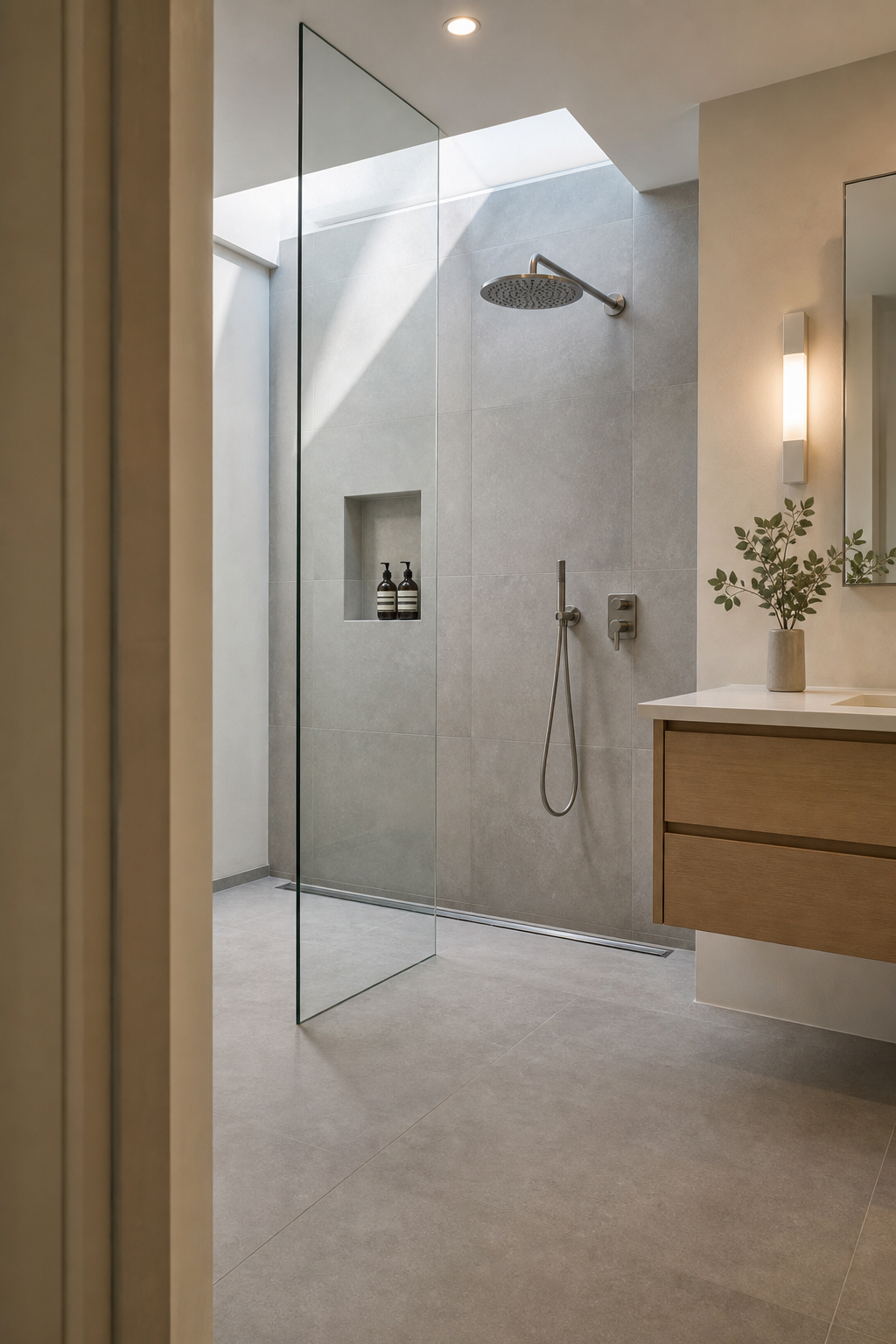

The slim drain at the base of the shower wall is the quiet detail that allows the entire bathroom floor to read as one plane. It runs parallel to the tiled wall behind a clear frameless screen, while large pale-gray tiles continue from the room into the wet zone without a raised curb. A skylight, round overhead shower, hand shower, recessed niche, floating vanity, and warm side light reinforce the contemporary clarity. Technical performance cannot be judged from the image, but the spatial result is unmistakable.
The Linear Drain Protects a Continuous Floor Reading
The drain reads as a long, deliberate line at the shower floor. Instead of breaking the tile with a small center drain, it reinforces the width of the shower zone. That makes the floor plane feel calmer. The eye sees one continuous surface, then the drain as a controlled edge.
The drain appears as one narrow dark line near the wall rather than a central point. Its length corresponds with the open shower zone and gives the floor a precise endpoint.
The shower floor appears to continue from the bathroom floor without a raised curb. This gives the bathroom a more open and contemporary feel. The linear drain helps that transition work because it manages the shower boundary without needing a heavy threshold.
The contemporary large-tile shower study examines the wall field. Here, floor continuity and the edge drain are the stronger organizing decisions.
The Drain Aligns With the Main Tiled Wall
Large format gray tile keeps grout lines quiet, which makes the drain line easier to read. The wall and floor feel connected rather than chopped into small pieces. The gray tone also suits the stainless and matte metal fixtures, keeping the palette controlled.
Drain and wall share a direction, while grout joints run in a restrained grid around them. This alignment makes the metal strip look integrated rather than added after the tile layout.
Large Pale-Gray Tiles Reduce Visual Interruption
The clear glass panel protects the shower area while keeping the drain and floor visible. A heavier enclosure would hide the detail that makes the room feel contemporary. Its minimal edge also allows daylight to reach the shower wall and floor.
Clear Glass Preserves the Long Ground Plane
The recessed niche gives the shower a practical storage point without adding a shelf to the glass or wall surface. It keeps bottles contained inside the tile plane. That matters in a bathroom where clean lines are the main design language.
The glass panel lands with a minimal dark edge and no bulky frame. It contains the shower visually while allowing the drain and floor tile to remain readable from the doorway.
The Skylight Pulls Attention Up From the Floor
Use a linear drain where it can align with a wall or glass edge. The detail works best when it looks intentional within the shower geometry. Keep surrounding tile simple and large enough that the drain does not fight with too many grout lines.
A Recessed Niche Keeps Bottles Off the Plane
Avoid adding too many competing lines near the drain. Multiple tile borders, patterned floors or busy accent strips can make the shower feel less precise. This bathroom succeeds because the drain, glass panel and tile layout all speak the same clean language.
Separating Visible Design From Drainage Engineering
A linear drain is not only a technical feature. In a contemporary bathroom, it can become the detail that makes the floor feel intentional. Here, the shower works because function and visual order are handled in the same line.
Slope, waterproofing, drain capacity, and installation tolerances are not visible and should be resolved professionally. What the photograph can support is the value of aligning drain, tile, and enclosure from the start.
The shower niche is set away from the controls and contains two dark bottles without breaking the large tile grid.
The floating vanity remains outside the glass line and leaves a pale floor strip visible beneath its two drawers.
Daylight from the roof opening falls diagonally across the tiled wall, exposing the scale of the panels and drawing attention away from hardware clutter.
The handheld shower hose forms the only loose curve in an otherwise rectilinear enclosure, making the controls visible without challenging the drain line.