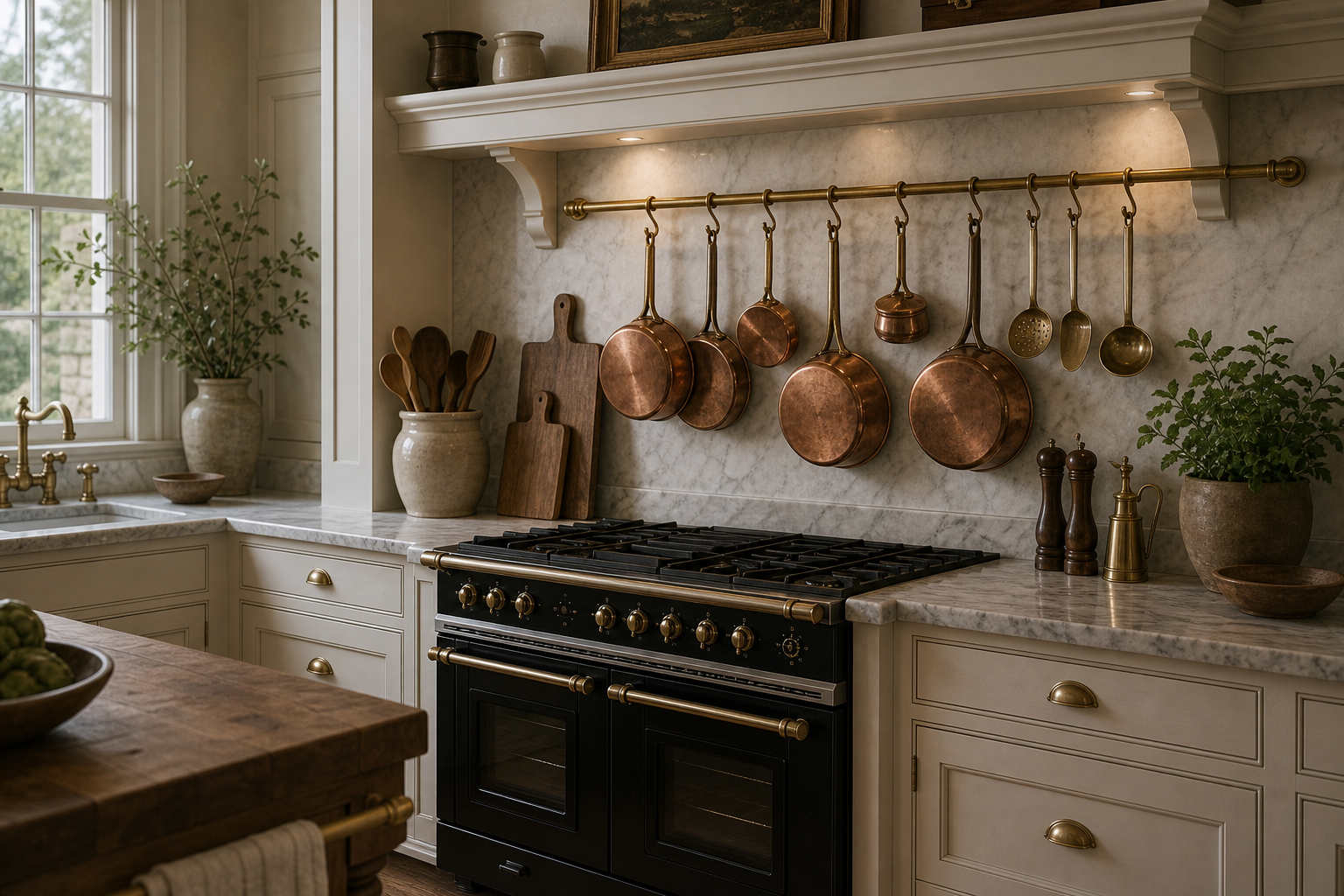

The cooking wall is organized by a fine metal rail rather than another bank of cabinets. Copper-toned pans hang in a measured row above the dark range, where they are easy to identify and visually connected to cooking. A pale veined backsplash provides a continuous field behind them, while inset cabinetry, short shelves, and side daylight keep the arrangement traditional but operational rather than nostalgic.
The Rail Establishes a Precise Working Height
The warm-metal rail runs across the pale veined surface backsplash at the exact height where cookware becomes both accessible and visible. That placement gives the range wall a strong horizontal center. Because the rail is polished and continuous, it feels intentional rather than improvised. The hanging pans become part of the architecture of the wall.
The rail begins and ends inside the range bay instead of stretching across unrelated counter areas. That containment matters: hanging cookware reads as a purpose-built tool zone, while the adjacent cabinet doors retain their own clear boundaries.
The copper-toned pans bring warmth against the cool gray movement of the pale veined surface. Their rounded forms also soften the straight lines of the rail, hood shelf and cabinetry. The key is consistency. The cookware shares a similar metal tone, so the open storage feels collected instead of chaotic.
A Dark Range Gives the Hanging Line a Base
The black range gives the warm-metal rail a strong base. Without that dark appliance below, the warm-metal and copper could feel too decorative on the pale backsplash. The range also explains the rail's purpose. This is not random display; it is storage placed directly above the cooking zone.
The range and broad hood form a strong vertical axis through the center. In the rustic brick cooking-wall study, texture supplies most of the character; here, the more refined backdrop allows cookware silhouettes and warm metal to carry the detail.
The pale veined surface backsplash gives the rail a refined surface to sit against. Its soft gray veining adds movement without competing with the copper cookware. The matching counter material keeps the cooking wall visually continuous, which helps the rail look integrated rather than attached later.
Inset Cabinets Frame an Open Work Bay
The cream inset cabinets soften the metal and stone palette. Their traditional drawer fronts and warm-metal pulls give the kitchen a formal frame around the working wall. Because the cabinetry is quiet in color, the rail can be the strongest functional detail without fighting the cabinets.
Daylight from the side window keeps the kitchen fresh, while the warm under-shelf light highlights the rail and pale veined surface. That lighting combination is important because metal storage can look flat in shadow. Here, the warm-metal and copper have enough light to show their texture.
A narrow light source is visible below the upper shelf, grazing the backsplash and catching the curved pan edges. Exact output cannot be inferred, but its position clearly prevents the hanging pieces from merging into the wall after daylight fades.
Editing the Number and Spacing of Hanging Pieces
Install the rail where it supports an actual work zone, ideally above a range or prep counter. Use sturdy hooks and hang only items that make sense in that location. Keep the cookware palette limited. Copper pans, warm-metal utensils or a small group of warm metal tools will look more intentional than a mixed collection of unrelated pieces.
Keeping an Exposed Cooking Wall Practical
I would not add a busy patterned backsplash behind this rail. Pale Veined Surface already gives enough movement, and the hanging cookware adds another layer of shape. I would also avoid filling every hook. Empty space along the rail helps the cooking wall breathe and keeps daily use practical.
Open cookware works only when each object has a reason to remain near the range. Leave gaps for hands to reach hooks, keep handles above the cooking surface, and resist extending the rail into the quieter preparation zones at either side.
The two short side shelves stop before the hood and leave breathing room around its tapered face. Their bowls, jars, and greenery remain at counter edges, separating display from the active pan rail. Below, pale cabinet fronts and the dark range create three clear value bands: light storage, dark appliance, and warm suspended cookware. That hierarchy lets the rail remain visible without turning every metal fitting in the kitchen into a competing accent.