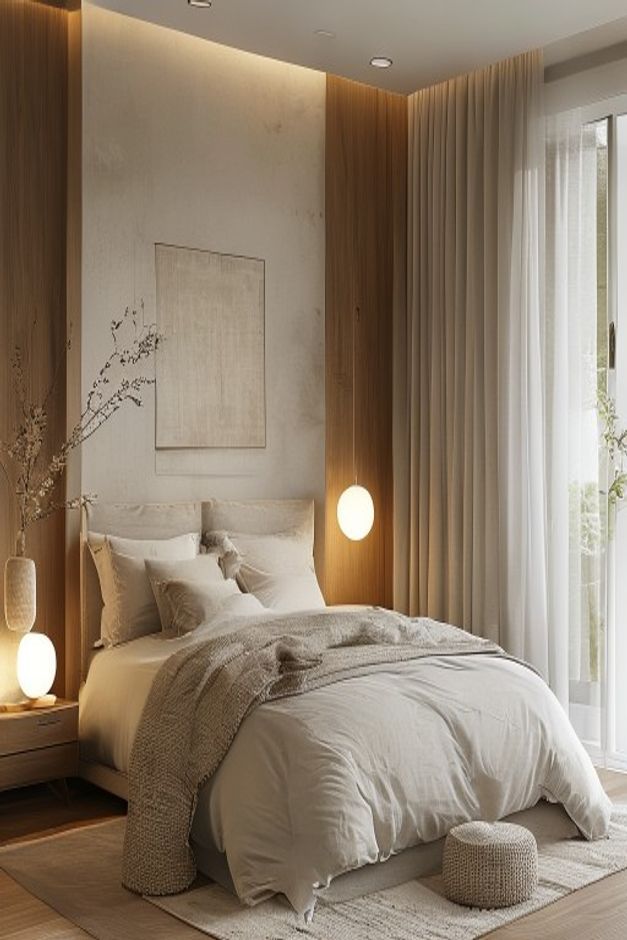

This bedroom presents a masterclass in restrained interior architecture, where the intersection of raw material and soft upholstery creates a sanctuary of profound stillness. By prioritizing a palette of beige, cream, and warm wood, the design avoids the sterile traps of modern minimalism, opting instead for a tactile experience that invites rest. It is a compelling study in how geometric precision—seen in the vertical wood paneling—can coexist with the softness of an upholstered bed frame, ultimately proving that true luxury lies in the intentional selection of natural textures.
Studying this space reveals how a monochromatic color scheme functions as an architectural tool rather than a design limitation. The layering of off-white and cream tones allows the eye to focus on the interplay of light and shadow across the plaster-effect walls and woven textiles. For those seeking to replicate this atmosphere, the room serves as a blueprint for balancing structural rigidity with the fluid, forgiving nature of organic materials, making it an essential reference for contemporary residential design.
The Architectural Impact of Vertical Wood Slat Wall Paneling
Vertical wood paneling serves as the primary structural anchor for the room, introducing a rhythmic quality that draws the eye upward and emphasizes the height of the space. This linear application of warm wood provides a necessary contrast to the softer, more amorphous textures found in the bedding and upholstery. By cladding the wall directly behind the bed, the design creates a deliberate boundary that defines the sleeping area without the need for additional architectural partitions or heavy furniture pieces.
The choice of wood grain is critical here, as it introduces a natural, unfinished quality that is central to the Wabi-Sabi aesthetic. Unlike high-gloss finishes that reflect light aggressively, these matte slats absorb ambient illumination, fostering a sense of depth and intimacy. This approach demonstrates how simple, repetitive patterns can transform a standard wall into a sophisticated feature, effectively grounding the bed frame within the broader spatial narrative of the bedroom.
Selecting the Ideal Upholstered Bed Frame for Organic Spaces
An upholstered bed frame acts as the soft-touch transition between the rigid vertical slats and the floor, providing a necessary layer of comfort that defines the room’s purpose. In this configuration, the fabric choice is paramount; selecting a textile that mimics the raw, tactile quality of linen or heavy cotton ensures the piece feels authentic to the surrounding environment. The frame’s low profile is particularly effective, as it maintains a grounded aesthetic that prevents the bed from overwhelming the scale of the room.
When integrating such a piece, consider how the upholstery color interacts with the plaster-effect wall finish. A cream or off-white fabric creates a seamless transition from the wall to the mattress, allowing the bed to appear as a natural extension of the architecture rather than an isolated object. This cohesive approach to color and material is what separates a well-curated bedroom from one that feels merely furnished, emphasizing the importance of harmony in modern organic bedrooms.
The Role of Plaster-Effect Finishes in Minimalist Interiors
Plaster-effect walls offer a subtle, nuanced backdrop that elevates the bedroom beyond standard paint applications. This finish introduces a slight variation in light reflection, giving the room a living, breathing quality that changes as the day progresses. It provides a soft, matte surface that complements the warm wood tones, ensuring that the transition between different materials feels fluid and intentional rather than abrupt.
Implementing this technique requires an appreciation for imperfection, which is the cornerstone of the Wabi-Sabi philosophy. By allowing for slight irregularities in the wall’s texture, the space gains a sense of history and character that is often missing from contemporary builds. This finish acts as a neutral canvas, allowing the specific choices of lighting and bedding to take center stage without competing for visual dominance.
Integrating Lighting as a Sculptural Element
Lighting in this bedroom is treated as a sculptural intervention, with pendant globe lights and minimalist table lamps serving functional and aesthetic roles. The globe pendants, suspended in a way that avoids cluttering the bedside area, provide a soft, diffused glow that enhances the room’s warm palette. This choice of fixture is essential for maintaining the minimalist integrity of the space, as it avoids overly decorative hardware that could distract from the organic theme.
The placement of these lights is equally important, as they create a symmetrical balance that reinforces the room’s layout. By utilizing a minimalist table lamp on the nightstand, the design provides task-specific illumination that doesn’t compromise the overall serene mood. This layered lighting strategy ensures that the room remains functional during evening hours while preserving the soft, tranquil atmosphere that defines the Wabi-Sabi approach to quiet luxury bedroom design.
The Importance of Low-Profile Wooden Nightstands
Low-profile wooden nightstands are essential for maintaining the horizontal flow of the room, keeping the focus at the level of the bed. By choosing a design that mirrors the warmth of the wall paneling, these pieces create a sense of continuity that anchors the bed within the space. Their minimalist form ensures they provide necessary storage without introducing unnecessary visual weight or complex hardware that would disrupt the clean lines of the room.
These nightstands serve as the perfect platform for curated decor, such as a single minimalist lamp or a small botanical arrangement. By limiting the amount of clutter on these surfaces, the design reinforces the importance of intentionality in a Wabi-Sabi interior. This restraint allows each object to be appreciated for its form and material, contributing to the overall sense of calm that permeates the bedroom environment.
Curating Textiles for a Tactile Bedroom Experience
Linen bedding is the definitive choice for a bedroom that prioritizes comfort and organic beauty. Its inherent texture, characterized by a slight crinkle and a matte finish, provides a soft contrast to the structured wood paneling and the smooth plaster walls. By layering different shades of cream and off-white, the bedding creates a visual depth that invites touch, reinforcing the room’s role as a place for rest and rejuvenation.
Beyond the bed, the inclusion of a woven textured ottoman adds another layer of complexity to the room’s material palette. This piece introduces a different scale of texture, which helps to break up the larger, flatter surfaces of the floor and walls. When selecting textiles, focus on natural fibers that age gracefully, as this aligns with the core principles of Wabi-Sabi, ensuring the room feels more authentic and lived-in over time.
The Strategic Use of Sheer Curtains for Softened Light
Floor-to-ceiling sheer curtains are a vital component in softening the natural light that enters the bedroom. By diffusing harsh daylight, these textiles create a gentle, ethereal glow that enhances the warmth of the wood and the softness of the plaster walls. This treatment of the windows allows for privacy without sacrificing the connection to the outside, maintaining the room’s sense of openness and tranquility.
The choice of a lightweight, translucent fabric ensures that the curtains do not become a distraction. Instead, they act as a veil, subtly framing the view and adding a sense of height to the room. When paired with the other organic elements, these curtains help to blur the lines between the interior and exterior, a hallmark of thoughtful residential design that seeks to create a seamless living experience.
Minimalist Decor and the Power of Botanical Arrangements
Minimalist framed wall art and dried botanical arrangements provide the finishing touches that give the room its personality. By keeping the art simple and the botanicals understated, the design avoids overwhelming the space, allowing the architectural features to remain the primary focus. These items are carefully chosen to reflect the room’s color palette, ensuring that they feel integrated rather than decorative additions.
Dried botanicals, in particular, are perfectly suited for a Wabi-Sabi bedroom because they represent the beauty of natural cycles and the passage of time. They add a sculptural element that is both fragile and enduring, providing a focal point that is subtle yet impactful. This approach to decor demonstrates that a few well-chosen items are far more effective than a collection of mass-produced accessories, emphasizing the value of quality over quantity in home design.
How can I incorporate Wabi-Sabi in a small bedroom?
Focus on a neutral, monochromatic palette and prioritize natural materials like wood and linen to create a sense of space and calm without adding visual clutter.
Why is an upholstered bed frame recommended for this style?
An upholstered frame adds a necessary layer of softness and tactile comfort that balances the harder, structural elements often found in Wabi-Sabi interiors.
What is the best way to choose lighting for a minimalist bedroom?
Select fixtures with simple, geometric forms and warm light temperatures to ensure the lighting enhances the room’s atmosphere rather than distracting from its clean lines.