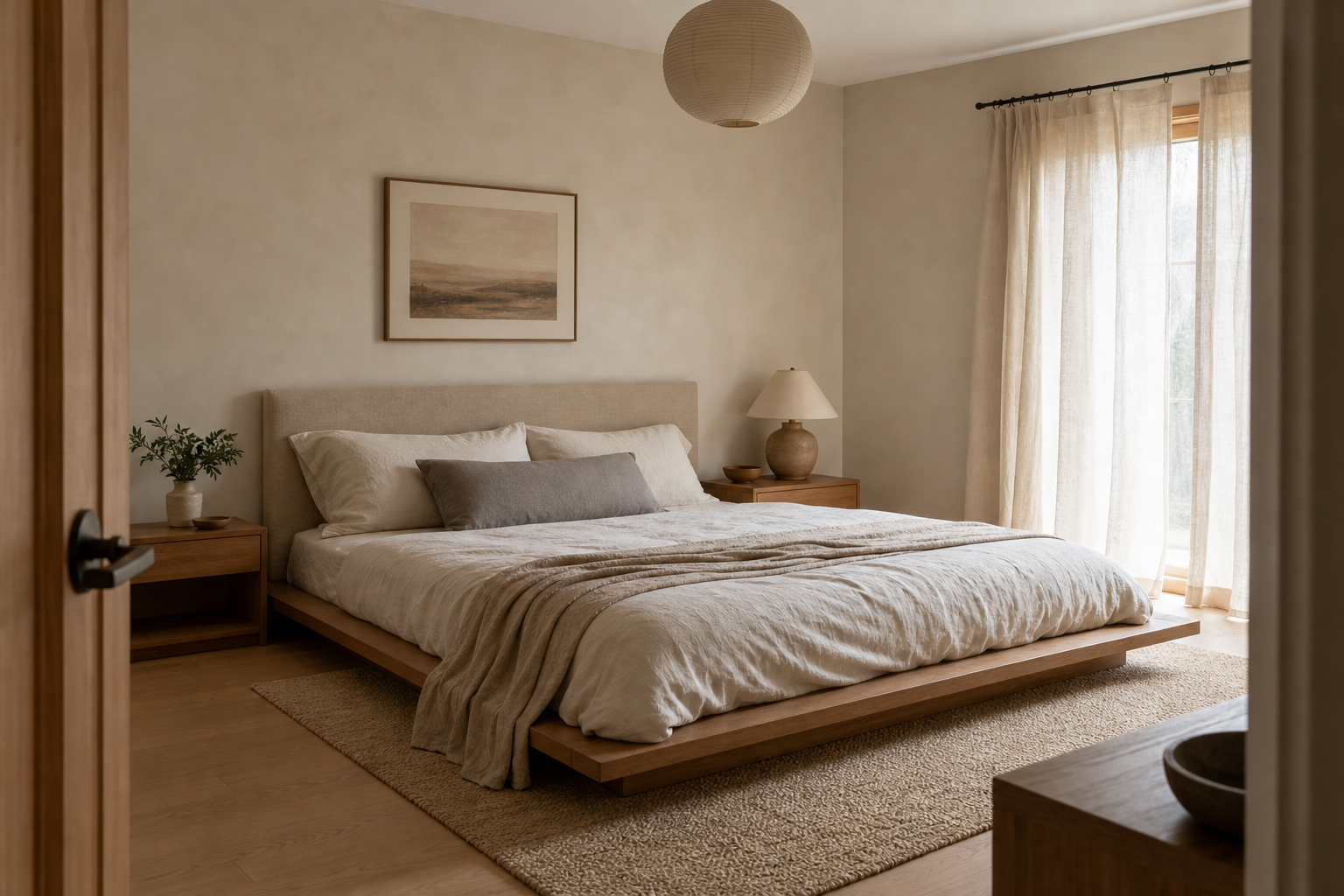

The room is organized around a horizontal line only a short distance above the floor. A broad timber-toned platform projects beyond the mattress and appears to recede beneath it, making the bed feel grounded but not bulky. Low bedside tables maintain that datum, while a round paper lantern introduces one suspended curve. Warm white walls, relaxed pale bedding, filtered daylight, and a textured rug make the minimal composition comfortable rather than austere.
The Platform Establishes a Low Horizon
The bed frame is low, broad and visually simple, which makes it the room's organizing line. Instead of relying on a tall headboard or dramatic color, the design uses the bed's horizontal profile to create calm. That low height also changes how the wall above the bed reads. The framed artwork has breathing room, and the paper lantern can sit overhead without making the bed area feel compressed.
The platform edge remains visible at the sides and foot, clearly distinguishing frame from mattress. Its broad rectangle gives the bed enough presence to organize the room even though neither headboard nor wall treatment rises high behind the pillows.
The bedding has a relaxed fabric texture, with soft creases that prevent the minimalist room from feeling too rigid. This matters because a perfectly flat bed would make the space colder and more staged. The ivory duvet, oatmeal throw and muted gray pillow create variation within a narrow palette. The result is quiet, but the layers are still readable.
Shadow under the platform makes its substantial top plane appear thinner from the doorway. The photograph does not reveal the support construction, but the visible setback is enough to explain why the bed reads as lightly hovering rather than as a solid box on the floor.
Bedside Tables Respect the Mattress Line
Both timber-toned nightstands sit close to the bed's height, so they do not compete with the platform frame. Their simple rectangular forms make the bed wall feel composed. The left side uses a small plant and bowl, while the right side carries a ceramic lamp. That slight asymmetry keeps the room from becoming stiff.
The Paper Lantern Adds One Overhead Curve
The round paper lantern introduces a soft shape above a room built mostly from rectangles. It breaks the geometry of the bed, nightstands and window without becoming visually heavy. Because the lantern is light in color and texture, it adds scale to the ceiling while keeping the bedroom's warm minimalist mood intact.
The lantern hangs off the bed's exact center and therefore counters the weighted bedside lamp on the right. This mild asymmetry keeps the arrangement domestic and relaxed while the circular shade relieves the many straight edges of window, art, bed, and rug.
Relaxed Bedding Breaks the Rectangular Geometry
The sheer curtains diffuse daylight across the bed and floor, which gives the room a softer edge. The black curtain rod is slim, so it frames the window without turning into a dominant detail. This is a useful lesson for minimalist bedrooms: the window treatment should control glare and privacy while still letting the architecture feel light.
The textured rug sits under the platform bed and extends beyond the frame, making the sleeping zone feel intentional. Without it, the low bed could look as if it were simply floating on the wood floor. Its scale is important. Enough rug remains visible at the foot and side of the bed to soften the first step in the morning.
The Rug Defines a Soft Landing Zone
Start with a timber-toned platform bed that has a clean, thin edge. The frame should feel grounded, not bulky, because the whole room depends on that low visual line. Pair it with low nightstands, layered bedding, a soft rug and one gentle overhead fixture. The goal is to build comfort around the bed without filling the room with unnecessary pieces.
Keeping a Low Bed Practical and Visually Calm
I would not add a tall dresser or heavy bedside storage to this wall. Those pieces would fight the calm proportion created by the bed. I would also avoid high-contrast bedding. The strength of the room comes from close tones, quiet texture and the way daylight moves across the linen.
The bed-wall layering in this modern minimalist bedroom analysis builds vertical emphasis. This room deliberately stays low, using platform width and floor texture to establish its scale.
Framed artwork remains modest in size and slightly above the low bed line, ensuring the broad platform carries more weight than the wall object. A small plant and bowl appear on the left table while the lamp occupies the right. Their asymmetry gives the sparse room a lived-in balance without adding another furniture type.