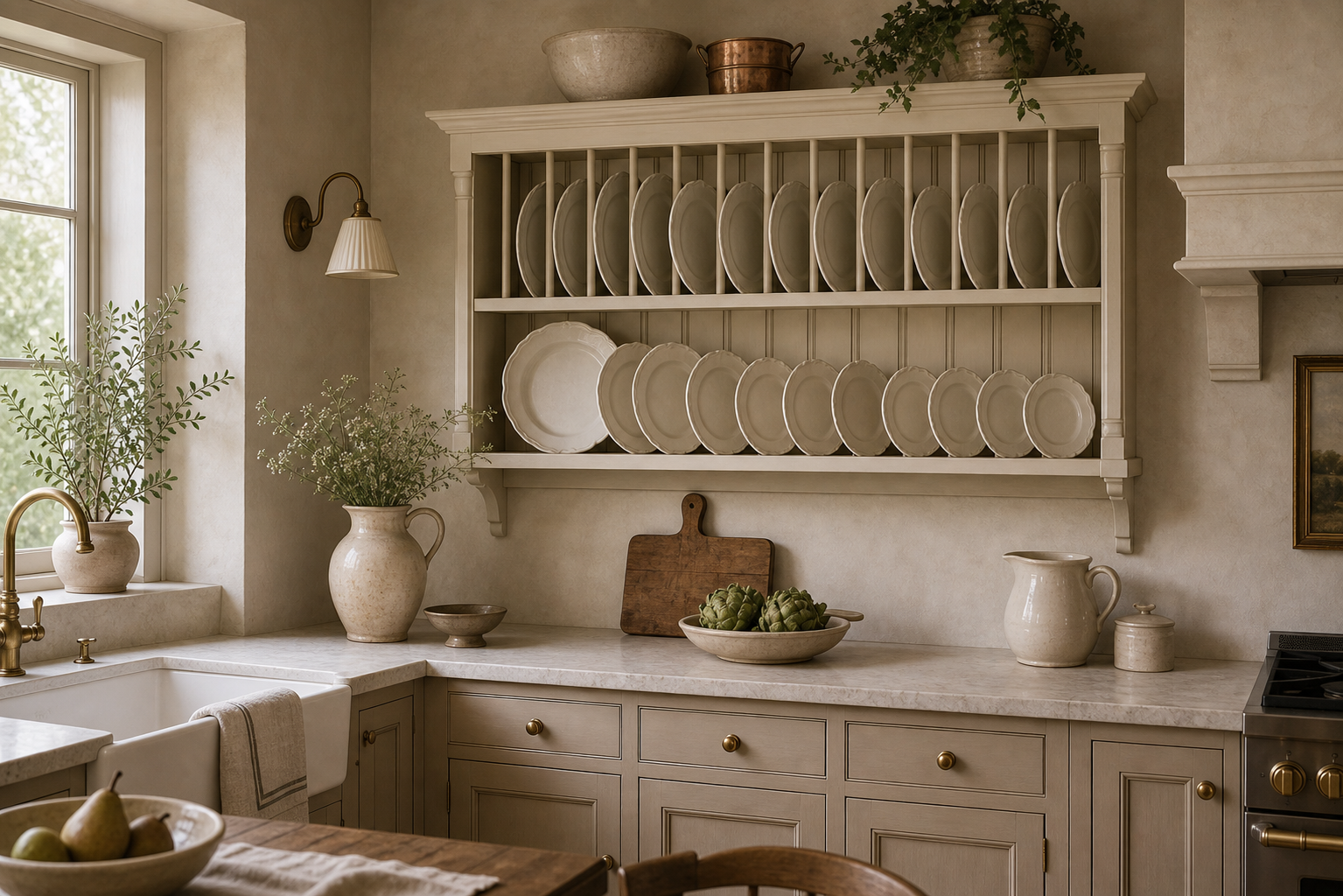

The plate rack turns everyday dishes into the upper structure of this kitchen wall. Vertical dividers hold pale plates in a repeated row, while small cubbies above contain bowls and vessels. The rack is centered between window and tall cabinet and sits directly over the sink-side counter, making storage visibly connected to washing and serving. Painted cabinetry and a restrained cream palette keep the numerous dish edges from feeling busy.
The Plate Rack Controls the Upper Wall
The cream painted rack is the strongest feature because it gathers the plates into a clear, repeated pattern. That order matters. Without the rack, the wall would rely on loose decor; with it, the kitchen gains a functional display that feels built into the architecture.
The rack occupies a broad rectangle but remains shallower than a conventional wall cabinet. Its open face keeps the wall light and allows plate silhouettes to provide detail without introducing another solid door plane above the counter.
The rows of white plates create a steady visual beat across the wall. Their repeated curves soften the straight cabinet lines and make the kitchen feel collected rather than overly polished.
Similar pale plates are spaced in individual slots, producing order through repetition rather than color contrast. The rhythm is dense enough to register across the room but quiet because every item stays within the same restrained range.
Upper Cubbies Break the Long Display Line
The painted rack relates to the lower cabinetry instead of looking like a separate wall accessory. That connection is important in a French country kitchen, where built-in pieces should feel as if they have always belonged.
Painted Joinery Keeps the Storage Integrated
The pale counter creates a quiet base below the plate rack. It gives pitchers, bowls and the cutting board a place to land without stealing attention from the displayed plates.
The brass faucet, cabinet knobs and sconce introduce warmth against the cream and putty paint. Their aged finish suits the relaxed character of the room better than bright polished metal would.
A white farmhouse-style sink sits below and slightly left of the rack, placing stored dishes close to the wet work zone. The counter between them remains sufficiently clear for setting down bowls or plates without covering the display.
Warm-Metal Fixtures Add Small Highlights
The farmhouse sink sits close to the plate display, which makes the rack feel connected to real kitchen use. That proximity keeps the feature from becoming purely decorative. It reads as a practical storage wall for dishes that are meant to be handled.
Choose one wall section where plates can be displayed in a clean row without interrupting cooking clearance. Use a painted rack that relates to the cabinet color, then keep the plates simple. The beauty comes from repetition, not from mixing too many dish patterns.
Displaying Dishes Without Losing Work Space
I would not replace the plates with a random mix of objects. The repeated ceramics are what make the rack feel calm. I would also avoid a high-gloss cabinet finish here. The softer painted wood is better suited to the plaster, stone and brass.
The tiled wall in this cottage kitchen backsplash study carries more of the visual rhythm. Here, the wall stays pale and the plate rack itself supplies the repeated vertical detail above the sink.
The window sits immediately left of the sink and casts side light across plate edges, faucet, and painted rack. A small open shelf on the opposite side carries only a few vessels, preventing the display language from spreading across every wall. The kitchen gains French country character through one working storage feature, not through an accumulation of unrelated decorative signs.
Painted lower cabinets use paneled fronts that are broader and quieter than the narrow plate slots above. This change in scale prevents the repeated storage detail from running from counter to floor. The pale counter forms a clean pause between display and base cabinetry, leaving room for a bowl, board, and branch vessel while keeping the sink-side work surface visibly available. The plate rack's crown aligns below the ceiling and leaves a narrow wall margin above. That breathing space completes the furniture-like silhouette and prevents the open storage from appearing wedged between counter and ceiling in an already detailed working corner.