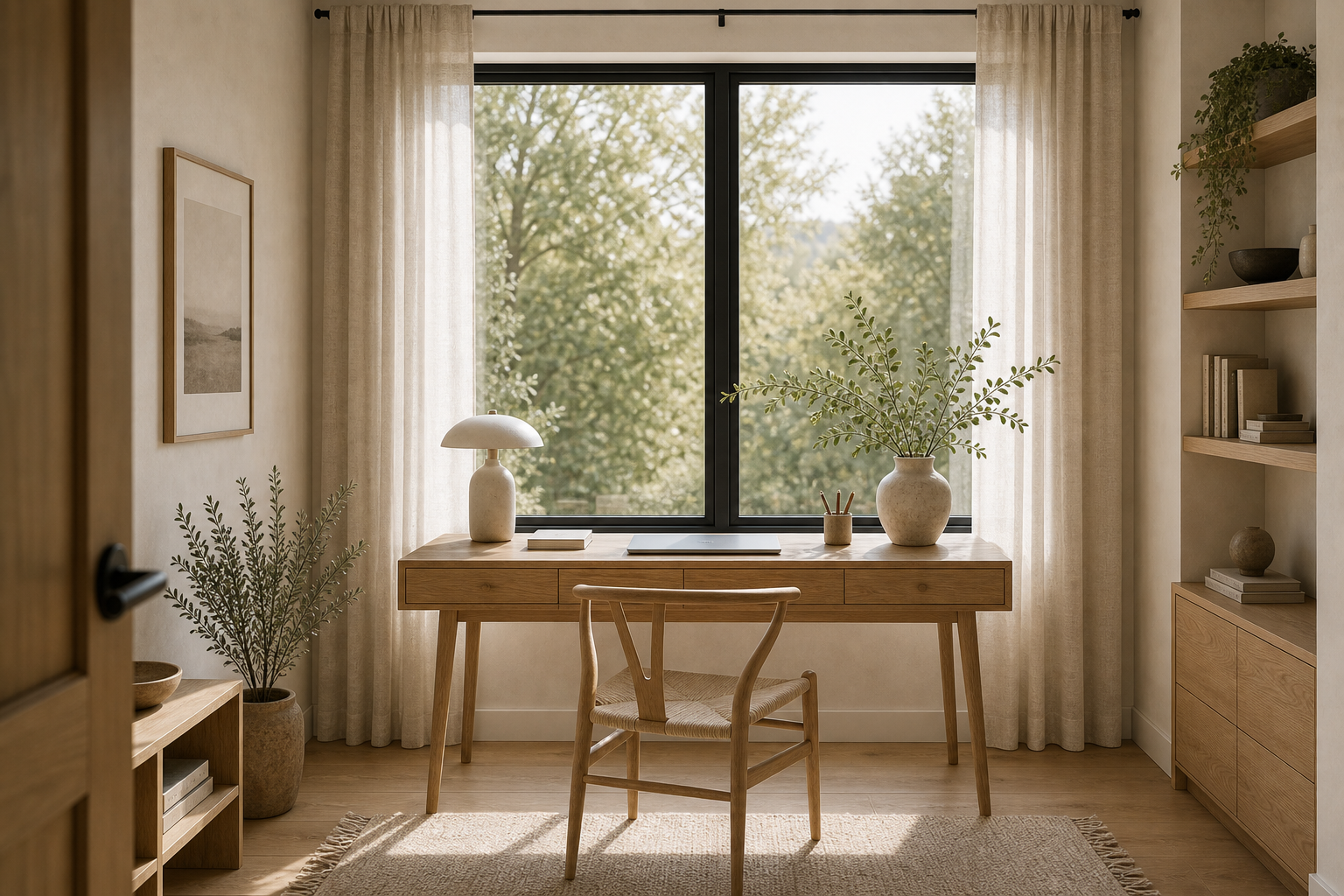

The desk is placed directly in front of the window, making daylight and the garden view part of the working position. Its slim timber-toned top spans the central opening without filling the full wall, and a woven chair keeps the foreground light. Pale curtains frame the black window, while open shelves are confined to the right side. The office feels calm because work surface, storage, and view occupy separate, clearly readable zones.
The Desk Faces the Primary Daylight Source
The desk is centered directly below the black-framed window, making the work zone the first thing the room communicates. That alignment gives the office a clear purpose. The view, daylight and writing surface are all part of one composition.
The desk is centered on the main glass panel and remains below the sill, so its horizontal edge does not divide the outdoor view. This alignment also places the brightest light in front of the user instead of behind the work surface.
The window brings soft light across the desk rather than relying on a heavy overhead fixture. For a home office, that matters. Natural light makes the surface feel open and reduces the visual heaviness that can come from too much furniture.
The Woven Chair Keeps the Foreground Open
The pale curtains soften the black window frame and filter the daylight. They also add vertical texture without covering the main view, which is exactly the kind of quiet control a Scandinavian office needs.
The chair uses an open back and narrow legs, admitting both light and floor through its silhouette. It supplies tactile warmth without becoming a dense upholstered object between the doorway and window.
Curtains Soften the Dark Window Frame
The woven chair seat adds tactile warmth to the pale oak desk. Its open frame also keeps the desk area light. A heavier upholstered chair would change the scale of this small office corner.
Side Shelves Stay Outside the Work Axis
The closed laptop, ceramic lamp, pencil cup and branch arrangement leave enough open surface for real work. That restraint is practical. The desk looks calm because only useful or visually quiet objects are allowed to stay.
A vertical shelf stack occupies the right return and holds only a few books, vessels, and plants. Keeping storage off the window wall prevents a tall cabinet from narrowing the opening or casting a broad shadow over the desk.
The open shelves sit on the right wall rather than above the desk. That placement keeps storage nearby while protecting the window view. It also prevents the work area from feeling boxed in.
A Quiet Rug Defines the Chair Zone
The small wool rug softens the wood floor and marks the chair area. It gives the desk a subtle boundary without adding a bulky furniture piece.
Planning a Window Desk Without Blocking Light
Start with the window width, then choose a desk that fits comfortably below it without covering the curtain panels. Use a simple chair, one lamp and a few small objects. The goal is to make the work surface feel connected to daylight, not crowded by accessories.
The integrated approach in this Scandinavian home-office lighting study combines work surface and storage more closely. Here, the desk remains independent so the window can retain its full visual width.
The desk surface carries only a small lamp, book, and plant, leaving the central width available for work. A low bench or cabinet remains against the left wall and does not overlap the chair path. The photograph shows a direct approach from the room into the working position, with shelving held to the side and no tall object placed between user, glass, and daylight.
The window frame and desk legs are the darkest linear elements, creating a restrained graphic outline against the pale room. The chair, rug, curtains, and branches introduce softer edges around those lines. This balance keeps the office from becoming either stark or overly rustic: structure remains precise at the working axis, while texture is distributed at the sides and floor where it does not interfere with the view. A small wall picture remains outside the window axis and above the low left furniture, adding one contained visual note without competing with the outdoor view. The office's strongest verticals therefore remain curtains, frame, and side shelving, all arranged around the work surface rather than across it.