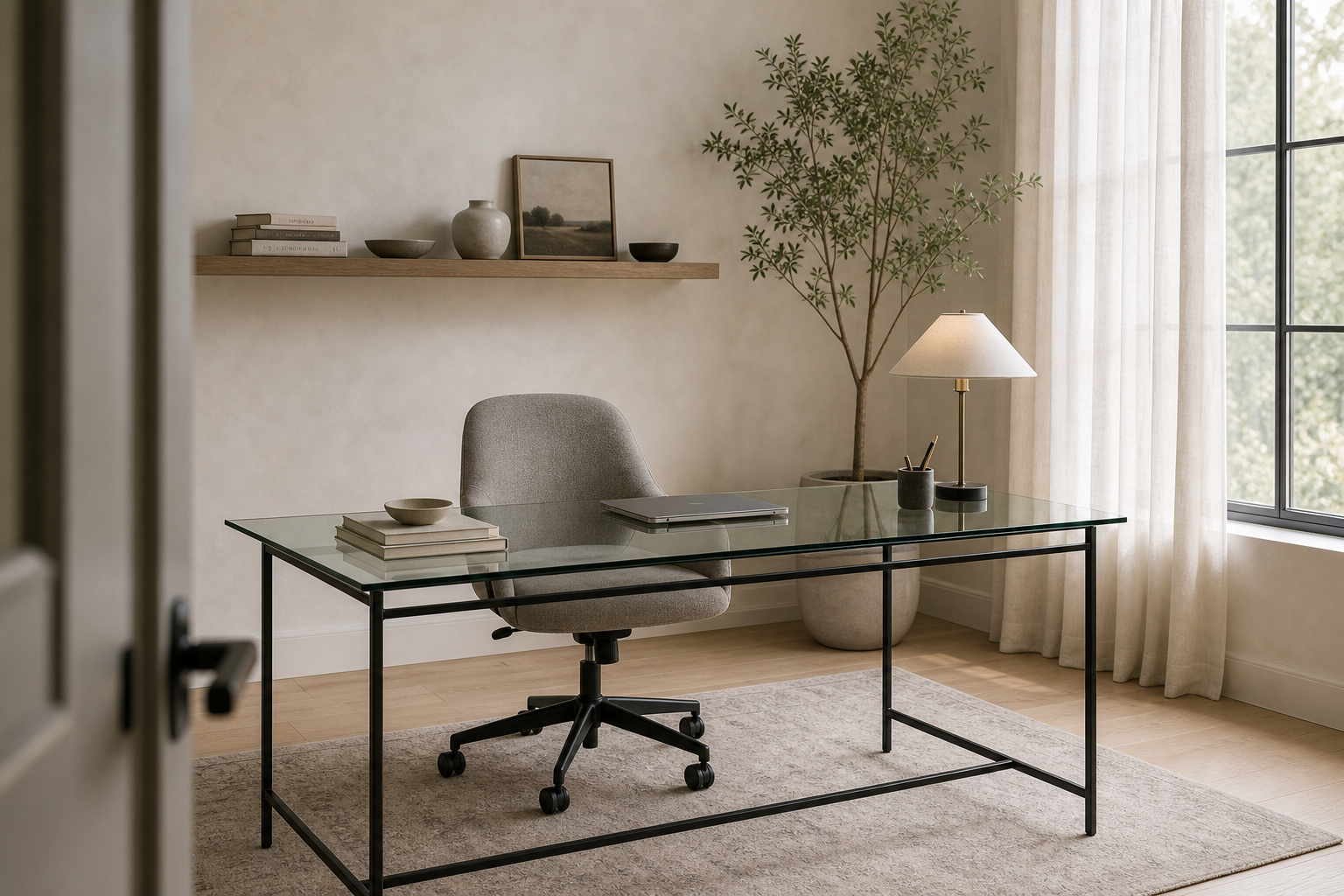

The work surface is almost absent from this office until its fine dark perimeter catches the eye. A broad transparent top spans two slim trestle-like supports, allowing the pale rug and floor to continue visually beneath it. The upholstered task chair supplies the room's softest volume, while a long wall shelf transfers books and small objects away from the desk. Filtered side light gives the glass definition without turning reflection into the dominant feature.
Transparency Preserves the Office Floor Plane
The transparent desktop lets the rug, chair and pale floor remain visible through the work surface. That openness is the reason the desk can be broad without visually crowding the room. A solid wood desk in the same position would block more of the floor and make the office feel heavier.
The tabletop is large enough for practical work, yet its clear center does not cut the image into upper and lower halves. Objects appear to rest within an open field, making the room feel less occupied than a solid desk of the same width would.
The slim black metal frame outlines the desk clearly, so the glass does not disappear completely. It gives the work area a boundary without adding bulk. The frame also repeats the dark window mullions and chair base, creating a controlled contemporary line.
Black horizontal and diagonal lines describe the table without forming a cabinet-like base. Their thinness matters because the window mullions and chair base already introduce dark structure; heavier legs would collect too much contrast at the floor.
The Task Chair Supplies a Soft Counterform
The upholstered office chair softens the glass and metal. Its rounded back introduces comfort in a room that could otherwise feel too sharp. The chair color stays muted, which helps it support the desk instead of becoming the main feature.
Side Daylight Gives the Glass an Edge
Daylight from the side window catches the glass top and makes the desk feel lighter. The sheer curtains reduce glare while still keeping the room bright. This is important with glass furniture. Too much direct reflection can feel harsh, but filtered light makes the material calmer.
The wall shelf holds books, ceramics and framed art, leaving the desktop mostly open for work. That division keeps the glass surface from becoming cluttered. The shelf also gives the wall a horizontal counterpoint to the desk, making the room feel composed.
The shelf sits above and behind the desk rather than directly over the user's head. Books, framed pieces, and small vessels are spaced along it, providing a readable background while leaving the transparent work surface available for a monitor and a few active items.
A Tall Plant Balances the Open Corner
The tall plant fills the corner near the window with height and organic shape. Its leaves soften the straight desk frame and wall shelf. Because the planter is simple, the plant adds life without turning the office into a decorative display.
Choose a glass desk with a fine metal frame rather than a thick base. The goal is to create a clear work surface that does not block the room. Then add texture through an upholstered chair, a rug, curtains and one plant. Those elements make the office comfortable while the desk stays light.
Using Glass Without Creating a Cold Workspace
I would not cover the desk with organizers. The strength of the design is the open glass surface. I would also avoid a very dark rug under this desk. The pale rug helps the transparent top feel airy instead of reflective and severe.
The integrated desk in this coastal home office storage study gains efficiency through built-ins. This room prioritizes visual openness, moving secondary objects to one floating line and keeping furniture visibly separate.
The monitor remains near one side of the transparent top, preserving an open working area rather than filling the full span with equipment. A floor lamp and tall plant occupy opposite sides of the window. Their softer silhouettes frame the desk without interrupting chair movement or the light crossing the rug.
A broad pale rug runs beneath table and chair but stops before the walls, giving the workstation a soft footprint within the larger floor. Its subtle border remains visible through the transparent top, so it contributes to the desk composition rather than disappearing under a solid slab.