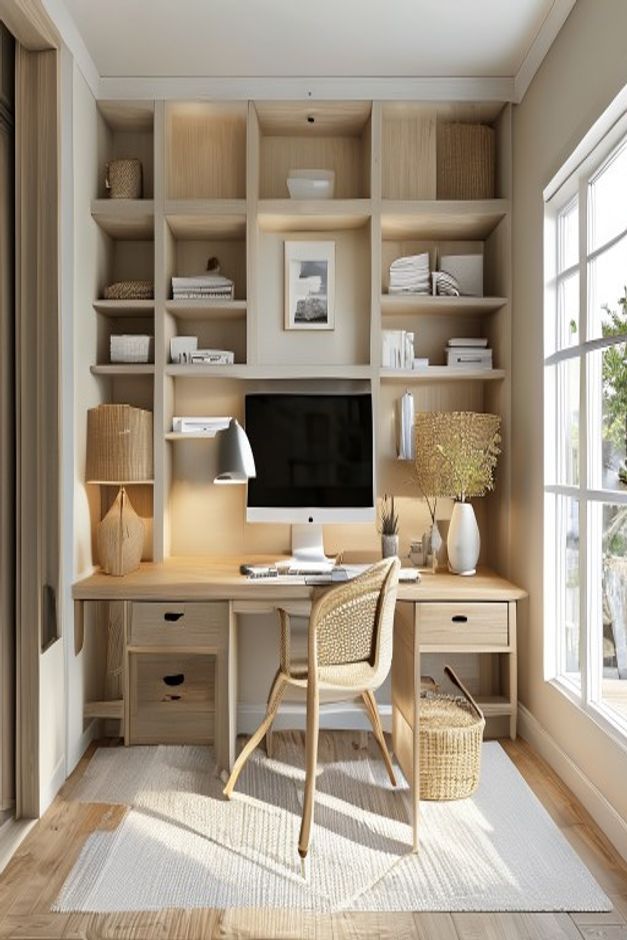

This coastal home office shows how a singular, floor-to-ceiling cabinetry unit can transform a niche into a high-functioning workspace. By consolidating storage and desk surfaces into a unified architectural element, the design eliminates visual clutter, allowing the serene, neutral palette to define the room’s character. It serves as a compelling study for homeowners looking to maximize utility without sacrificing the airy, relaxed aesthetic synonymous with coastal interiors.
The intentional use of light-toned surfaces and natural textures provides a blueprint for creating a workspace that feels both professional and tranquil. By examining the integration of these built-ins, one can appreciate how custom millwork acts as the backbone of the room, dictating the flow of light and the organization of daily tasks. This setup proves that even the most compact home offices can achieve a sense of expansive luxury when the furniture is treated as a permanent extension of the architecture.
Floor-to-Ceiling Built-Ins Add Storage Without Bulk
Floor-to-ceiling built-ins are the defining feature of this space, effectively utilizing vertical height to provide substantial storage capacity while maintaining a clean, minimalist silhouette. By carrying the cabinetry from the floor to the ceiling, the designer creates a sense of height and permanence that standalone furniture simply cannot replicate. This approach ensures that every inch of the wall is accounted for, preventing the accumulation of dust and unnecessary visual gaps that often disrupt the flow of a room.
Beyond the aesthetic benefits, this vertical integration allows for a sophisticated layering of storage options, from accessible desk-level shelves to higher zones reserved for long-term organization. The unified structure anchors the room, providing a stable foundation for the desk surface to cantilever or sit flush within the frame. When storage is built directly into the wall, the office feels less like a collection of disparate pieces and more like a curated, permanent environment designed for deep focus.
Warm Neutrals Let the Light Wood Stand Out
The color palette in this office relies on a foundation of beige, cream, and white, which collectively reflect light and amplify the sense of openness. These warm neutrals serve as a canvas for the light-toned wood surfaces, which introduce an organic, tactile quality that softens the rigidity of the built-in cabinetry. By avoiding high-contrast colors, the room maintains a cohesive, monochromatic feel that is essential for a calming coastal atmosphere.
Texture plays a crucial role in preventing this neutral scheme from appearing sterile or flat. The inclusion of woven elements, such as the desk chair and storage baskets, introduces depth and visual interest through natural variations in light and shadow. This strategic use of texture ensures that the room feels lived-in and approachable, proving that a neutral workspace can be just as dynamic as one filled with bold patterns or saturated hues.
Optimizing Workflow with Integrated Desk Surfaces
The desk area is seamlessly incorporated into the larger cabinetry unit, creating a dedicated workspace that feels both protected and integrated. This layout is particularly effective for those who require a stable, permanent desk setup that does not infringe on the rest of the room’s square footage. By nestling the desk within the shelving structure, the designer creates a natural boundary between work and rest, which is essential for maintaining productivity in a home environment.
For those interested in exploring further, these warm neutral home office wood desk ideas provide additional inspiration for selecting surfaces that complement built-in cabinetry. The desk surface itself remains clear of unnecessary hardware, emphasizing the beauty of the light oak wood and the precision of the joinery. This streamlined approach to desk design encourages a tidy workspace, as the integrated shelving provides immediate access to essential items without the need for additional bulky furniture.
Oak and Rattan Bring Texture to the Workspace
Natural materials are central to the coastal identity of this office, with light oak and rattan serving as the primary contributors to the room’s warmth. The use of wood cabinetry brings an earthy, grounded quality to the space, balancing the brightness of the white walls and cream tones. This material choice is not merely aesthetic; it also provides a durable, timeless finish that ages gracefully over time, ensuring the office remains relevant for years to come.
Rattan, utilized in the desk chair and woven baskets, adds a layer of organic texture that contrasts beautifully with the smooth surfaces of the built-in unit. This juxtaposition of hard and soft materials is a hallmark of sophisticated coastal design, where the goal is to evoke the natural world while maintaining a polished, professional finish. By incorporating these elements, the office gains a tactile dimension that invites interaction and comfort during long hours of work.
Strategic Lighting for Enhanced Functionality
Lighting in this office is handled with a multi-layered approach that combines integrated shelf lighting with a task lamp featuring a woven shade. The shelf lighting provides a soft, ambient glow that highlights the contents of the built-ins, adding depth and shadow to the display areas. This hidden illumination is a clever way to draw attention to decorative items without creating harsh glare or distracting light spots that could interfere with screen work.
To supplement this, the task lamp offers focused illumination exactly where it is needed most, while its woven shade echoes the room’s coastal theme. Those looking to refine their own lighting setup might consider these coastal home office task lighting ideas to balance function and style. By utilizing both ambient and task lighting, the room remains versatile, transitioning easily from daylight hours to evening sessions without losing its warm, inviting character.
Curating Shelving Displays for Visual Balance
The open shelving within the built-in unit is curated with a mix of books, ceramic vases, and greenery, which adds personality to the workspace. Rather than packing the shelves to capacity, the design leaves deliberate negative space, which allows the eye to rest and prevents the unit from feeling overwhelmed. This balance between storage and display is vital for maintaining a professional appearance in a home office.
The inclusion of greenery adds a touch of life to the office, breaking up the linear nature of the cabinetry and introducing a vibrant, organic element. When choosing decor for your own shelves, prioritize items that serve a purpose or hold personal significance, keeping the overall composition simple and uncluttered. This curated approach ensures that the shelving acts as a backdrop for creativity rather than a source of visual distraction.
Maximizing Utility with Woven Storage Solutions
Woven baskets offer a practical solution for storing items that are essential but not necessarily decorative. By placing these baskets on the lower shelves, the designer keeps the most frequently used tools within arm’s reach while maintaining a tidy, organized appearance. The texture of the baskets complements the rattan chair, reinforcing the coastal theme throughout the room.
This method of storage is highly adaptable, allowing for the easy categorization of office supplies, files, or electronics. For those who need more structured organization, exploring coastal kitchen cabinet organization ideas can offer transferable lessons for managing smaller items within a home office. Using baskets as a primary storage tool keeps the desk surface clear, which is the most effective way to maintain a sense of order and focus throughout the workday.
The Impact of Soft Furnishings on Acoustic Comfort
An area rug anchors the office space, providing both visual cohesion and acoustic dampening. In a room with hard surfaces like wood cabinetry and desk tops, a rug is essential for absorbing sound and creating a more comfortable environment. The choice of a neutral-toned rug ensures that it blends seamlessly with the rest of the room, supporting the overall coastal aesthetic without drawing undue attention to itself.
Beyond its acoustic benefits, the rug defines the workspace as a distinct zone within the larger room. This spatial delineation is crucial for psychological separation, helping the inhabitant feel as though they are in a dedicated office even if the space is part of a larger, open-plan home. By investing in a high-quality rug, homeowners can significantly enhance the comfort and functionality of their home office, making it a more pleasant place to spend time.
How can I integrate a desk into existing shelving?
To integrate a desk into existing shelving, consider removing a middle section of the shelves to create a continuous surface that spans the width of the unit. Ensure the desk height is ergonomic, typically around 29 to 30 inches, and use sturdy brackets or a custom-cut board that matches the wood finish of your shelves for a seamless transition.
What are the best materials for a coastal office?
The best materials for a coastal office include light-toned woods like oak or pine, rattan, wicker, and linen. These materials introduce natural warmth and texture, which, when paired with a neutral palette of white, cream, and beige, create the airy, relaxed atmosphere characteristic of coastal design.
How do I keep integrated storage looking tidy?
Keep integrated storage looking tidy by utilizing baskets for loose items, limiting the number of decorative objects on display, and maintaining a consistent color scheme for books and folders. Regularly editing the contents of your shelves ensures that only necessary items remain, preventing the buildup of clutter that can disrupt your focus.