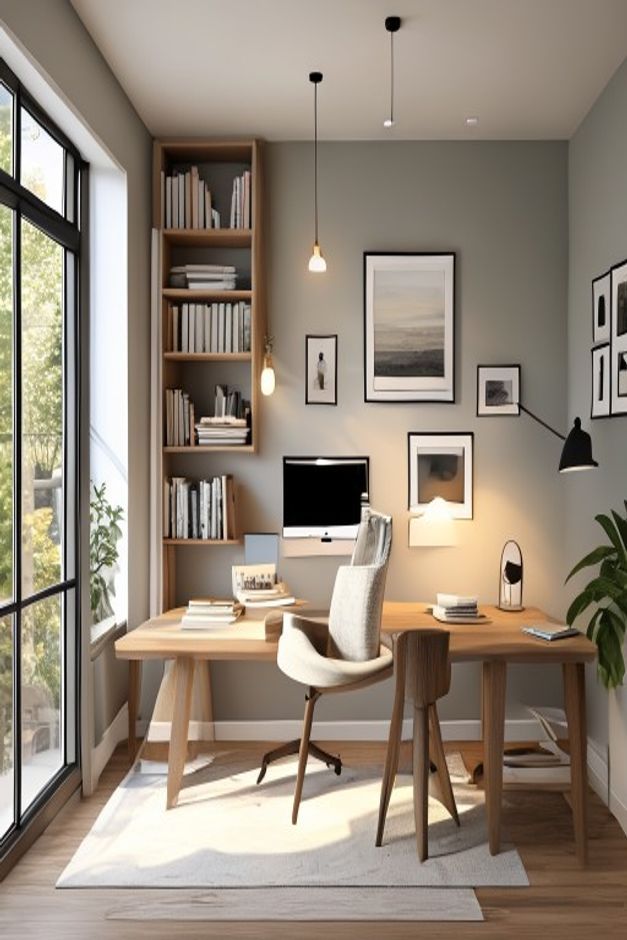

This coastal modern workspace demands attention because it masterfully resolves the tension between ergonomic necessity and aesthetic tranquility. By utilizing a restrained palette of sage green, light oak, and crisp white, the room avoids the typical clutter associated with home offices, instead offering a curated environment that promotes sustained focus. Architectural rigor is evident in the alignment of the vertical shelving with the desk, creating a cohesive workstation that feels integrated rather than merely furnished.
Studying this space reveals how specific material choices—namely the warm, light-toned wood—can anchor a room without overwhelming its footprint. The deliberate placement of the desk near a large window suggests a design philosophy that prioritizes natural light, while the sophisticated layering of artificial lighting ensures that productivity remains unhindered after dusk. This office serves as a blueprint for those seeking to blend professional utility with a relaxed, coastal-inspired atmosphere.
Light Oak Keeps the Workspace Warm
Light oak serves as the foundational material in this office, providing a neutral yet warm base that defines the coastal modern aesthetic. The choice of a light wood desk with tapered legs introduces a sense of lightness and mid-century influence, preventing the furniture from appearing bulky against the wall. This wood tone acts as a bridge between the soft sage green walls and the stark white accents, ensuring the room feels cohesive and grounded.
Beyond the desk, the inclusion of matching light wood elements in the built-in shelving reinforces a sense of architectural continuity. This repetition of material creates a rhythmic flow throughout the room, allowing the eye to travel seamlessly from the workspace to the storage areas. By keeping the wood grain visible and natural, the design emphasizes an organic connection to the environment, which is a hallmark of successful coastal-inspired residential architecture.
Optimizing Task Lighting for Productivity
Effective task lighting in this office is achieved through a multi-layered strategy that addresses both focused work and ambient needs. A wall-mounted swing-arm task lamp provides adjustable illumination directly over the desk surface, allowing for precision when reviewing documents or engaging in detailed tasks. This hardware choice is particularly effective because it frees up valuable desk space while offering a flexible range of motion that fixed lighting solutions cannot match.
Complementing this swing-arm fixture is a dedicated desk lamp that provides a secondary layer of light, minimizing shadows and reducing eye strain during long hours of operation. This combination of directed lighting ensures that the workspace remains functional regardless of the time of day. For those looking to refine their own setup, exploring Coastal Home Office Affordable Desk Setup Ideas can provide further inspiration on how to balance these essential fixtures within a limited budget.
The Architectural Function of Vertical Shelving
Built-in vertical shelving units transform the wall into a highly functional storage system that maintains a clean, uncluttered aesthetic. By utilizing the vertical plane, the design maximizes storage capacity without encroaching on the floor space, which is essential for maintaining an open and airy feel. The shelves are organized with books and decorative objects, demonstrating how storage can serve as both a practical utility and a display element.
The alignment of these shelves with the desk creates a unified workstation that feels intentional and well-planned. This configuration allows for easy access to reference materials while keeping the primary workspace clear of distractions. The integration of these shelves into the wall structure itself speaks to a high level of design precision, ensuring that the office feels like a permanent, well-thought-out room rather than a temporary arrangement of furniture.
Sage Green Walls Calm the Office
The color palette, dominated by soft sage green, introduces a calming influence that is essential for a high-performance workspace. This muted tone works harmoniously with the light oak wood, creating a palette that feels both grounded and refreshing. By avoiding high-contrast colors, the walls recede, allowing the furniture and the gallery wall to become the primary points of interest within the room.
White accents, seen in the window treatments and ceiling, provide necessary brightness, ensuring that the sage green does not make the room feel too dark or enclosed. This balance of colors is critical in a coastal modern design, where the goal is to evoke a sense of nature and light. For readers interested in how different wood tones interact with these color schemes, comparing this space to Japandi Home Office Wood Desk Ideas offers a useful perspective on material selection.
The Impact of Gallery Walls in Offices
A gallery wall featuring framed monochrome prints provides a sophisticated focal point that adds character without introducing visual chaos. The monochrome nature of the art ensures that it complements the existing color palette rather than competing with it. This deliberate choice of art reinforces the coastal modern theme, as it relies on clean lines and simple forms to convey a sense of curated elegance.
The placement of these prints above the desk allows for a personalized environment that inspires creativity while maintaining a professional standard. By keeping the frames consistent in style and color, the gallery wall appears as a singular, cohesive installation. This approach to wall decor is highly effective in home offices, where the goal is to create a space that feels personal yet remains conducive to focused work.
Ergonomics and Comfort in Workspace Design
The choice of an upholstered ergonomic office chair is a critical design decision that prioritizes long-term physical health and comfort. The fabric upholstery adds a soft texture to the room, contrasting with the hard surfaces of the wood desk and metal lamp hardware. This tactile variety is essential for preventing the space from feeling sterile or overly industrial, contributing to the overall sense of comfort.
Additionally, the inclusion of a wooden stool suggests a flexible approach to seating, perhaps for a quick conversation or a change of posture. This secondary seating option is a thoughtful addition that enhances the room’s versatility. When combined with the ergonomic chair, it ensures that the workspace can accommodate different modes of working, from deep focus to collaborative sessions, without sacrificing the room’s aesthetic integrity.
Maximizing Natural Light and Window Positioning
Positioning the desk toward a large window is a classic architectural strategy that maximizes natural light and provides a visual connection to the outdoors. This orientation is particularly effective in a coastal home office, as it allows the resident to benefit from the shifting quality of light throughout the day. The window acts as a natural light source that reduces the reliance on artificial lighting during daylight hours.
The window treatments, while understated, play a vital role in controlling the intensity of the light, ensuring it does not create glare on screens or work surfaces. By framing the view, the window becomes an integral part of the office design, bridging the gap between the interior workspace and the external environment. This connection to the outside world is a key element in creating a space that feels expansive and restorative.
Curating Books and Decor for Professionalism
The careful curation of books and indoor plants on the shelving units adds a layer of life and intellectual depth to the office. Books provide a sense of history and knowledge, while the plant introduces a vibrant touch of nature that aligns with the coastal theme. These elements are not merely decorative; they serve to humanize the workspace, making it feel more approachable and less like a sterile corporate environment.
The arrangement of these items reflects a disciplined approach to decor, where every object has a purpose or a place. By avoiding over-accessorizing, the design keeps the focus on the primary tasks of the room. This restraint is a hallmark of effective interior design, demonstrating that a few well-chosen items can communicate a strong sense of style and personality far more effectively than a cluttered display.
FAQ
How can I incorporate coastal elements into a home office without looking thematic?
Focus on natural materials like light oak, muted color palettes such as sage or sand, and clean-lined furniture. Avoid overt nautical decor in favor of textures and organic shapes.
What is the best way to layer lighting in a small office?
Combine overhead ambient light with a dedicated swing-arm task lamp for the desk and a secondary lamp for ambient glow. This ensures functionality while creating a warm atmosphere.
How do I choose the right desk for a coastal modern look?
Prioritize light-toned woods with simple, tapered legs. A desk with a slim profile will maintain the airy, open feeling essential to the coastal modern aesthetic.