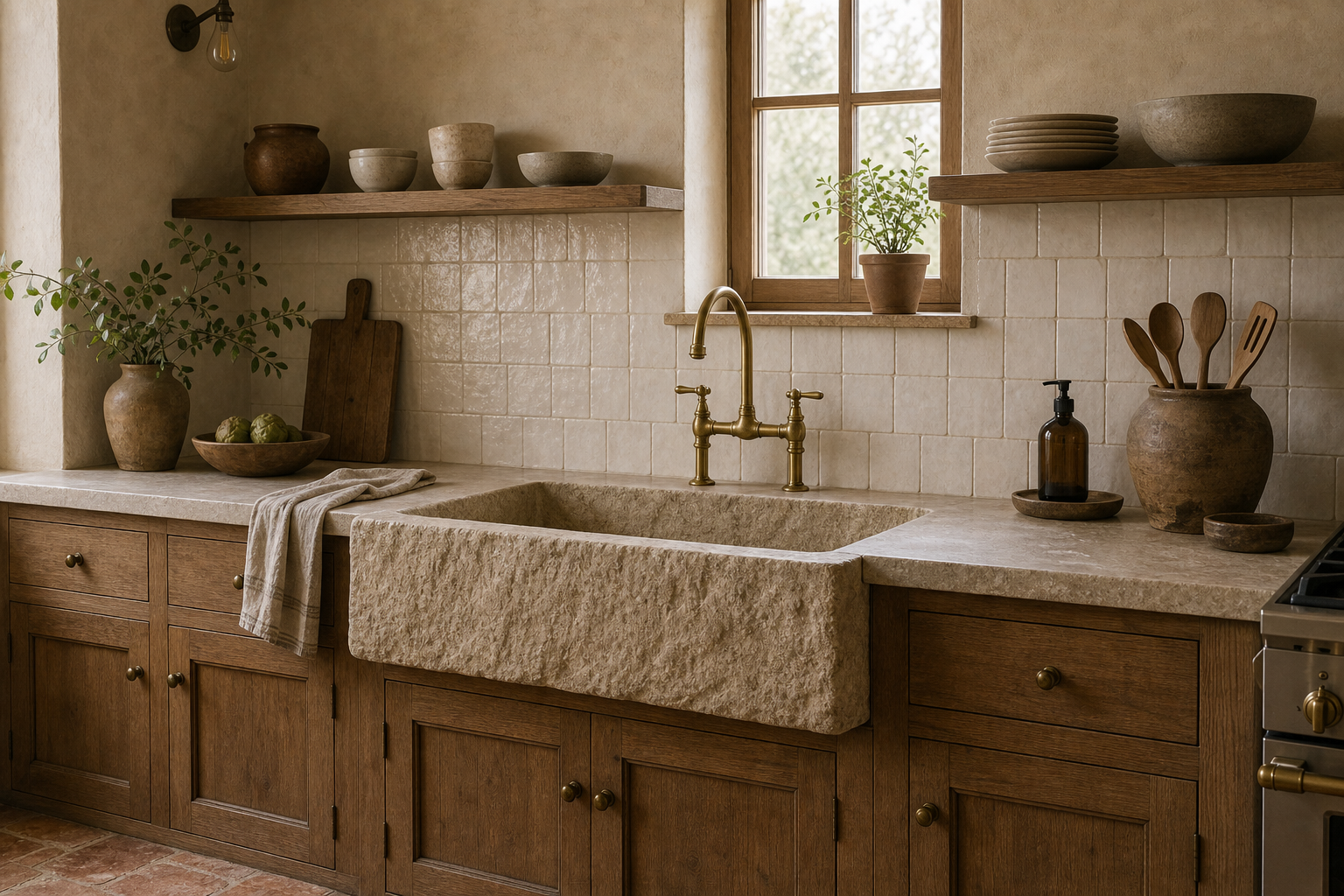

The projecting sink front gives this kitchen wall its physical weight. A thick pale stone basin interrupts the timber-toned cabinet run beneath a small window, exposing irregular surface variation that daylight can reach directly. Warm-metal bridge fittings provide a finer line above the heavy apron. Cream tile, open shelves, and a pale counter keep the surrounding work wall quiet enough for the basin to remain unmistakably central.
The Stone Apron Projects Beyond the Cabinet Line
The sink projects forward with a thick carved apron, making it the most tactile element on the wall. Its rough surface contrasts with the smoother counter and tile. Because it sits under the window, the daylight catches the stone face and makes the basin feel even more substantial.
The apron is taller than the adjacent drawer rail and extends across most of the central cabinet bay. Its forward edge creates a deep shadow beneath the rim, making thickness and tactile variation readable even in the room's restrained color range.
The warm-metal bridge faucet gives the sink a refined line above the heavy basin. Its warm metal tone fits the rustic palette without feeling too polished. The faucet also provides a vertical note at the center of the composition, balancing the long horizontal counter.
The window is centered close behind the basin, so side and frontal daylight reveal small tonal changes across the stone face. Its dark trim also gives the pale sink a narrow vertical boundary without requiring a contrasting backsplash feature.
Bridge Fittings Add a Precise Vertical Counterpoint
The wood base cabinets have enough warmth to support the stone apron. Their framed doors and simple knobs feel sturdy, which suits the sink's weight. A sleek flat cabinet would make the stone look isolated. Here, the wood gives it a believable home.
Timber-Toned Cabinets Carry the Visible Weight
The handmade cream tile brings subtle variation behind the sink. Its uneven surface works with the stone rather than against it. The tile also brightens the wall around the window, keeping the rustic kitchen from feeling too dark.
Cream Tile Softens the Working Wall
The wood shelves hold ceramic bowls and plates, creating a quiet frame above the backsplash. Their thickness relates to the cabinet fronts below. The shelves stay sparse, which is important. Too many objects would distract from the sink.
The counter holds useful objects like a cutting board, towel, plant and soap bottle, but the area around the basin remains readable. That restraint lets the sink's texture and depth remain the main focus.
Shelves occupy both sides of the window but leave the opening and fitting axis clear. Bowls and vessels are arranged in small groups with wall visible around them, ensuring stored objects do not erase the calm cream backdrop.
Counter Objects Stay Clear of the Basin Edge
Start with the sink material and scale. A stone apron sink should feel substantial enough to anchor the cabinet run. Then choose supporting finishes with similar warmth: wood doors, cream tile, aged warm-metal and plaster all help the sink feel integrated.
Integrating a Heavy Sink Into a Rustic Cabinet Run
I would not add glossy modern hardware here. The aged warm-metal works because it respects the stone's natural texture. I would also avoid filling the shelves with colorful objects. The kitchen is strongest when the palette stays earthy.
The open shelf treatment in this English country kitchen study carries more of the visual narrative. In this room, shelves remain supporting elements around the heavier apron sink and window axis.
Cutting boards and utensils gather at the right, while a small plant and vessel sit beyond the left basin edge. The sink remains accessible from the full front and its apron is never hidden by a towel. This editing supports food preparation while preserving the tactile surface that distinguishes the central fixture.
Cabinet fronts on both sides use broad framed panels, but the projecting apron interrupts their repeated widths at the exact window center. This interruption is what makes the sink feel integrated rather than simply placed over standard doors. A dark floor band anchors the cabinetry and contrasts with the pale basin, while the counter line passes behind the sink rim without becoming visually dominant. The composition moves from heavy lower storage to tactile central fixture and then to the bright opening above.