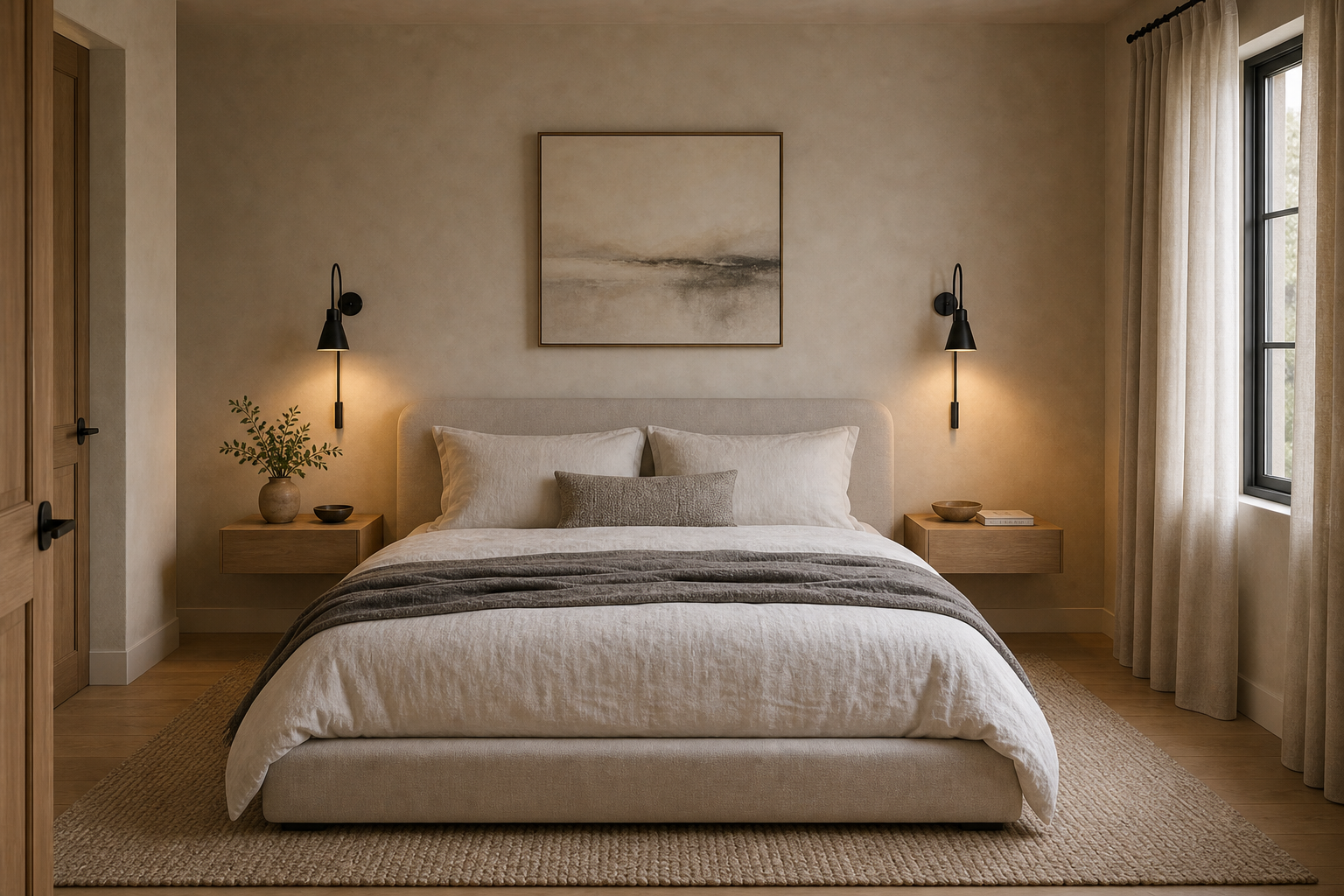

The bedside lights are treated as part of the wall composition rather than as accessories placed on furniture. Two dark adjustable sconces sit at equal heights beyond the pillow width, framing a low bed and freeing the small floating nightstands below. Centered artwork occupies the quiet upper field. Pale bedding, sheer curtains, and side daylight keep the compact room bright, while the sconces provide the strongest graphic marks.
Paired Sconces Define the Bedside Width
The black sconces sit on both sides of the upholstered bed, giving the wall a clear left-right balance. Their vertical form adds height without needing tall lamps. Because they are mounted above the nightstands, the lighting feels connected to the bedside function.
The fixtures sit outside the headboard edge rather than directly above the pillows. This gives each sleeper a distinct light position and leaves the central wall available for art. Equal mounting height creates order without requiring identical bedside objects.
The floating timber-toned nightstands remain visually light because the lamps are off the surface. That is the main advantage of this layout. The small bowls, books and vase can stay modest because the sconces are doing the visual work.
Short angled arms place the shades forward from the wall and direct their openings down. The image does not establish brightness, but the visible geometry shows why they suit reading: light is brought closer to the bed without occupying the nightstand top.
Floating Nightstands Preserve Floor Below
The matte black fixtures create crisp marks against the warm plaster wall. They also repeat the dark window frame and curtain rod. That repetition keeps the room from feeling too soft or washed out.
Each small timber-toned table projects from the wall and leaves a clean shadow below. A lamp is unnecessary on these surfaces, so a plant and small personal objects can remain without creating a dense bedside cluster.
Centered Artwork Holds the Upper Axis
The abstract artwork fills the center above the bed while the sconces hold the sides. This gives the wall a stable three-part composition. The muted tones in the art suit the bedding and keep attention on the lighting rhythm.
A Low Bed Leaves Wall Space for the Fixtures
The upholstered headboard sits low enough that the sconces can rise above it without feeling squeezed. This proportion matters: if the headboard were much taller, the sconces would need a different height or a wider placement.
Curtains Moderate Daylight Beside the Right Sconce
The side curtains filter daylight so the warm sconce glow does not feel harsh against the wall. They also add a vertical fabric line that balances the slim black fixtures.
Dark Lines Bring Definition to a Pale Room
Start with the bed width and nightstand position. The sconces should feel tied to the sleeping area, not randomly placed on the wall. Use wall-mounted fixtures when you want bedside surfaces to stay open and uncluttered.
Setting Sconce Position Around Real Bedside Reach
I would not add table lamps to these nightstands. The wall sconces already provide the bedside lighting. I would also avoid moving the artwork lower, because the space between headboard and art gives the sconces room to breathe.
The fixtures in this scheduled Scandinavian bedroom sconce study sit within a lighter material language. Here, dark adjustable arms supply the contrast that gives an otherwise pale contemporary wall its structure.
Bed, tables, and sconces form a broad symmetrical frame, but the plant at left and window at right prevent the room from becoming rigid. The curtain falls clear of the right fixture arm, preserving safe-looking separation without inventing dimensions. Each vertical edge has enough space to remain readable from the doorway.
The headboard rises only slightly behind the pillow stack, leaving a large calm wall area between bed and artwork. That open field is what allows sconce arms to project without feeling crowded. A taller bed would compress the three-part arrangement of table, light, and frame.
Light pools on the wall directly below each shade and fades before reaching the centered artwork. That visible separation gives the bedroom layered illumination without suggesting exact color temperature or output. The sconces identify bedside use; window and curtains shape the broader ambient field. Neither fixture competes with the central framed work.