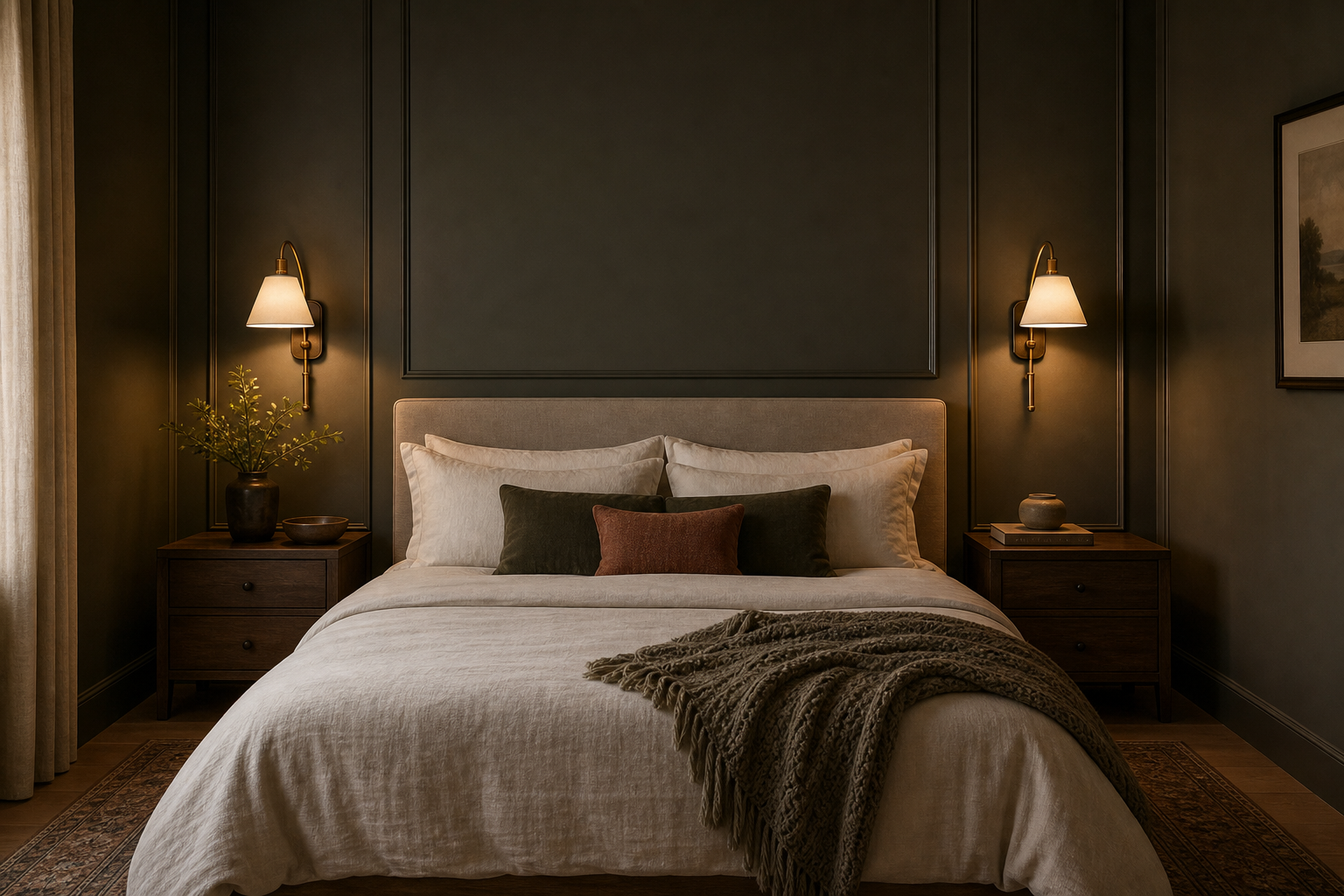

Two wall sconces define the bedside composition more decisively than any portable lamp could. Their brass-toned arms and pale tapered shades sit within separate dark molding panels, flanking a low upholstered headboard at matching heights. Each fixture creates a warm pool that reveals the wall relief while leaving the central panel intentionally quiet.
The design is moody because contrast is controlled, not because every surface is dark. Charcoal-brown walls and timber nightstands form a deep enclosure around pale bedding, soft curtains, and the lit shades. A rust lumbar cushion and muted green pillows add restrained color close to the bed, where it can be read without breaking the room's calm symmetry.
The Sconces Sit Inside the Wall-Molding Rhythm
Each fixture is centered within a narrow rectangular wall panel rather than attached arbitrarily beside the headboard. The vertical stems reinforce the molding lines, while curved arms and tapered shades interrupt the strict geometry. This alignment makes lighting feel integrated into the elevation even though the fittings remain clearly visible.
The large central panel above the bed is left empty. That blank field is useful: it separates the fixtures, gives the upholstered headboard a clean outline, and prevents artwork from becoming a third competing focal point. The wall gains depth through proportion and shadow rather than added objects.
Matching Height Creates Functional Bedside Balance
Both shades sit above the nightstand surfaces and outside the headboard width, leaving pillow space clear. Their lower edges form a level line across the bed despite the camera perspective. Exact mounting dimensions cannot be inferred, but the visible relationship shows that fixture position was established from the bed and tables together.
Moving the lights off the nightstands preserves room for a dark vase and bowl on the left, then books and a small vessel on the right. Those objects differ without disturbing the bilateral structure. The tables remain usable because the lighting equipment occupies the wall rather than the limited horizontal surfaces.
Pale Shades Control Glare Against a Dark Wall
The small fabric-like shades diffuse the lamps into warm cones above and below, keeping the glowing source from appearing harsh against the deep paint. Brass-toned stems catch narrow highlights and remain legible without becoming the brightest objects in the room. Precise shade fiber and bulb temperature are not visible and should not be assigned.
Daylight enters through full-height curtains at the left, producing a softer vertical wash along the first panel. That cooler natural illumination and the concentrated bedside glow serve different parts of the composition. The room remains dimensional because the wall is not lit evenly from edge to edge.
Dark Nightstands Ground the Light Fixtures
Two matching timber-toned nightstands use broad tops, paired drawers, and slim legs. Their height gives each sconce a visible base below, while their dark finish connects to the wall and molding. Small round knobs repeat the scale of the sconce joints in a quieter form.
The nightstands stop short of the curtains and the side wall, leaving narrow strips of floor visible around them. That breathing space prevents the bed wall from reading as a continuous dark block. A patterned rug extends beneath the group and provides a low, warmer boundary against the timber-toned floor.
Neutral Bedding Keeps Attention on Light and Architecture
A pale upholstered headboard, white bedcover, layered pillows, and a dark knitted throw create a broad light field through the center. The textiles reveal the warm cast of the sconces without reflecting it as a glossy surface. Rust and green accents connect the bed to the earthy artwork at the room's edge.
To adapt this approach, draw the bed elevation first, center each sconce within its own molding bay, and preserve an undecorated central panel. Keep nightstands visually substantial enough to answer the dark wall, then use pale bedding as contrast. The room feels composed because light, joinery, and furniture share one measured axis.
The wall color continues across molding, baseboard, and door trim, allowing relief to emerge through shadow rather than contrasting paint. That continuity makes the sconces appear brighter and the pale bed broader. It also contains the bedside composition inside one dark envelope, so the few rust and green textile accents feel deliberate instead of incidental.