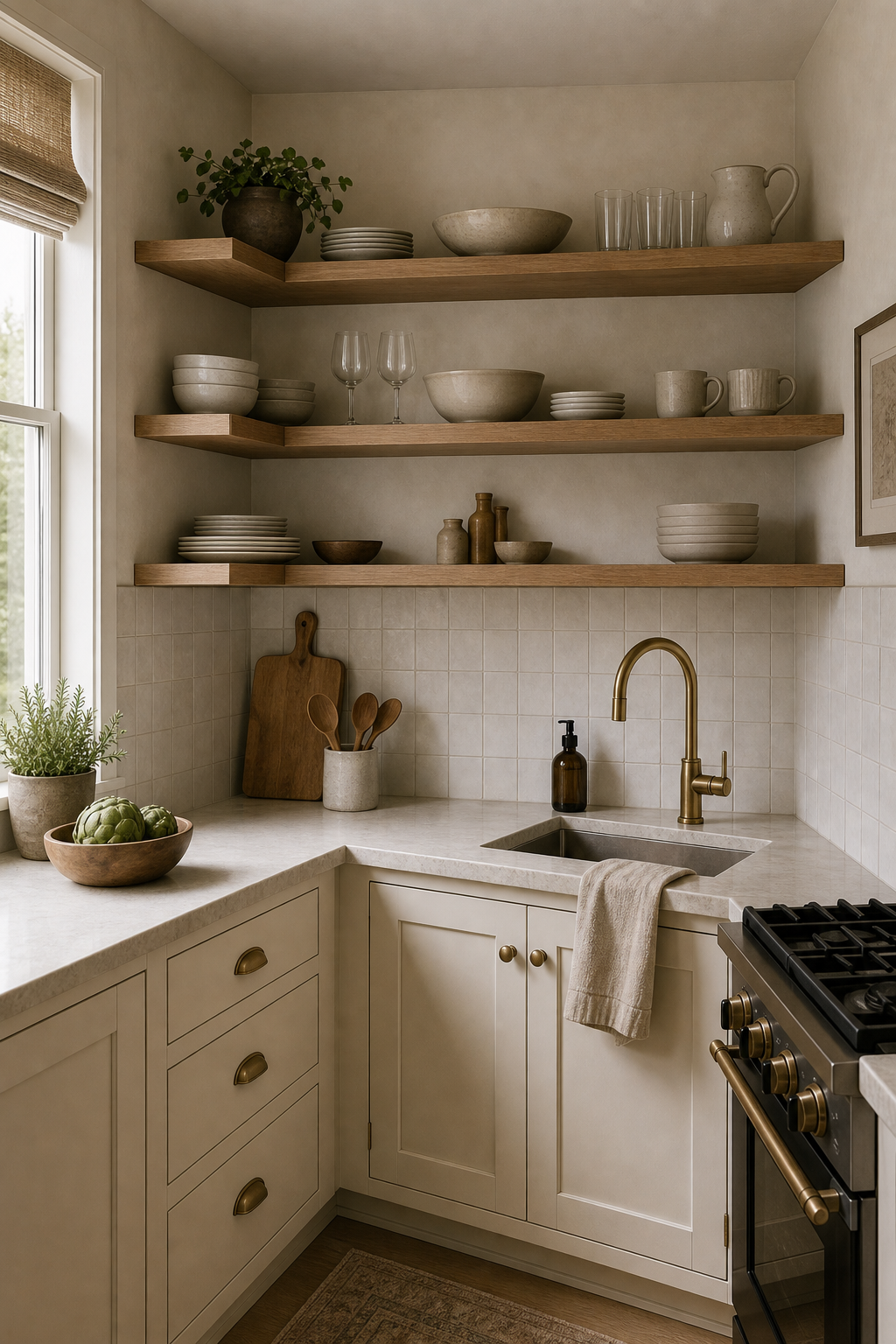

The open shelves solve a corner that enclosed cabinets could easily make heavy. Two light timber-toned boards turn across the adjoining walls above the sink, maintaining one continuous storage line for pale dishes, clear glassware, and a few small plants. Below, square pale tile, a warm-metal faucet, light cabinets, and a mostly clear counter keep the working area legible. The success lies in using the corner without visually sealing it.
The Shelves Turn the Corner as One Composition
The open shelves wrap the corner and make use of both walls, which is the smartest move in this compact kitchen. Their length gives the corner purpose without making the work area feel boxed in. Because the shelves are light timber-toned, they add warmth above the pale tile while still feeling visually lighter than closed cabinets.
The boards meet cleanly at the inside angle and maintain consistent depth across both walls. That turn is the key design decision: it treats the corner as useful continuity rather than leaving an awkward gap between separate shelf runs.
The shelves are spaced far enough apart for bowls, glasses and plates to breathe. That spacing is important because open storage becomes stressful when objects are packed too tightly. The visible dishes are grouped by type, which makes the shelves feel organized rather than decorative clutter.
Dish Groups Create Distinct Storage Zones
The counter under the shelves remains mostly open around the sink. This keeps the corner useful for prep and cleanup instead of turning it into display space. The cutting board, utensil crock and soap bottle are practical objects, so the surface still feels connected to daily cooking.
Bowls, cups, plates, and glass vessels sit in small groups with visible wall between them. The Scandinavian open-shelf kitchen study uses longer straight boards; here, the same disciplined spacing must negotiate a tighter change in direction.
The Counter Remains a Working Surface
The square tile backsplash gives the shelves a quiet grid behind them. Its pale color keeps the corner bright and allows the wood to stand out. The tile also protects the wall around the sink, which matters when open shelving is placed directly above a work zone.
Boards, a utensil vessel, and soap remain close to the sink but do not form a solid line across the counter. Keeping the central work area open prevents upper storage and lower objects from compressing the same corner visually.
Square Tile Gives the Background a Quiet Grid
The warm-metal faucet adds a warm vertical element below the shelves. It connects visually to the cabinet hardware and gives the sink zone a polished finish. Because the faucet is slim, it does not compete with the shelves above.
The Faucet Marks the Sink Below the Turn
Daylight from the nearby window reaches the shelves from the side, making the glassware and ceramics feel lighter. That natural light is one reason open shelving works here; a dark corner with the same amount of exposed storage would feel heavier.
Side Daylight Lightens Glass and Ceramics
Use shelves that continue through the corner rather than stopping abruptly at one wall. The turn is what makes the storage feel designed for the space. Keep the shelf contents limited to everyday pieces in similar tones: plates, bowls, mugs, glasses and one or two ceramic vessels.
Editing a Small Kitchen Corner for Daily Use
I would not add baskets to every shelf in this kitchen. The shelves already show useful dishes, and too many containers would make the corner feel crowded. I would also avoid dark heavy brackets because the current floating shelf effect is part of what keeps the small kitchen open.
Limit the shelves to items used often enough to justify exposure, and preserve gaps near the inner turn where objects can otherwise look crowded. Deep baskets or tall stacks would erase the lightness that makes this alternative to corner cabinetry persuasive.
Shelf contents grow slightly taller toward the outer ends, while the inside corner stays comparatively open. This distribution prevents the junction from becoming a dark knot of overlapping dishes. The faucet rises below the turn but remains narrow enough for the shelf edges to stay dominant. At the lower level, cabinet fronts close the storage that would look untidy if exposed, creating a practical balance between frequently used pieces above and visually quiet volume below.