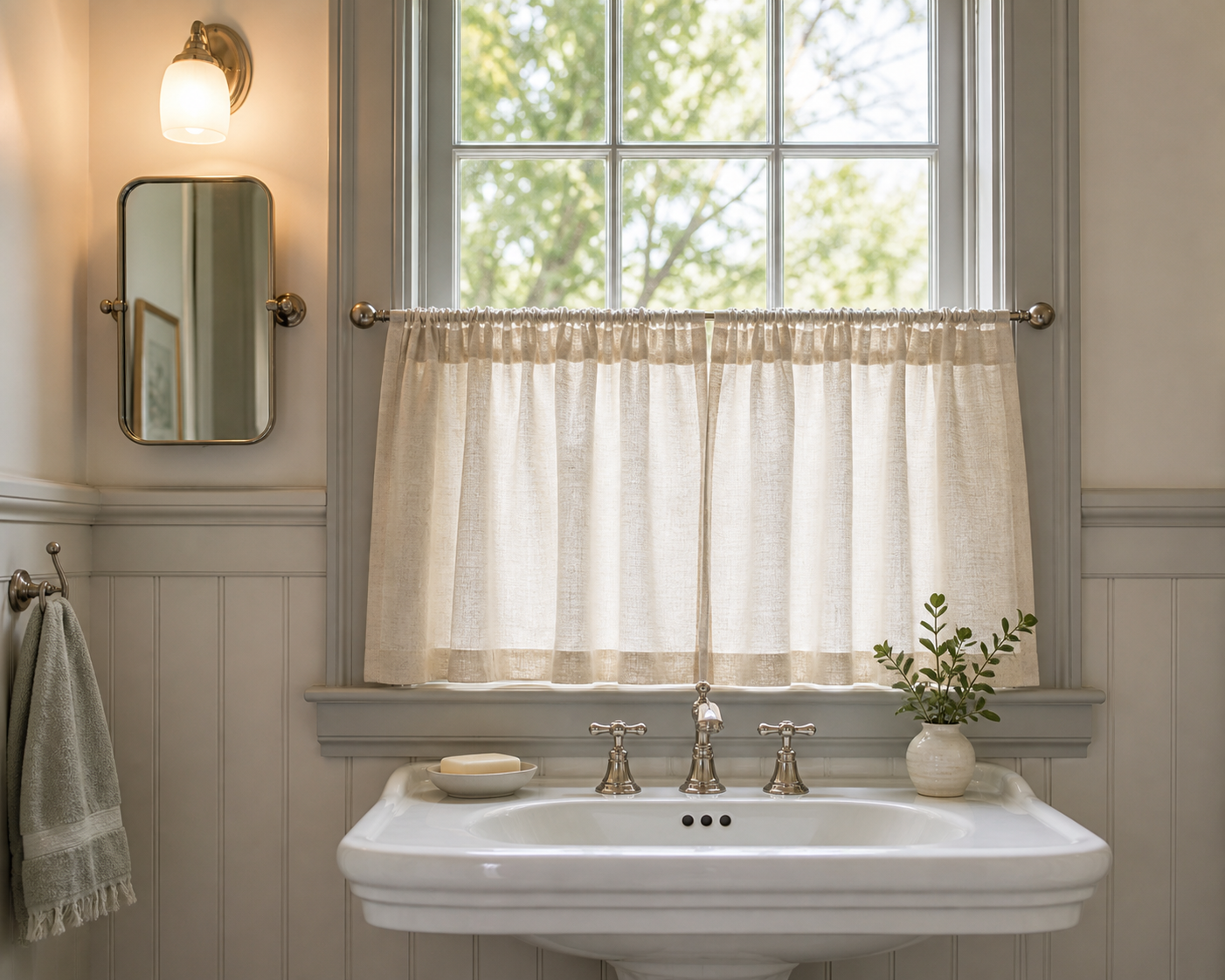

Privacy is placed only where it is needed in this compact bathroom. A gathered pale curtain covers the lower half of the divided window, leaving the upper panes open to daylight. The fabric begins at an existing horizontal rail and stops at the sill, so it belongs to the window's geometry. A pedestal sink, vertical wall paneling, narrow mirror, wall light, and a few small vessels keep the surrounding elevation visually light.
The Curtain Protects the Lower Sight Line
The curtain covers only the lower half of the window, which is exactly where privacy is needed at the sink. Leaving the upper panes exposed keeps daylight active in the room. A full shade would flatten this wall. The gathered pale fabric gives the window movement, texture and a softer edge without hiding the traditional divided panes.
The upper glazing remains completely unobstructed, maintaining a bright rectangle above eye level. That division lets privacy and daylight coexist instead of forcing a full blind across a window that already has useful internal proportions.
The rod sits across the middle rail of the window, so the fabric feels connected to the existing architecture. That placement makes the curtain look deliberate rather than temporary. Because the curtain stops at the sill, the sink area still feels open. In a compact bathroom, that small visual gap matters.
Gathered Folds Soften the Divided Panes
The fabric texture filters the daylight instead of shutting it down. You can still read the brightness of the window through the fabric, which keeps the sink wall from becoming dull. The slightly relaxed weave also suits the traditional setting. It softens the polished faucet and painted trim without feeling overly decorative.
Fabric folds create a fine vertical rhythm below the broader glass panes. The nearby skirted-sink bathroom analysis uses fabric to soften storage; here, textile controls the view while the sink remains fully exposed.
The pedestal sink leaves open space below the basin, so the curtain remains the visual feature. A bulky cabinet would have made the lower half of the wall feel crowded. The sink's pale also reflects the window light. That reflection helps the bathroom feel cleaner and brighter.
The narrow pedestal leaves wall, floor, and window light visible around the basin. A broad vanity would combine too much mass with the gathered curtain at precisely the lowest and tightest part of the composition.
Vertical Paneling Gives the Lower Wall Order
The vertical wall paneling gives the lower wall a measured rhythm that works with the curtain folds. Both details are vertical, but neither one overwhelms the sink wall. Painted in a soft gray tone, the trim frames the window and vertical wall paneling without creating harsh contrast.
The mirror and sconce sit to the left of the window, which keeps the center of the composition focused on the curtain and sink. That asymmetry feels practical rather than accidental. The warm sconce light also balances the daylight. It gives the mirror area a useful glow while the window remains the brighter feature.
Mirror and sconce occupy a slim strip to the left, creating a practical grooming point without cutting into the curtain width. Their asymmetry is resolved by the centered sink and window rather than disguised with a second fixture.
Daylight Remains the Primary Light Source
Start with the window dimensions. The curtain should align with a real rail, muntin or lower pane division so it looks built into the architecture. Choose a slim metal rod, a gathered pale fabric panel and simple rings or rod pockets. The goal is privacy with softness, not a heavy decorative statement.
Choosing Privacy Without Closing the Room
I would avoid patterned fabric here because the divided window, vertical wall paneling and gathered pale fabric already provide enough detail. A busy print would distract from the quiet traditional architecture. I would also avoid replacing the pedestal sink with a large storage cabinet in this exact composition. The openness below the sink is part of why the curtain feels graceful.
Align the rod with a real window division and select fabric dense enough for privacy but light enough to retain brightness. The photograph cannot establish fiber or opacity ratings; its dependable lesson is the carefully limited coverage area.
The sill remains visible between gathered fabric and basin, providing a clean lower boundary. A small plant and soap vessel sit near the sink edge but stay below the curtain center, preserving the hierarchy of open upper glass, filtered lower glass, and pale fixture.
The curtain gathers are densest near the rod and loosen toward the sill, giving the compact window a softer lower edge without hiding its frame.