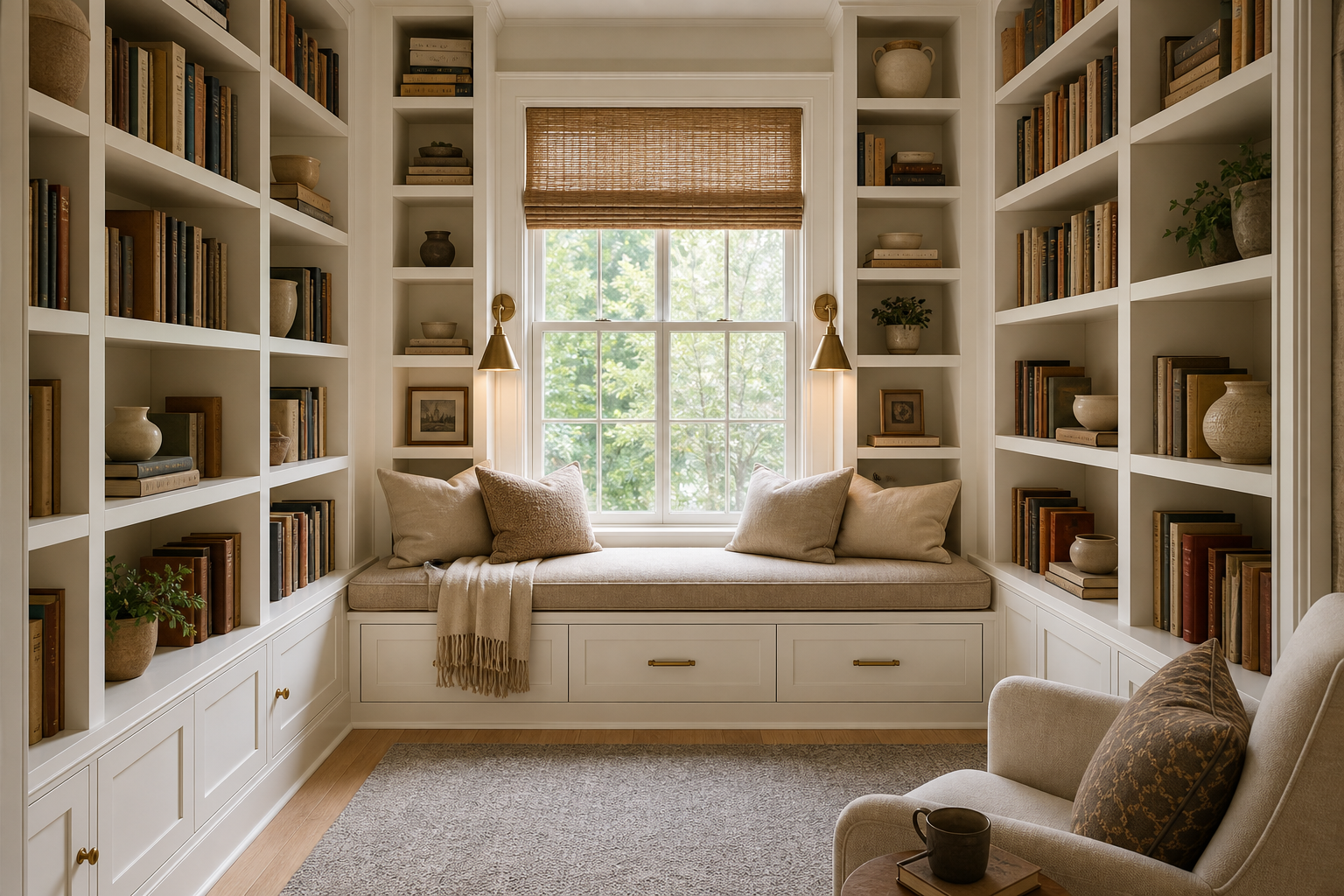

Matching bookcases create a complete room within the room by framing a deep window seat on both sides. Pale shelves rise to the ceiling, lower drawers form a continuous base, and warm wall lights mark the transition into the central niche. A woven shade, seat cushion, pillows, controlled books, small art, pale rug, and side chair make the bay usable without dissolving its symmetry.
Bookcases Form Two Equal Sides of the Nook
The bookcases rise on both sides of the window seat, so the shelves create an architectural pocket. That enclosure is what makes the nook feel separate from the larger room. Because the built-ins are painted warm white, they add structure without making the seating area feel dark.
Each bookcase uses comparable width, shelf spacing, and lower cabinetry, so the window reads as a deliberate center rather than leftover wall space.
The bench cushion sits directly under the window and gives the built-ins a reason to wrap around it. The seat is the destination; the shelves are the frame. Drawers below the cushion add function without interrupting the clean built-in base.
The earlier window bookcase-wall guide covers the broader arrangement. This nook emphasizes equal side towers, paired lights, and a centered drawer-based seat.
Lower Drawers Give the Shelves a Stable Base
The two warm-metal sconces sit at reading height beside the window. They make the nook usable when daylight fades and add warmth to the white shelving. Their small scale is right for the space because the shelves already carry most of the visual detail.
The drawer line continues beneath the window and visually joins both shelf bases. No interior organizer is visible, so the analysis stays with the externally confirmed storage fronts.
Warm Sconces Mark the Inner Bookcase Edges
The woven shade filters daylight and adds natural texture above the bench. It also softens the strong rectangular window frame. That texture relates to the fabric pillows and pale rug, keeping the nook from feeling too built-in and hard.
Shelf Gaps Keep the Architecture Visible
Books are mixed with ceramic vessels and a few plants, but the shelves are not packed edge to edge. The open gaps are important because they keep the built-ins readable. A cozy nook does not need every shelf filled. It needs enough visual rhythm to feel collected.
Books and objects occupy portions of each shelf while pale backing remains exposed. Those gaps prevent the towers from becoming two dark columns beside a bright window.
A Woven Shade Softens the Bright Center
The soft rug in front of the bench gives the seating area a floor zone. It makes the nook feel like a place to linger rather than just a window wall. Its muted tone keeps attention on the built-ins and bench.
Cushions Stay Inside the Window Bay
Start with the seat location and build the shelving around it. The nook works best when the bench feels intentionally framed by the bookcases. Add reading lights before styling the shelves. Function should come before decorative objects in a space meant for reading.
Building Symmetry Without Making a Library Rigid
I would avoid filling the bench with too many pillows. The window seat needs enough open cushion to remain usable. I would also avoid bright shelf accessories because the calm palette is what makes the nook feel restful.
Establish window center, seat depth, and matching bookcase widths before styling. Unequal shelf heights or a large chair placed in front would break the protected central pocket.
The seat cushion fills the central bay without projecting beyond the drawer base. Pillows remain low enough to preserve the lower window glass.
A side chair sits outside the bookcase frame, expanding use without intruding into the protected reading pocket.
Paired sconces sit at the same shelf height and frame the bright window without adding a pendant inside the nook.
The window seat is deep enough for two back cushions and a smaller central pillow, but textiles stay within the casing width. This keeps the sitting area visibly contained by the bookcases instead of spilling into the room like a loose sofa.
Lower cabinetry uses broad drawer fronts with limited hardware, providing visual calm beneath the many small shelf compartments. The contrast between simple base and varied upper display is what prevents the built-in wall from feeling overly busy.