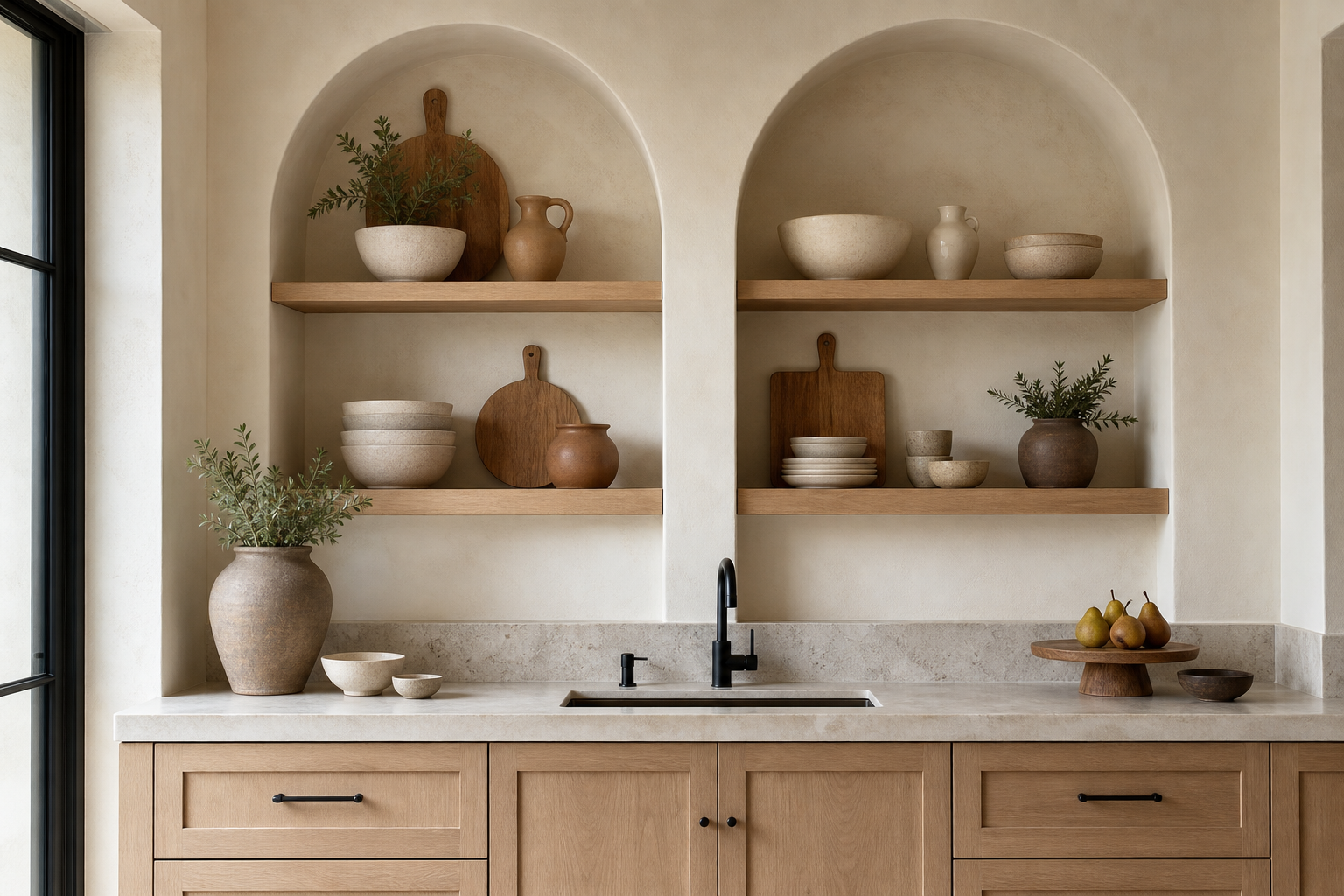

Two arched niches give this sink wall a strong architectural rhythm without adding upper cabinets. Each pale recess contains timber-toned ledges and a small group of tonal vessels, while the sink and long counter establish a quiet working line below. Warm lower cabinetry, a side window, greenery, and larger floor-level vessels support the same organic palette. The display works because curves are repeated but contents are edited.
Twin Arches Establish the Upper Wall Rhythm
The two arched niches dominate the wall above the sink. Their rounded tops give the kitchen a softer architectural identity than straight open shelves would. Because the shelves sit inside pale curved recesses, the display feels integrated instead of applied.
The two openings share height and width but retain a narrow pale pier between them. That separation keeps each arch legible while allowing the pair to read as one composition.
The wood shelf ledges cut clean horizontal lines through each arch. They bring warmth to the pale curved and relate to the lower oak cabinets. That mix of curve and line is what keeps the wall modern rather than overly rustic.
The double floating-shelf kitchen article uses applied horizontal ledges. Here, shadowed curved reveals make the shelves appear carved into the wall.
Timber-Toned Ledges Warm the Pale Recesses
Cream bowls, clay vessels and pale dishes keep the shelf display quiet. Their colors sit close to the pale curved and stone, so the arch shape remains the main feature. A brighter dish collection would change the shelves from architecture into decoration.
Each ledge spans the inner width and stops cleanly at the reveal. Timber tone is visible, but the species and concealed fixing method cannot be determined.
Tonal Vessels Preserve Each Curved Outline
The sink and black faucet below the shelves make the wall clearly functional. This is not just a display niche; it belongs to an active kitchen zone. The faucet's dark finish gives the pale wall a precise focal point at counter height.
The Sink Holds the Practical Center Below
The light pale counter provides a calm base below the arched shelves. Its subtle variation relates to the pale curved without duplicating it. Because the counter stays mostly clear, the shelves can remain the primary visual event.
The dark faucet sits between the arches and provides one precise center below. It ties display geometry to actual kitchen use rather than creating a decorative wall detached from the counter.
Daylight from the left side reveals the depth of each arch. It also casts gentle shadows that make the pale curved niches feel three-dimensional. Without that side light, the wall would still be attractive, but the recesses would feel flatter.
Side Light Models the Niche Depth
Start with the niche proportions before choosing objects. The arches should feel balanced over the counter and sink. Limit the display to a few repeated materials: ceramic, clay and wood are enough to support the organic modern palette.
Using Open Display Without Rebuilding Upper Cabinets
I would avoid extra brackets or visible hardware inside these arches. The clean pale curved opening is the point. I would also avoid stacking the shelves too densely. The negative space inside each arch gives the wall its calm.
Plan niche width from display scale and keep enough solid wall around every curve. Additional open shelves outside the arches would dilute their clear architectural role.
The niche bottoms align above the counter and leave a pale backsplash band beneath. That spacing keeps sink splashes visually separate from displayed objects.
Larger vessels occupy the floor and counter ends rather than crowding the arches, distributing organic forms at three heights.
The left niche carries a taller plant and vessels while the right uses lower bowls, producing balance without mirror-image styling. Both retain enough empty curved surface for the architectural outlines to remain stronger than their contents.
Lower drawers repeat in broad warm bays across the sink wall, giving the twin arches a stable base. Their continuous top edge also separates food preparation and washing from the quieter display level above.
Because the arches stop well below the ceiling, a generous pale margin remains above them. That negative space makes the curves feel deliberate and prevents the sink wall from reading as a dense run of upper storage.